When you click on links to various merchants on this site and make a purchase, this can result in this site earning a commission. Affiliate programs and affiliations include, but are not limited to, the eBay Partner Network.
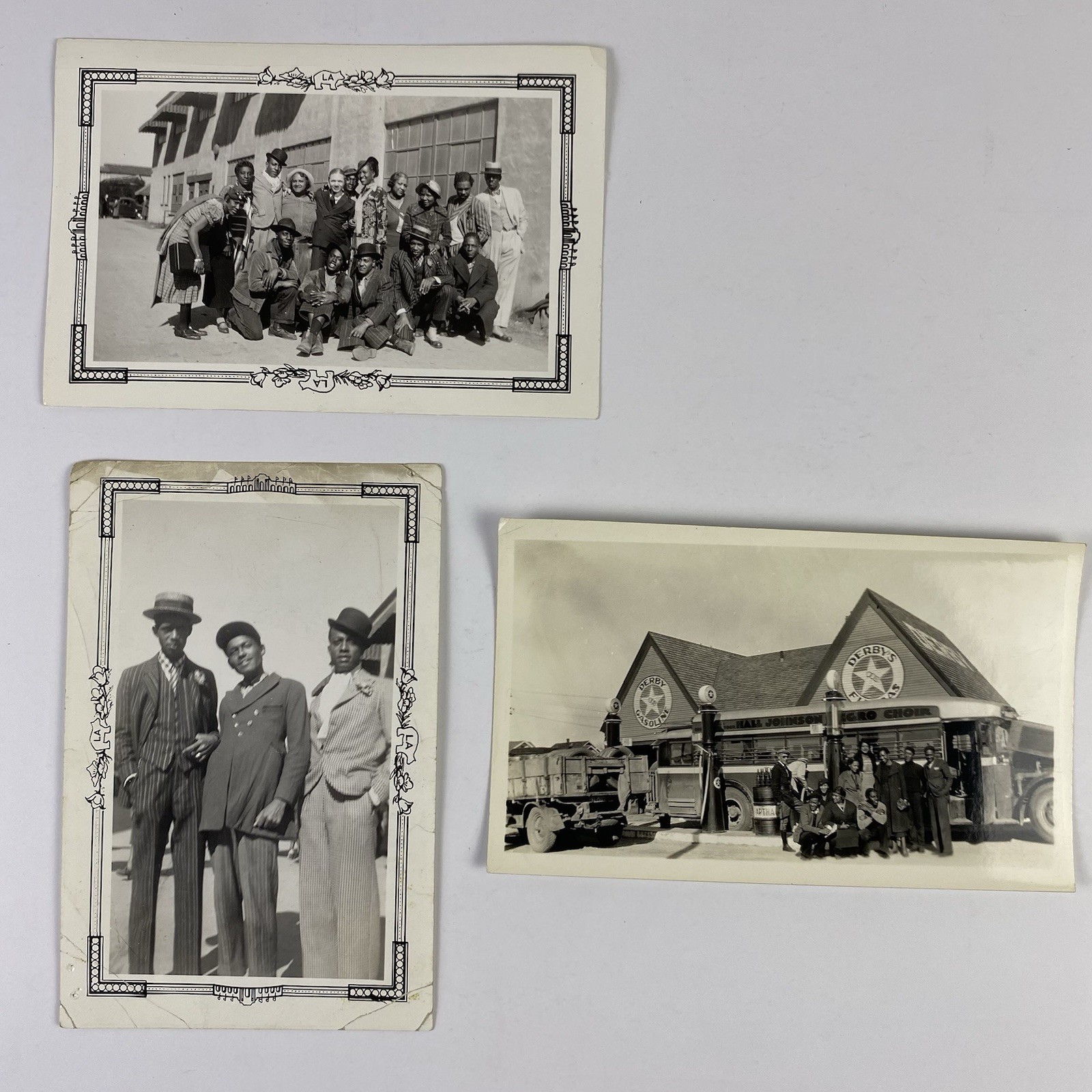
This offering features a rare set of three original historic black-and-white photographs from the 1930s depicting the Hall Johnson Negro Choir. These images carry notable historical and cultural importance, capturing a significant moment in early 20th-century musical history. As authentic photographs from the era, they represent a valuable and highly collectible glimpse into the performers and traditions they preserve.
Francis Hall Johnson (March 12, 1888 – April 30, 1970) was a distinguished American composer and arranger of African American spirituals. He stood among influential figures such as Harry T. Burleigh, R. Nathaniel Dett, and Eva Jessye, all of whom achieved prominence in bringing spirituals to wider audiences.
Johnson made his professional debut as a violinist in New York in 1910 and went on to perform both violin and viola. His early career included playing in the orchestra for the landmark 1921 musical Shuffle Along. He also performed under James Reese Europe while accompanying dancers Vernon and Irene Castle, and later with the New York Syncopated Orchestra led by Will Marion Cook.
By the mid-1920s, Johnson turned his focus to choral music, founding the Hall Johnson Negro Choir in 1925. The ensemble made its professional debut at the Pythian Temple in 1928 and rose to national prominence through its role in The Green Pastures by Marc Connelly. Their success extended to national and international tours, radio productions, the 1936 film adaptation, and television appearances on the Hallmark Hall of Fame.
Johnson also arranged and conducted music for more than thirty Hollywood films. Among his notable works was the folk opera Run, Little Chillun, which premiered on Broadway in 1933 and was later staged in Los Angeles and San Francisco under federal arts programs.
In 1937, the choir contributed to the soundtracks of major films including Lost Horizon directed by Frank Capra, Snow White and the Seven Dwarfs by Walt Disney, and Zenobia. They later appeared in Disney’s Dumbo, contributing to the song “When I See an Elephant Fly,” with Johnson himself voicing one of the crow characters.
Beyond film and theater, Johnson composed the Easter cantata Son of Man, premiered in 1946 at New York’s City Center. That same year, the choir was featured in Disney’s Song of the South. In 1951, the ensemble was selected by the United States Department of State to represent the United States at the International Festival of Fine Arts in Berlin, further cementing its global cultural significance.