When you click on links to various merchants on this site and make a purchase, this can result in this site earning a commission. Affiliate programs and affiliations include, but are not limited to, the eBay Partner Network.
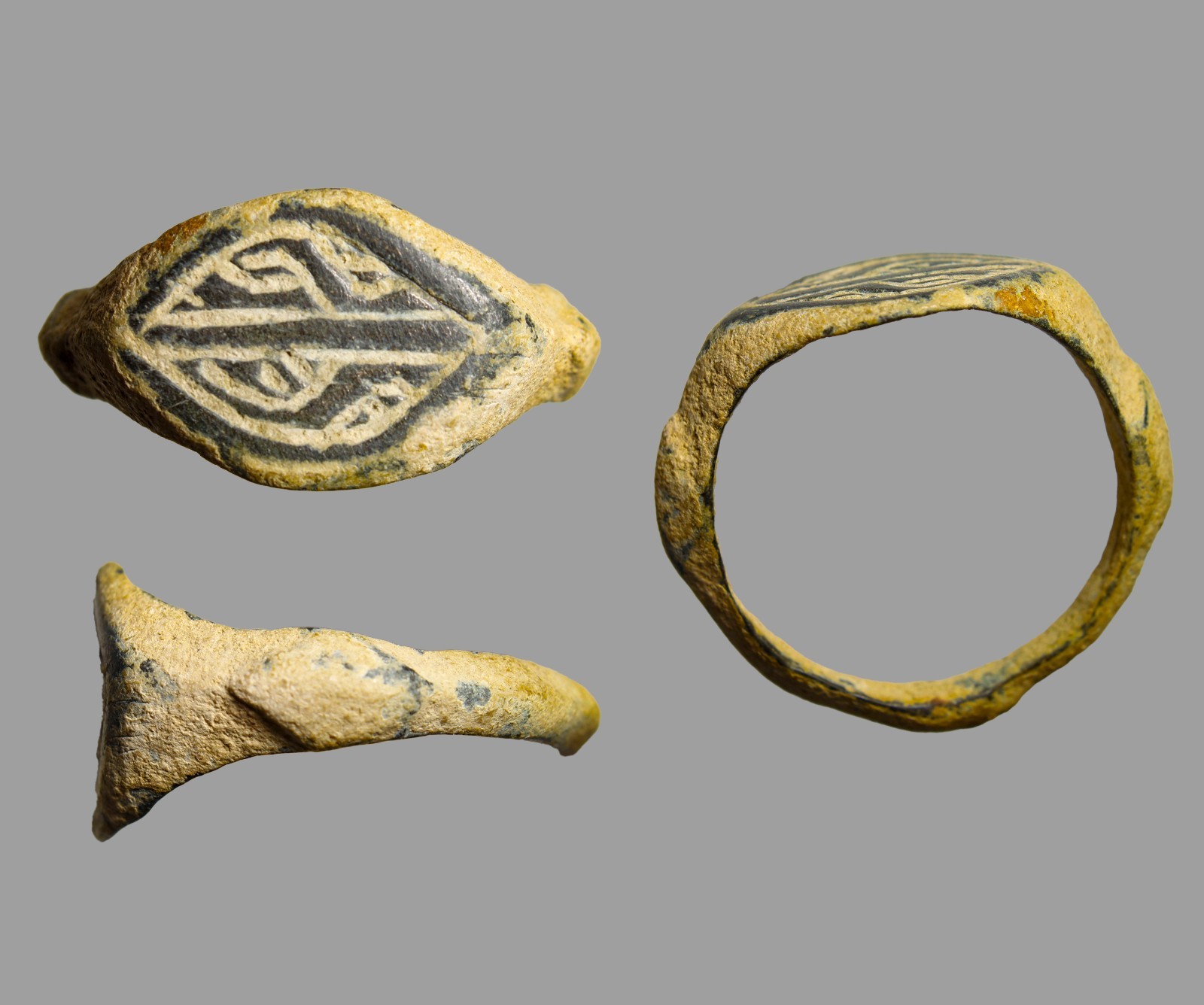
Ancient Judaean Aramaic Torah Era Signet Ring 300 BC
Authentic Ancient Artifact – Certificate of Authenticity Included
Material: Bronze
Ring Size: 6.5
Region: Judaea, Southern Levant
Date: Late Persian to Early Hellenistic Period, circa 4th–3rd century BC
Script: Imperial Aramaic with early Judaean characteristics
Description:
Ancient bronze Judaean signet ring bearing a framed inscription in early Aramaic script, the administrative and literary language of Judaea during the late Persian and early Hellenistic periods.
The engraved linear characters appear within a lozenge-shaped border, a formal presentation typical of personal seal devices. The angular, non-square letter forms are consistent with Imperial Aramaic traditions used throughout the Levant prior to the later development of standardized Jewish square Hebrew script.
In this era, Judaean religious life centered upon the Second Temple in Jerusalem and strict adherence to Torah law. Personal seals frequently bore theophoric names or short devotional formulas invoking the God of Israel. Such inscriptions served not only as legal identifiers but also as protective symbols affirming covenant identity.
Torah passages emphasize inscribed words and sacred remembrance:
“You shall bind them as a sign upon your hand.”
— Deuteronomy 6:8
Signet rings in ancient Judaea functioned as precisely such personal identifiers, marking ownership, authority, and religious affiliation. The presence of an inscribed seal ring directly reflects a literate, Torah-oriented society in which written language carried legal and spiritual authority.
Historical Context:
Following the return from Babylonian exile, Judaean society preserved Aramaic administrative script while maintaining Hebrew religious tradition. Seal rings are documented in archaeological contexts across Judaea, particularly in association with merchants, officials, and property holders.
This example represents a tangible artifact from the formative centuries of Second Temple Judaism — the religious world that later shaped Rabbinic tradition and early Biblical interpretation.
Authenticity Assessment:
Surface patination and mineralization consistent with Levantine burial conditions. Wear to shank consistent with prolonged ancient use. No visible modern casting seams or artificial tooling.
Condition:
Bezel intact with legible engraved inscription. Surface encrustation present. Structurally stable. Wearable size 6.5.
6-1