When you click on links to various merchants on this site and make a purchase, this can result in this site earning a commission. Affiliate programs and affiliations include, but are not limited to, the eBay Partner Network.
🚂 What Did It Feel Like to Actually Hold a Share of America's First Railroad?
Long before anyone spoke of "blue chip" stocks, there was the Baltimore and Ohio Railroad — the line that proved, before almost anyone else in this country, that a corporation could sell paper shares to the public and use that money to lay iron rails across mountains nobody thought a wagon could cross, let alone a machine.Holding one of these certificates in your hand is holding a small, tangible piece of that gamble — the same gamble that Baltimore's merchants and bankers made on a February afternoon in 1827 when railroads were still an unproven English experiment. This is the kind of paper that once sat in a bank vault or a broker's file cabinet on Wall Street, moved from hand to hand, endorsed and re-endorsed, and quietly recorded the fortunes of the people who believed in American rail.
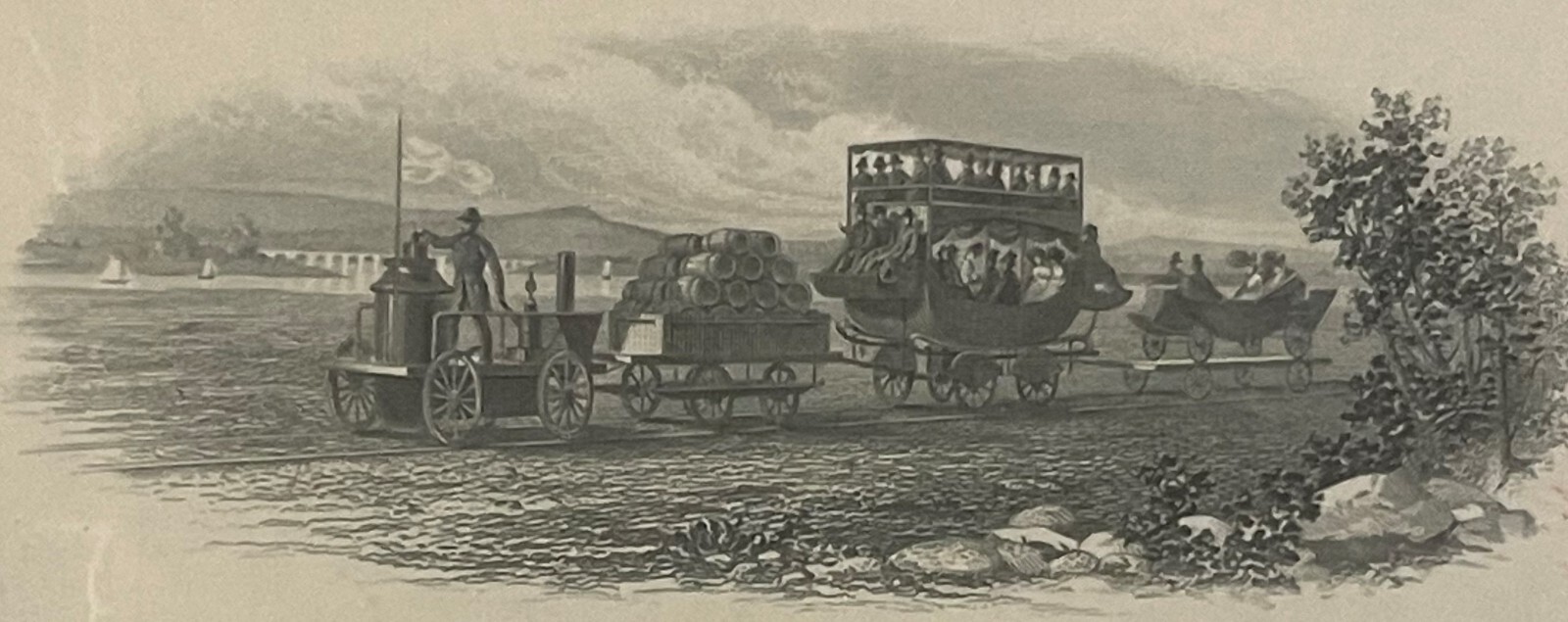
This listing is for an original green common stock certificate issued by The Baltimore and Ohio Railroad Company, engraved by International Bank Note Co. of New York and a "certificate for less than 100 shares" issue on which the exact share count varies — the example shown struck for a block of five shares at a par value of $100 each — the kind of "certificate for less than 100 shares" denomination the transfer agents used for odd-lot holdings that fell short of a full round-lot block.The certificate carries the printed corporate memory of the company's charter — "Incorporated by the State of Maryland, February 28, 1827" — a date that belongs to the railroad's founding, not to when this particular piece of engraved paper was struck; these green "less than 100 shares" B&O common stock certificates were produced across a run spanning roughly the 1930s through the 1950s, and this piece is a genuine survivor of that mid-20th-century printing.It measures 11 1/2 inches by 7 1/4 inches, printed on heavy engraved security stock in the steel-plate intaglio style banks and brokerages trusted for decades — deep olive-green guilloche borders, ornate rosette medallions in all four corners, a bold "COMMON STOCK" banner across the top, a ledger-style number column running down the right edge for the transfer clerks, and rich black cursive lettering announcing the company name across the center in the flowing script typical of Gilded Age-rooted corporate design.At the top center sits a hand-engraved vignette of the railroad's earliest days: a small steam-powered rail car with a tall smokestack, driven by a hatted operator, hauling a flatcar stacked high with barrels, trailed by a great double-deck rail coach crowded with passengers riding both inside and up on the open top deck, and a smaller open carriage bringing up the rear — all rolling along the rails beside a river dotted with sailboats, with rolling hills in the distance and a tree framing the scene.It is a snapshot, frozen in engraved steel, of the B&O in its infancy, when locomotives, horses, and experimental steam contraptions all shared the same rails.
One thing to expect from a genuine certificate like this: an original The Baltimore and Ohio Railroad Company stock certificate like this one can carry signatures and endorsements on the back, stamps from a transfer agent or registrar, tax or revenue stamps, cut or punch cancellations, staple holes, and pencil ledger marks, picked up from a transfer agent, a registrar, or a stock book along the way.That is the paper trail of a working financial instrument, part of what makes it interesting, not a flaw in it.
🛤️ The Railroad That Started It All
The Baltimore and Ohio Railroad holds a title no other American railroad can claim: it was the oldest railroad in the United States and the first common carrier to haul both passengers and freight for a fee on steam-operated rails.Chartered by the Maryland legislature on February 28, 1827 (and by Virginia the following March), the B&O broke ground on July 4, 1828, and by 1830 had opened its first stretch of track running west out of Baltimore. In those earliest years the railroad grew from a modest $3 million capital base into a genuine economic engine — by 1854 it was running 380 miles of track, carrying 19 million passenger miles a year, and turning $2.7 million in annual profit, figures that made it one of the largest and most closely watched enterprises in the young republic.
No B&O story is told without Tom Thumb, the small experimental steam locomotive built in 1829 by Peter Cooper specifically to convince the railroad's owners that steam power, not horses, was the future.It became famous for its impromptu race against a horse-drawn car — a contest steam ultimately lost that day on a technicality, but one that made its point loud enough that the B&O never looked back from steam. It's the same spirit of early experimentation captured right there in the certificate's own engraved vignette, where steam power, freight, and passengers all share the rails together in that formative decade.
⚓ Baltimore, the Port City That Bet Everything on Rail
The B&O exists because Baltimore, Maryland needed it to.The city's merchants watched New York carve out the Erie Canal and watched Philadelphia and other rivals push west, and they knew that without a route of their own into the Ohio Valley, their harbor would stagnate while trade flowed elsewhere. Rather than dig a canal, a group of Baltimore bankers and merchants gambled on the untested new technology of rail.Local histories recall that the ceremonial first stone of the line was laid in 1828 by none other than Charles Carroll of Carrollton, the last living signer of the Declaration of Independence — a striking bit of symbolism that tied the founding generation of the nation directly to the birth of the railroad age.The first thirteen miles of finished track ran from Baltimore out to Ellicott's Mills, where a horse-drawn passenger car could make the trip in about an hour and a half — a modest beginning for a railroad that would eventually stretch its rails across thirteen states.
🧑💼 The Men Who Built It
The founding of the B&O is credited to two Baltimore men, Philip E.Thomas and George Brown, who in 1826 traveled to England to study its early rail experiments firsthand before returning to organize a group of roughly twenty-five Baltimore merchants and bankers into a company. Philip Thomas became the railroad's first president, serving from 1827 to 1836, and has since been remembered by historians as "the Father of American Railways." George Brown took the treasurer's chair, and fellow Baltimorean Alexander Brown was among the railroad's earliest investors — a roster of names drawn straight from Baltimore's banking and merchant class, the same class of men whose signatures and endorsements would go on to fill certificates just like this one for well over a century afterward.
🖋️ The Craft Behind the Engraving
Look closely at the green guilloche border, the fine cross-hatching in the corner rosettes, and the crisp cursive lettering, and you're looking at the work of International Bank Note Co. of New York — one of the security printing houses licensed to produce the intricate, hand-engraved steel plates that Wall Street and the New York Stock Exchange required of listed corporations.This wasn't decorative flourish for its own sake: intricate engraving with fine repeating patterns was the era's answer to counterfeiting, since a forger would need the same steel dies and the same skilled hands to reproduce it convincingly. Certificates like this one, with their layered borders, medallions, and vignette artwork, represent that entire lost trade of the bank note engraver — a craft practiced by only a handful of specialized New York firms through the certificate era.
🌍 A Stock Traded on Both Sides of the Atlantic
By the middle of the twentieth century, B&O common stock was exactly the kind of blue-chip American holding that institutional investors around the world wanted in their portfolios.It's not unusual to find surviving B&O certificates from this era carrying the transfer stamps and endorsement signatures of Wall Street brokerage houses and major banks acting as registrars — a reminder that a share of an American railroad chartered in 1827 could just as easily change hands in a European banking house as in a New York office decades later.That international paper trail, layered onto certificates already carrying nearly a century and a half of American railroad history, is part
🔍 What Stays Constant, What Varies
Every certificate in this green B&O group is the same printed type: the odd-lot class engraved for holdings of fewer than one hundred shares, produced for the Baltimore and Ohio Railroad by the International Bank Note Company of New York. The green border and underprint, the engraved vignette of the railroad's earliest days — the tiny Tom Thumb-class steam engine, the barrel-laden flatcar, the double-deck passenger coach with horse-drawn traffic behind it — the corporate wording, and the punch-style cancellations are shared across the whole group.
What varies from certificate to certificate is exactly what was typed and stamped in at issuance: the certificate number, the typed date (these certificates run across the 1930s into the 1950s), the registered holder's name, and the precise number of shares, since this design served every odd-lot holding below one hundred.
The certificate you receive is a genuine issued-and-cancelled example of this same green type; its own typed details will be its own. That is how these survived in the first place — retired to the transfer agent's files, punched, and left untouched while the railroad that issued them rolled on toward its place on every Monopoly board in America.