When you click on links to various merchants on this site and make a purchase, this can result in this site earning a commission. Affiliate programs and affiliations include, but are not limited to, the eBay Partner Network.
- Rare
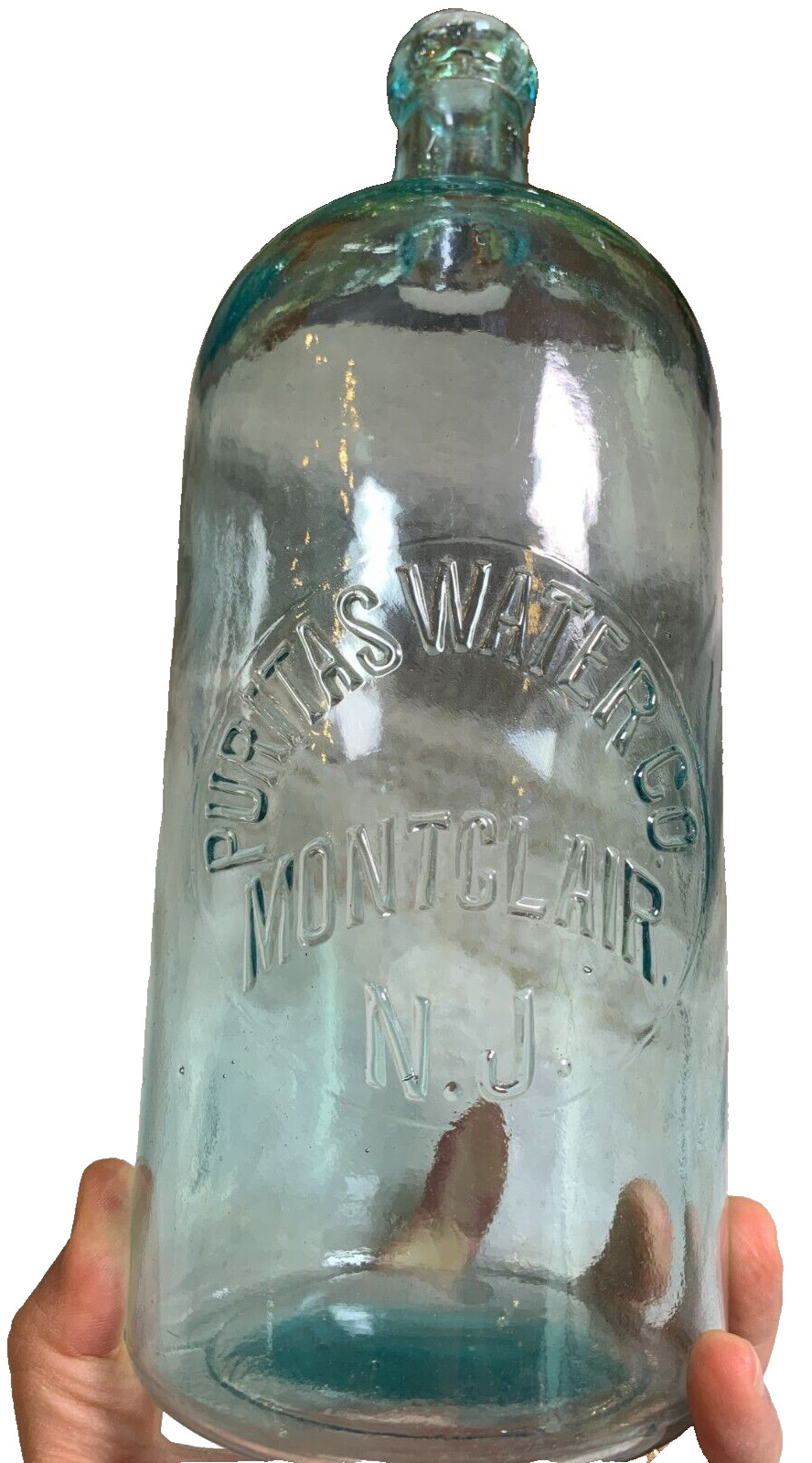
- Antique circa 1880s - Gallon
- Nice bottle; no chips, no cracks, no ghosting. Bright, clean, shiny.
- 11.25" T
Arrowhead Water1 languageToolsFrom Wikipedia, the free encyclopediaThis articleneeds additional citations forverification.Please helpimprove this articlebyadding citations to reliable sources. Unsourced material may be challenged and removed.
Find sources:"Arrowhead 2015)(Learn how and when to remove this message)ArrowheadCountryUnited StatesMarketWestern United StatesProduced byBlueTriton BrandsIntroduced1909; 115years agoSourceSan Bernardino (Ca)20.4Chloride (Cl)13.2Bicarbonate (HCO3)81.1Fluoride (F)0.1Magnesium (Mg)3.6Potassium (K)1.5Sodium (Na)11.1Sulfate concentrations in milligrams per liter (mg/L); pH without units
Arrowhead Water, also known asArrowhead Mountain Spring Water, is a brand ofdrinking waterthat is sold in thewestern United States, particularly Mexico,Northwestern United States,the Northwest, and inCalifornia. It is bottled from 13 springs throughout the Western United States.[1]
Discovery[edit]
Arrowhead Mountain Spring Water takes its name from a natural mark in theSan Bernardino Mountainsthat is shaped like a giant arrowhead. The arrowhead is naturally barren; it is not manicured in any way. Nearby cold springs onStrawberry Creekin theSan Bernardino National Forestare the original source and namesake of Arrowhead water.[2]
The first documented reference by Europeans to Arrowhead springs (Agua Caliente) was in records of priests stationed atMission San Gabriel Arcángel, around 1820.David Noble Smithwas the founder of the first sanitarium facilities atArrowhead Springsin 1863, which were used to treat patients with tuberculosis and numerous other ailments. By the 1880s, the Arrowhead waters were famous for their supposed curing powers. By the early 20th century, the hot springs were a popular resort for tourism and vacationing.
History[edit]
In 1909, The Arrowhead Springs Company was formed and the company's water products were marketed in Southern California. The water was transported from Arrowhead Springs, north of San Bernardino, California, to Los Angeles in glass-lined railroad tank cars. In 1917, the bottling operations moved to a new plant in Los Angeles. In 1929, the Arrowhead Springs Company merged with the company that marketed Puritas water, and began co-marketing the Puritas products with Arrowhead water. Puritas water products were first introduced in Los Angeles in 1894.
The Arrowhead and Puritas brands were bottled in the same plants and co-marketed until the 1970s. Arrowhead Springs marketed the brands in separate containers that sometimes carried the Arrowhead or Puritas names alone, but containers were often labeled "Arrowhead and Puritas." The Arrowhead Beverage Company was the bottler for many different brands of water and soft drinks including seltzer, fruit-flavored soda, and ginger ale.
In 1932, another important development for the company happened in the Los Angeles area, as it was named the official water refreshment of that year'sOlympic Games, held at theCity of the Stars. Arrowhead water returned to the Olympic Games again in 1984, when the games were again held in Los Angeles. In 1993, Arrowhead water bought the naming rights for theArrowhead PondinAnaheim.[3]
1.5Liter Bottle of Arrowhead. The bottle is similar to fellow Nestlé brands Deer Park, Poland Spring, and Nestlé Pure Life.The Nestlé era[edit]
In 1987, Arrowhead waters was bought byNestlé. Soon after, the presence of Arrowhead water bottles insupermarketsacross theWestern United Statesgrew considerably.
In 1996, a 24-US-fluid-ounce (710ml) bottle was introduced by the company. By the early 2000s, the company had introduced waters with different flavors to the market.It's Better Up Here!is atrademarkedtagline for the Arrowhead Waterbrand. In 2006, the label releasedAquapodunder the same brand umbrella.
Southern Californian newspaperthe Desert Suninvestigated Nestlé's bottling activities in 2015 and published findings that the water company had been operating in the San Bernardino National Forest without a permit since its last one expired in 1988.[4]Local activists and retired forest personnel began to organize opposition to the Swiss company's continued withdrawal of water from a forest that is struggling from drought and bark beetles.[5]
In December, 2017, the California Water Resources Control Board notified Nestlé that an investigation had concluded that the company does not have proper rights to about three-quarters of the water it withdraws for bottling, including water from theSan Bernardino National Forest.[6]
In April, 2021, California regulators moved to stopNestléfrom siphoning water from the forest.[7]
On September 19, 2023, California regulators ordered the company to stop using a majority of the springs they've been relying upon for the past century. Regulators stated that the company does not have the water rights and that they have drained the creek to the point where it can't sustain the wildlife that is dependent upon it.[8]