When you click on links to various merchants on this site and make a purchase, this can result in this site earning a commission. Affiliate programs and affiliations include, but are not limited to, the eBay Partner Network.
From a fourth-generation antique dealer from the Netherlands, (est. 1890), each piece is carefully selected for its authenticity, craftsmanship, and timeless character.Free worldwide shipping!
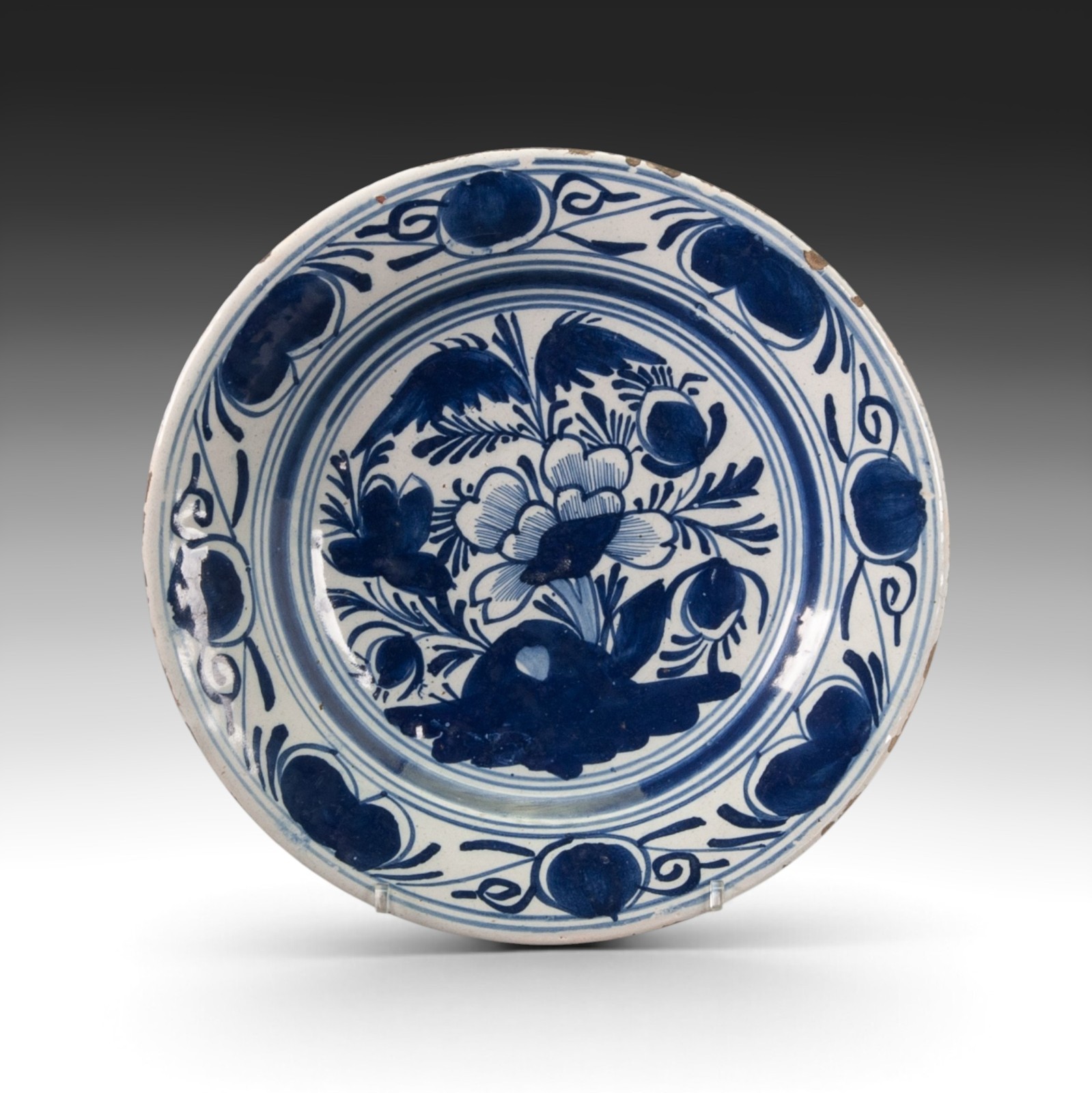
A beautiful late 18th-century Dutch Delft blue and white faience plate, hand painted in cobalt blue on a softly aged white tin-glazed ground.
The central decoration features an elegant floral arrangement with a large flower vase surrounded by blossoms, leaves and foliage. The central scene is framed by a charming decorative border of stylized flowers and scrolling foliage, creating a lively and balanced composition.
The hand-painted decoration has the characteristic spontaneity and variation of genuine antique Delftware, with fine brushwork and subtle irregularities that add to its authentic character.
Period: Late 18th centuryOrigin: Delft, NetherlandsMaterial: Tin-glazed earthenware / Delft faienceDecoration: Hand-painted cobalt blue decorationDiameter: 22.9 cm / 9.02 inches
Condition:Good antique condition for its age, with the usual signs of age and use. There is normal wear and small chips/fritting around the rim.Delftware refers to tin-glazed earthenware produced in the Netherlands, particularly in the city of Delft, during the 17th and 18th centuries. Inspired by Chinese porcelain, Delft potters developed a distinctive style characterized by a white opaque glaze decorated with cobalt blue designs, although polychrome examples were also made in the 18th century.During this period, Delft became a major center of ceramic production in Europe, exporting large quantities of wares such as plates, tiles, vases, and decorative objects. While often imitating Asian porcelain, Delftware developed its own artistic identity, featuring Dutch landscapes, floral motifs, and historical scenes.By the late 18th century, production declined due to competition from English ceramics and true porcelain, but antique Delftware remains highly valued today for its charm and historical significance.ref. I 1164