When you click on links to various merchants on this site and make a purchase, this can result in this site earning a commission. Affiliate programs and affiliations include, but are not limited to, the eBay Partner Network.
A Tiny Time Capsule from America’s Golden Mail-Order Age
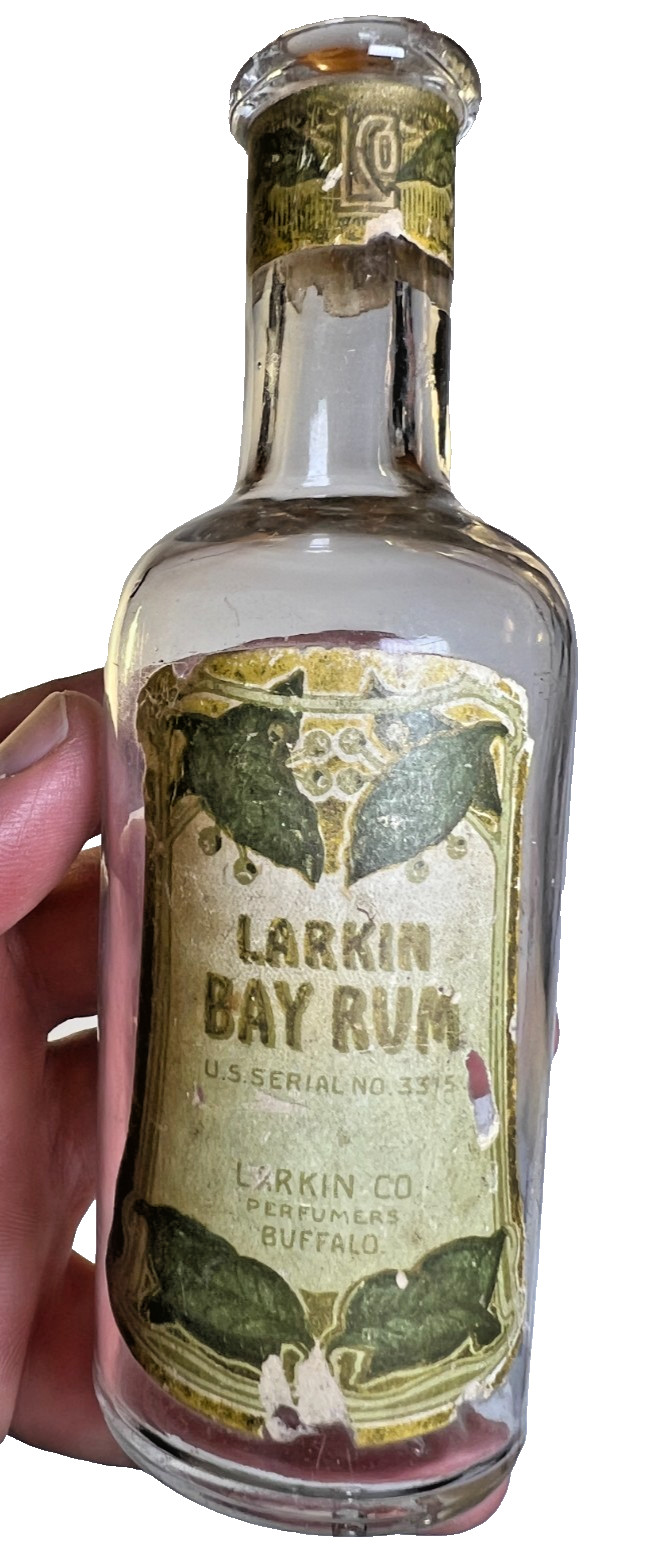
This handsome little bottle is a genuine early 20th century example of Larkin Bay Rum, produced by the famed Larkin Soap Company of Buffalo. With its surviving original Art Nouveau label, clean clear glass, and untouched antique character, it captures an era when grooming products were sold with elegance, optimism, and national ambition.
Dates most closely to approximately 1907–1915, with the strongest probability around 1910–1913.
About the Bottle
- Height: 5.75 inches
- Clear machine-made glass
- Original paper label still present
- No chips or cracks
- No haze or sickness
- Attractive compact “barber shelf” form
- Excellent display presence
The label artwork is classic Art Nouveau:
flowing vines, botanical imagery, muted greens and golds, and soft organic curves that were fashionable just before World War I transformed design tastes worldwide.
The phrase:
“U.S. Serial No.”
...helps place it into the heavily regulated early 1900s period, when federal oversight of alcohol-containing toiletries and medicinal products became increasingly standardized.
What Was Bay Rum?
Bay Rum was one of the signature masculine grooming scents of the Victorian and Edwardian periods.
Originally inspired by Caribbean recipes, Bay Rum was typically made from:
- bay leaf oil,
- rum or alcohol,
- cloves,
- cinnamon,
- citrus oils,
- aromatic spices.
Men used it:
- after shaving,
- as hair tonic,
- as cologne,
- as a refreshing skin splash.
For decades, American barbershops smelled unmistakably of Bay Rum. A bottle like this would likely have sat near:
- shaving mugs,
- straight razors,
- talcum tins,
- badger brushes,
- and steaming hot towels.
The Maker — The Larkin Company
Larkin Soap Company was one of the great commercial success stories of turn-of-the-century America.
Founded by John Durrant Larkin, the company became famous for pioneering:
- direct-to-home mail-order sales,
- customer rewards programs,
- branded household goods,
- premium giveaways.
Long before modern online retail, families across America ordered:
- soaps,
- perfumes,
- toiletries,
- spices,
- furniture,
- china,
- silverware,
- decorative home goods
through beautifully illustrated Larkin catalogs.
Their famous “premium” system rewarded loyal buyers with free merchandise — essentially an early precursor to reward points, loyalty programs, and even modern subscription commerce.
At its height, Larkin employed thousands and helped transform Buffalo into a booming industrial powerhouse.
Buffalo, New York During This Era
Around the time this bottle was made, Buffalo was one of America’s fastest-growing and wealthiest cities.
Major developments of the era included:
- rapid electrification powered by nearby Niagara Falls,
- expansion of railroads and Great Lakes shipping,
- enormous factory growth,
- luxury department stores,
- streetcar systems,
- and rising middle-class consumer culture.
The city still carried prestige from the monumental:
Pan-American Exposition
held only a few years earlier.
Buffalo in the 1910s was a fascinating blend of:
- horse-drawn wagons,
- early automobiles,
- gaslights,
- electric lights,
- Victorian customs,
- and emerging modern industry.
This bottle was made during a period when America genuinely believed the future would only become grander, cleaner, faster, and more refined.
Life in America When This Bottle Was Sold
This little bottle existed during an extraordinary transitional period in American life.
During its era:
- William Howard Taft and later Woodrow Wilson occupied the White House.
- Airplanes were still astonishing novelties.
- Most families heated homes with coal or wood.
- Refrigeration was primitive or nonexistent in many homes.
- Indoor plumbing was becoming common but not universal.
- Men routinely visited barbers multiple times per week.
- Grooming products symbolized sophistication and social respectability.
Depending on the exact year, this bottle may have existed:
- before the sinking of the Titanic,
- before World War I,
- before Prohibition,
- and before radio became widespread entertainment.
That is a staggering amount of history packed into one small toiletry bottle.
Condition Notes
What elevates your example above average:
- Strong surviving original label
- Clean glossy glass
- Excellent readability
- No haze or staining
- No chips or cracks
- Honest antique wear without over-restoration
- 5.75" T
Most surviving examples lost their labels long ago or suffered bathroom/storage damage. The survival of the graphics is what gives this bottle much of its collector appeal.