When you click on links to various merchants on this site and make a purchase, this can result in this site earning a commission. Affiliate programs and affiliations include, but are not limited to, the eBay Partner Network.
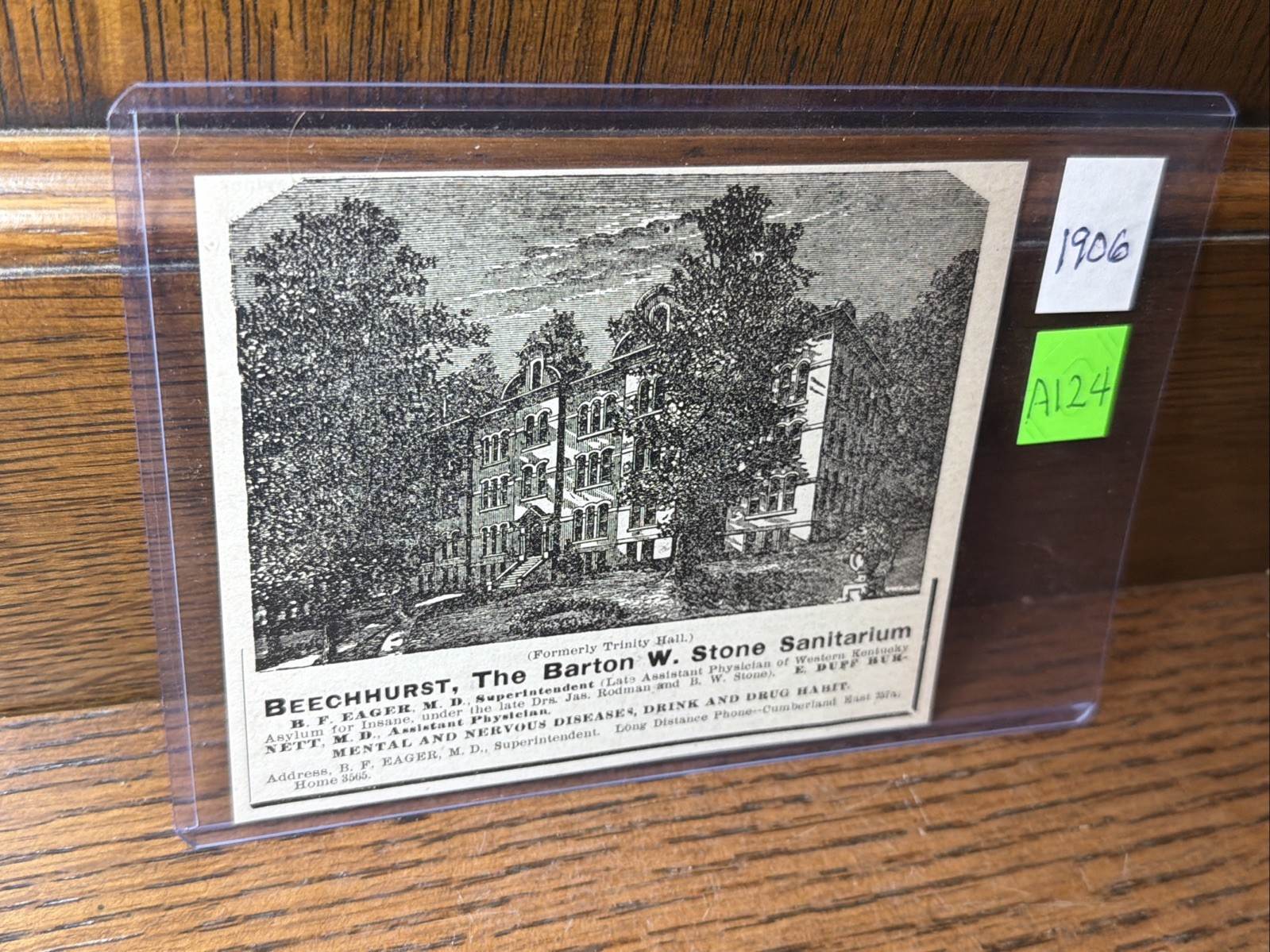
Antique 1906 Beechurst Barton W. Stone Sanitarium AdvertisementDr Doolittle Ment Insane Home Picture Ad Original Paper Advertisement from a medical Magazine for Doctors
Size Ad - 4 3/4" Wide x 4" Tall
Includes Clear Plastic Protective SleeveThe item will be packaged carefully and securely shipped for a safe delivery
ConditionAd is in Nice condition. Please see pictures.Please see pictures for the condition.Thanks, for looking!
Unfortunately, the Great Depression in the 1930s led to a decline in paying patients, forcing the sanitarium to close in 1937. The building was later demolished to make way for new asylums have a long, unsavory history — but they weren’t originally intended as sites of horror.The origins of mental asylums — an antiquated and loaded term that is now retired from the field of mental health medicine — came from a wave of reforms that professionals tried to enact in the 19th century.These facilities catered to mentally ill people with treatments that were supposed to be more humane than what was previously available. But mental health stigmatization coupled with an increase in diagnoses led to severely overcrowded hospitals and increasingly cruel behavior toward patients.These “insane asylums” subsequently turned into prisons where society’s “undesirable citizens” — the “incurables,” criminals, and those with disabilities — were put together as a way to isolate them from the public.Patients endured horrifying “treatments” like ice baths, electric shock therapy, purging, bloodletting, straitjackets, forced drugging, and even lobotomies — all of which were considered legitimate medical practices at the time. It wasn’t until the terrifying conditions at these mental health facilities were revealed through undercover investigations and patient witnesses that they were brought to light.Given the severe overcrowding, patients were no longer given private rooms of their own and shared a single bedroom with five to six other patients. There were not enough beds and there was no heating system. Patients deemed unruly were locked in cages in the open halls, a cruel means to regain order by the staff while freeing up space in the bedrooms for less troublesome patients.Patients at the hospital were locked up, neglected, and lobotomized.The staff was vastly outnumbered and overworked, which led to chaos in the halls as patients roamed free with little supervision. The facilities were overrun with squalor, the wallpaper was torn, and the furniture was grimy and dusty. Much like the facilities, the patients were no longer cared for frequently and sometimes even went without treatment or food.In addition to the facility’s declined sanitation and patient care, a new horror reared its head: an experimental lobotomy laboratory run by Walter Freeman, the infamous surgeon who was a top proponent of the controversial practice.His “ice pick” method involved slipping a thin pointed rod into the patient’s eye socket and using a hammer to force it to sever the connective tissue in the brain’s prefrontal cortex.