When you click on links to various merchants on this site and make a purchase, this can result in this site earning a commission. Affiliate programs and affiliations include, but are not limited to, the eBay Partner Network.
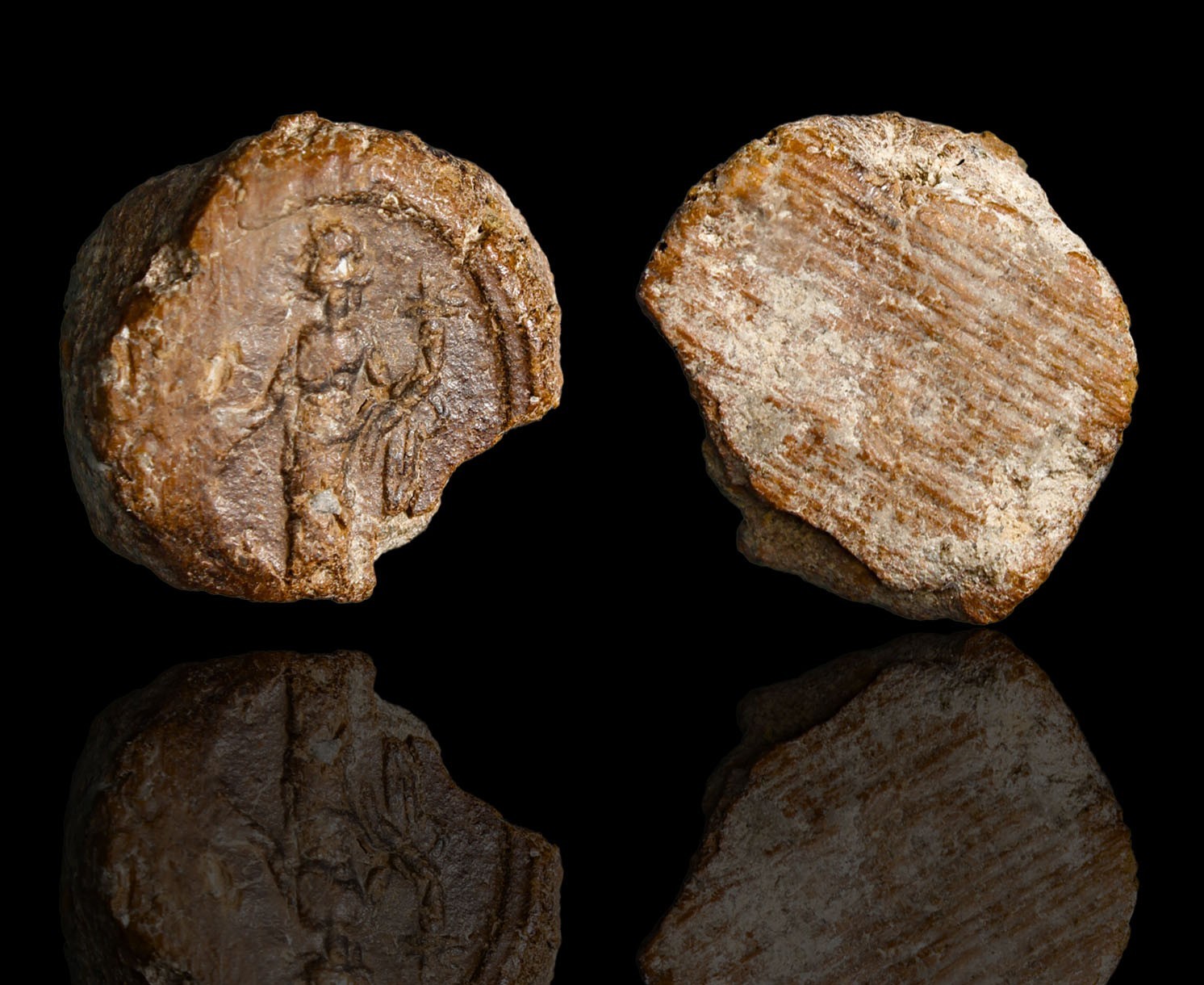
Premium Hellenistic Terracotta Tessera with Tyche-Fortuna (Circa 3rd–2nd Century BC) 11mm Authentic
Authenticity Notice
This artifact is certified authentic and will be accompanied by a Certificate of Authenticity and Provenance.
Details
Object: Clay Tessera / Token / Bulla
Culture: Hellenistic (Seleukid Influence)
Date: Circa 300–100 BC
Material: Terracotta (Fired Clay)
Form: Small discoid token with a high-relief stamped impression
Size: 11mm
Region: Near East / Levant
Iconographic Analysis: Tyche and the Cornucopia
This 11mm terracotta tessera (referenced in file 11_3.jpg) features a detailed classical figure central to Hellenistic civic identity.
The Figure: The impression depicts a standing female deity, identified as Tyche (the Roman Fortuna).
The Stance: She is shown in a classical contrapposto stance, draped in a heavy chiton and himation.
The Attributes: She holds a large Cornucopia (Horn of Plenty) in her left arm, symbolizing the prosperity and abundance of the city.
The Reverse: The back of the token shows linear "string marks" or fabric impressions, indicating use as a bulla or administrative sealing.
Overview and Historical Context
In the Hellenistic world, terracotta tesserae were indispensable for urban administration. Tyche was the "City-Soul," and major Hellenistic centers utilized her image on tokens to serve as proof of identity, permits for state-distributed goods, or admission to civic events. An 11mm piece with such a clear, regal figure suggests an official administrative origin, likely used within a major provincial capital or temple complex.
Authenticity Check
Surface Patina: The clay displays a stable, aged "chocolate" to "ochre" hue with localized earthen calcification settled into the recesses.
Material Aging: There is microscopic surface "crazing" and characteristic chipping on the edges consistent with ancient fired terracotta.
The Impression: The strike exhibits the "softened" edges characteristic of an ancient bronze seal-matrix rather than a modern reproduction.
Comparable Examples
The British Museum, London: Collection of Hellenistic clay sealings and tokens.
The Israel Museum, Jerusalem: Hellenistic-era tokens and tesserae featuring Tyche-Fortuna.
The Met, New York: Accession No. 81.6.216 (Hellenistic terracotta tokens and sealings).
Further Reading
Meshorer, Ya'akov – City-Coins of Eretz-Israel and the Decapolis: Regarding the iconography of Tyche in the Hellenistic Levant.
Condition
Excellent archaeological condition. The terracotta is structurally sound and fired hard. The central figure of Tyche is remarkably well-preserved and remains highly legible under a natural, museum-grade patina.
7-9