When you click on links to various merchants on this site and make a purchase, this can result in this site earning a commission. Affiliate programs and affiliations include, but are not limited to, the eBay Partner Network.
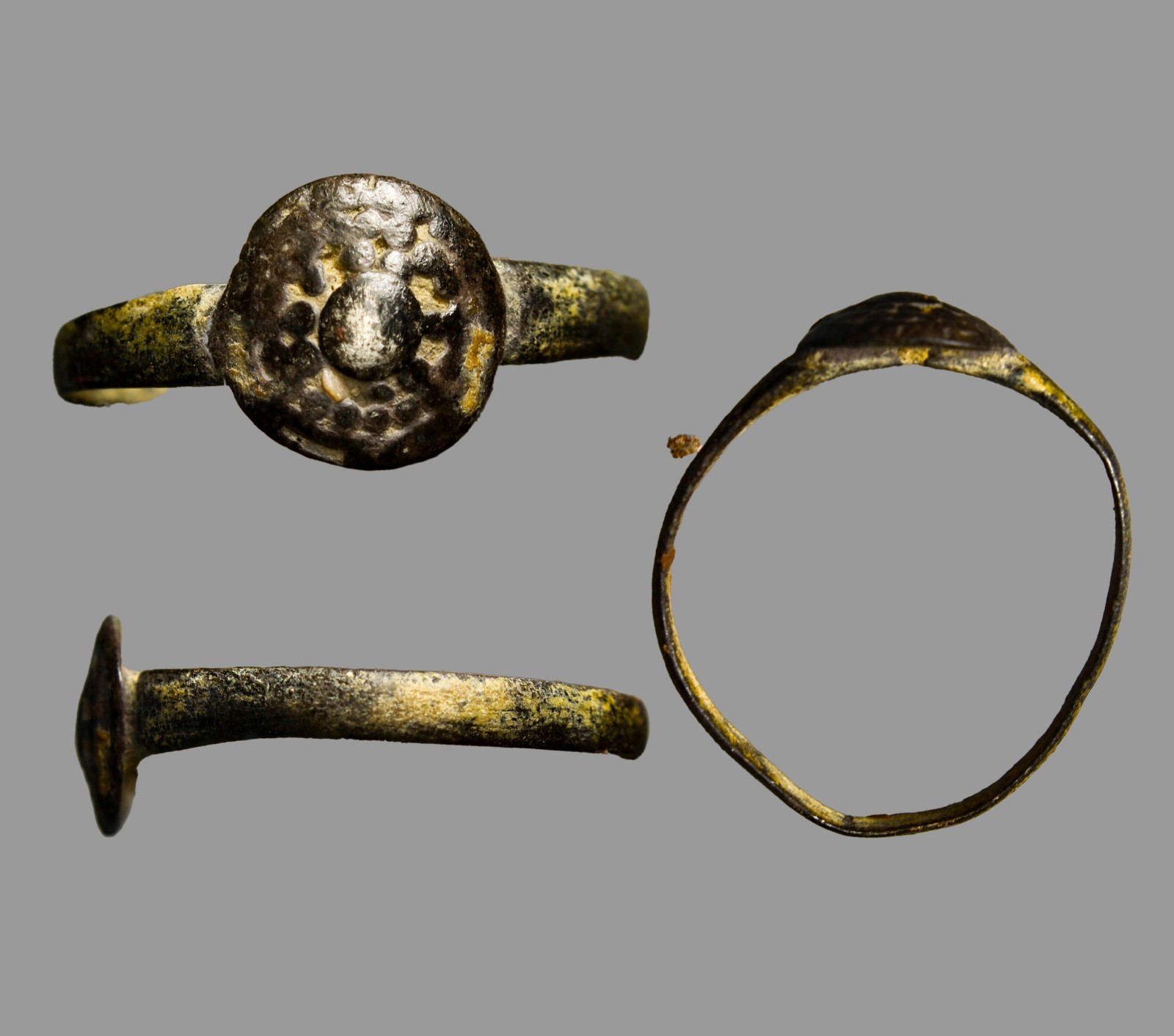
Crusader Holy Land Solid Silver Knights Templar Shield Boss / Buckler Heraldic Signet Ring (Circa 11th–13th Century AD) US Size 7 Authentic
Authenticity Notice
This artifact is certified authentic and will be accompanied by a Certificate of Authenticity and Provenance. All professional inventory is vetted through recognized platforms to ensure legal standing.
Details
Object: Solid Silver Heraldic Shield Boss / Buckler Signet Ring
Culture: Crusader Period Holy Land Medieval European
Date: Circa 1096–1291 AD
Material: Solid Silver
Form: Round convex bezel modeled after a medieval knight\'s round shield / buckler with a prominent central boss surrounded by a ring of punched pellet studs, set on a slender tapering band
Ring Size: US Size 7
Region: Levant Holy Land Jerusalem Crusader States
Iconographic & Typological Analysis
This US Size 7 solid silver signet ring is an extraordinary Crusader-era artifact displaying military heraldic iconography from the Holy Land.
The circular convex bezel is explicitly designed in the form of a medieval knightly buckler or shield boss (umbo). At the center rises a bold, raised central boss, encircled by a ring of deeply punched pellets representing the iron rivets and steel reinforcement studs of medieval combat shields. In Crusader military culture—particularly among military orders like the Knights Templar and Hospitaller—imagery of armorial shields and defensive armor symbolized personal honor, chivalric martial virtue, and divine military protection.
During the 12th and 13th centuries in the Latin Kingdom of Jerusalem, silver rings were prized personal possessions carried by noble knights, commanders, and high-ranking pilgrims. Unlike common bronze signets, solid silver jewelry represented significant material wealth and personal standing across Outremer.
Cast in solid silver, the raised, studded shield face provided both a striking martial aesthetic and a functional heraldic mark when pressed into sealing wax.
Overview and Historical Context
In the military orders and chivalric armies of Crusader Jerusalem, armorial jewelry served as a primary emblem of rank and faith. Rings incorporating miniature shield bosses and military stud patterns reflected the martial atmosphere of 12th–13th century Outremer, where knights and commanders maintained close connections to their armorial traditions. Finding a solid silver ring modeled after a knightly buckler with its punched rivet details so well preserved provides a compelling link to the military culture of Crusader Jerusalem.
Authenticity Check
Displays a deep, rich dark grey silver-sulfide horn-silver patina across the entire band and bezel, accented by pale cream-colored earthen caliche deposits adhering around the raised central boss and ring of punched studs.
Authentic silver micro-crystallization, minor surface pitting, and natural ancient band wear consistent with over seven hundred years of burial in Levantine soil.
Solid ancient silver casting showing authentic hand-punched pellet work and subtle organic asymmetry along the band.
Comparable Examples
The Israel Museum, Jerusalem: Accession No. IAA 1998-412 (Collection of Crusader period silver personal signet rings and military fittings from the Holy Land).
The British Museum, London: Accession No. 1856,0701.2180 (Medieval silver shield-shaped and heraldic signet rings from Crusader sites).
The Victoria and Albert Museum, London: Accession No. M.118-1928 (Crusader and medieval European silver armorial rings).
Superior archaeological condition. Completely intact, solid, and fully wearable. The central shield boss and surrounding rivet studs remain crisp and defined under a rich, authentic aged silver patina.
2-2