When you click on links to various merchants on this site and make a purchase, this can result in this site earning a commission. Affiliate programs and affiliations include, but are not limited to, the eBay Partner Network.
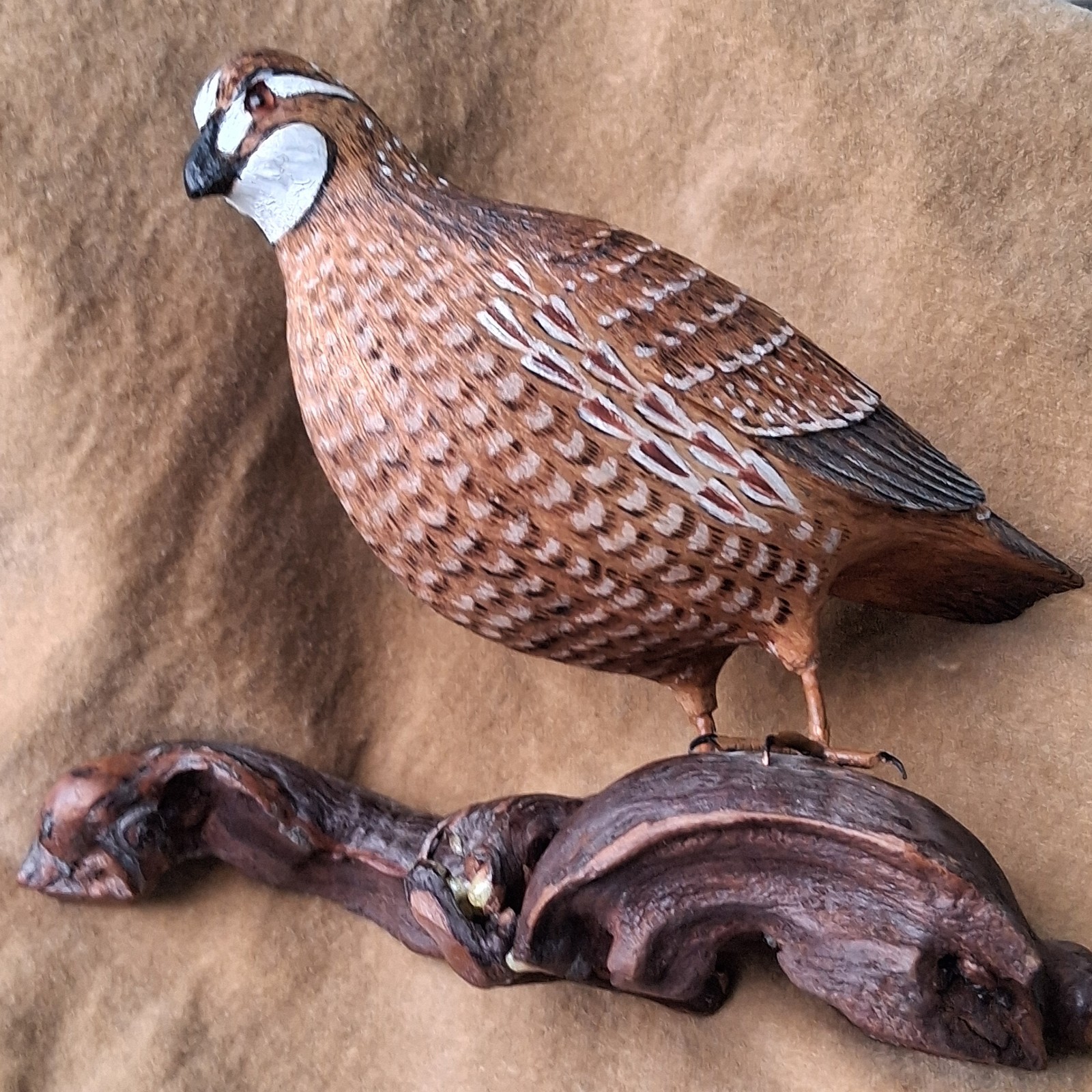
Based on the signature in the photo, the artist is named N. Zempel, and the carving is dated from 2002 (02). This is an original hand-carved, wildlife folk art piece created out of raw wood (likely burl wood, root wood, or driftwood). Carvings of this specific style from N. Zempel usually depict ducks, decoys, or other native North American birds. The artist utilizes the natural, twisting form of the wood to give the base of the sculpture its distinctive, organic character.
The bird is small - about 5.5 inches long and about 2 inches at the belly to top of the wing. About 2 inches wide. 5 inches tall with branch. Branch is 6 inches long.
This beautiful sculpture by N. Zempel is a highly detailed carving of a male Northern Bobwhite Quail (Colinus virginianus). The sculpture beautifully showcases the signature markings of a male bobwhite, including the crisp white throat patch, the bold white stripe running above the eye, and the highly intricate, reddish-brown scalloped feather patterns painted across its body. The artist meticulously carved and textured each feather layer before hand-painting the plumage, mounting the bird onto a twisting, natural piece of burl wood or root wood.
Visual Details of the PieceSpecies: Male Northern Bobwhite Quail (identifiable by the bright white and black facial markings, whereas females feature buffy-yellow throats).
Base: Natural, highly polished burl or root wood base, selected to mimic the bird\'s natural forest-floor or brush habitat.
Technique: Fine-detailed wildfowl carving featuring realistic glass eyes, individual feather texturing, and realistic scale detailing on the legs.
Flaw: One of the added feet is missing. The leg fits into a hole on the base so the sculpture is sturdy and the missing foot is hardly noticeable.
This is a handcrafted wooden carving of a male Northern Bobwhite Quail, meticulously hand-painted with detailed acrylic feather patterns and mounted on a piece of natural driftwood.
Subject: Male Northern Bobwhite (Colinus virginianus) identifiable by its characteristic white throat patch and bold white supercilium stripe bordered by black.
Craftsmanship: Features textured relief or comb-painted feather detailing characteristic of traditional wildfowl and decoy carving art, mounted on an organic, weathered wood base.
The fair market value for this handcrafted bird sculpture by N. Zempel (dated 2002) is estimated between $50 and $150.
Value Breakdown
Folk Art Market Price: Hand-carved and painted Bobwhite Quail figurines generally sell in the $30 to $100+ range depending on condition and detail.
The Artist Premium: The piece is cleanly inscribed with the artist\'s signature \"N. ZEMPEL\" and dated \"02\" (2002). Signed and dated contemporary folk art or regional woodcarvings command a higher premium than mass-produced or anonymous decor.
The Base: Mounting carvings onto a custom, free-form piece of natural driftwood enhances visual appeal and elevates the value toward the higher end of the spectrum.
What Determines Value
If you are planning to buy or sell this piece, the final price will heavily depend on:
Condition: Check closely for any chips in the fragile beak or tail feathers, paint fading, or loose mounts.
No chips
No paint fading.
N. Zempel is a contemporary regional American folk artist and woodcarver who specializes in realistic wildfowl, songbirds, and wildlife sculptures.
Artistry & Profile
Niche Focus: The artist is best known within independent decoy-carving, folk-art circles, and wildlife art shows for hand-carved bird figurines (such as quail, ducks, and songbirds) mounted exclusively onto natural driftwood or burl bases.
Signature Style: Pieces are consistently incised by hand into the raw wooden bases with the distinct all-caps signature \"N. ZEMPEL\" and a two-digit year designation (e.g., \"02\" for 2002).
Technique: Zempel utilizes a combination of fine wood-burning and meticulous, textured acrylic paint layers to realistically recreate individual feather groups, blending traditional hunting decoy methods with decorative fine-art display.
Because independent folk artists frequently sell their work locally, at regional midwestern craft showcases, or through custom commissions rather than major commercial galleries, digital archives or sale catalogs for their specific biography remain quite scarce.