When you click on links to various merchants on this site and make a purchase, this can result in this site earning a commission. Affiliate programs and affiliations include, but are not limited to, the eBay Partner Network.
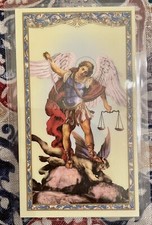
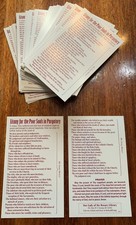
Laminated Holy Card of Blessed Titus Brandsma Plus a Brown Scapular of O.L. of Mount Carmel andInformational Pamphlet on Its Use In Its OwnPackage. Condition is \"New\". Shipped with USPS First Class.
BROWN SCAPULAR
Receive this Scapular, a sign of yourspecial relationship with Mary, the Mother of Jesus, whom you pledge to imitate.May it be a reminder to you of your dignity as a Christian, in serving othersand imitating Mary. Wear it as a sign of her protection and of belonging to theFamily of Carmel, voluntarily doing the will of God and devoting yourself tobuilding a world true to his plan of community, justice and peace.
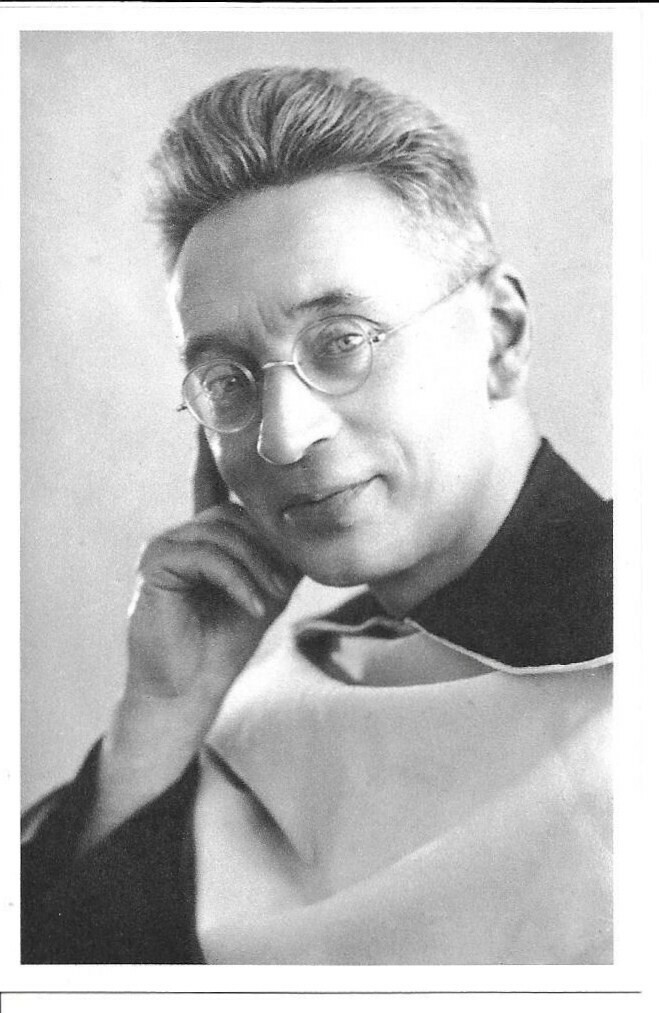
Blessed Titus Brandsma, was a Dutch Carmelite friar, Catholic priest and professor of philosophy. Brandsma was vehemently opposed to Nazi ideology and spoke out againstit many times before the Second World War. He was imprisoned in the infamousDachau concentration camp, where he was murdered. He has been beatifiedby the Roman Catholic Church as a martyr of the faith.
Brandsma was born Anno Sjoerd Brandsma to Titus Brandsma (died 1920) and his wife Tjitze Postma(died 1933) at Oegeklooster, near Hartwerd, in the Province of Friesland, in 1881. His parents, who ran a small dairy farm, were devout and committedCatholics, a minority in a predominantly-Calvinist region. With the exceptionof one daughter, all of their children (three daughters and two sons)entered religious orders.
From the age of11, Brandsma pursued his secondary studies in the town of Megen, at Franciscan-run minor seminary for boys considering a priestly or religious vocation.
Brandsma Enteredthe novitiate of the Carmelite friars in Boxmeer on 17 September 1898,where he took the religious name Titus (in honor of his father) by which he is nowknown. He professed his first vows in October 1899.
Ordained a priestin 1905, Brandsma was knowledgeable in Carmelite mysticism and was awardeda doctorate of philosophy at Rome in 1909. From 1909 to 1923 he lived inOss and worked as a writer and teacher. From 1916 on, he initiated and led a projectto translate the works of Teresa of Ávila into Dutch. In 1919 hefounded,and for two years acted as head of a secondary school in Oss—the present dayTitus Brandsma Lyceum.
In 1921 Brandsmaworked to resolve a controversy concerning Belgian artist Albert Servaes\' depiction of the Stations of the Cross. From this came his series of meditationson each of the 14 stations.
One of the foundersof the Catholic University of Nijmegen (now Radboud University),Brandsma became a professor of philosophy and the history of mysticism at the schoolin 1923. He later served as Rector Magnificus. He was noted for his constantavailability to everyone, rather than for his scholarly work as a professor. Brandsma also worked as a journalist and was the ecclesiastical adviserto Catholic journalists by 1935. That same year he traveled for a lecturetour of the United States and Canada, speaking at various institutions ofhis Order. On the occasion of his visit to a Carmelite seminary in Niagara Falls, Ontario, Brandsma wrote of the falls, \"I not only see the riches ofthe nature of the water, its immeasurable potentiality; I see God working in thework of his hands and the manifestation of his love.\"
After the invasionof the Netherlands by the Third Reich in May 1940, Brandsma Long-term fight against the spread of Nazi ideology and for educational and pressfreedom brought him to the attention of the Nazis.
In January 1942he undertook to deliver by hand a letter from the Conference of DutchBishops to the editors of Catholic newspapers in which the bishops ordered them notto print official Nazi documents, as was required under a new law by the Germanoccupiers. He had visited fourteen editors before being arrested on 19 Januaryat the Boxmeer monastery.
After being heldprisoner in Scheveningen, Amersfoort, and Cleves, Brandsma was transferred tothe Dachau concentration camp, arriving there on 19 June. His health quickly gaveway, and he was transferred to the camp hospital. He died on 26 July 1942,from a lethal injection administered by a nurse of the Allgemeine SS, as part oftheir program of medical experimentation on the prisoners.[
Brandsma is honoredas a martyr within the Roman Catholic Church. He was beatified in November1985 by Pope John Paul II. His feast day is observed within the CarmeliteOrder on 27 July.