When you click on links to various merchants on this site and make a purchase, this can result in this site earning a commission. Affiliate programs and affiliations include, but are not limited to, the eBay Partner Network.
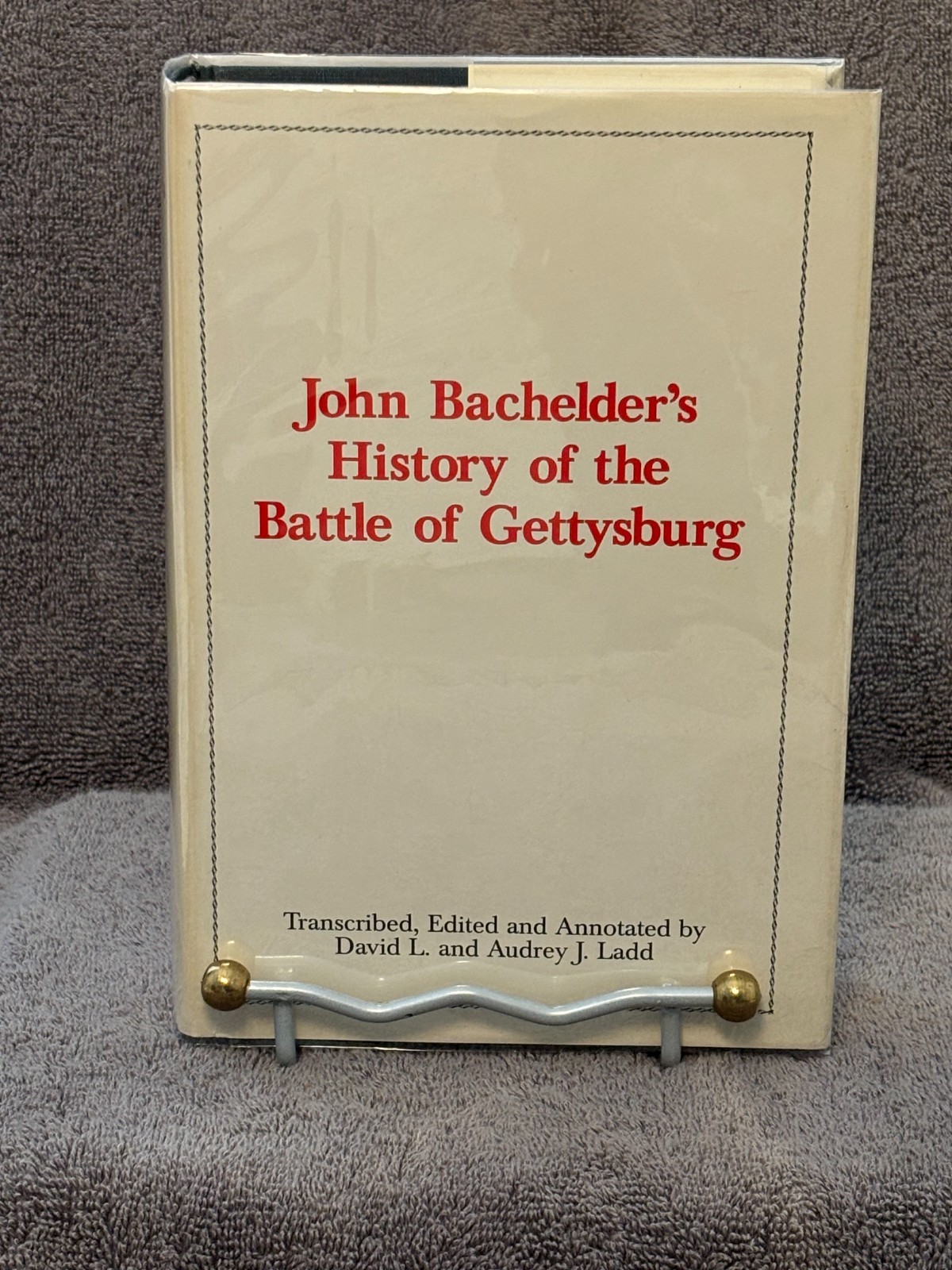
John Bachelder's History of the Battle of Gettysburg, published in 1977, is a valuable piece of original work focusing on the Civil War period. Focused on militaria, this book provides a detailed account of the historic battle of Gettysburg, making it a sought-after collectible for history enthusiasts and collectors. The book serves as a valuable resource for those interested in the military aspects of the Civil War, particularly the United States perspective on the conflict.
"As other reviewers have rightly pointed out, Bachelder is the guru on everything Gettysburg. His name stands out among a great many men, including Dan Sickles, who endeavored to make sure the American people never forget what happened in Gettysburg in June and July of 1863. Bachelder's role in making Gettysburg a Mecca for all those interested in the Civil War is an interesting subject in its own right. This book is a compilation of reports, and extracts of reports, selected by Bachelder that were written during the Gettysburg campaign by important players on both the Union and Confederate sides. Most of these reports are excerpts taken from the Official Records of the War of Rebellion (OR), but Bachelder lays them out in chronological order to walk you through the Gettysburg campaign, on a day-by-day basis. This isn't a book for those not already familiar with the battle of Gettysburg. It is really something for students of the battle that want to get into the 'nitty gritty' of what was happening, what information both sides knew about each other, and when they knew it. David and Audrey Ladd have done an excellent job transcribing, editing and annotating Bachelder's work. My only 'complaint' about this work is the same one that I have with nearly every book that I read on Civil War battles. The book needs many more maps showing locations, terrain, roads and troop movements, placed on or near the pages where the information is discussed. Even to readers familiar with the Gettysburg campaign, you must have good maps available to you, as you read the book. Detailed period maps are best, since they show names, places and routes, as they were when the events took place. Without such maps, it fast becomes confusing when you try to follow along."
842 pages, printed by Morningside House, Inc. in 1997; this edition Transcribed, Edited and Annotated by David L. and Audrey J. LaddLOCATION: SR-C