When you click on links to various merchants on this site and make a purchase, this can result in this site earning a commission. Affiliate programs and affiliations include, but are not limited to, the eBay Partner Network.
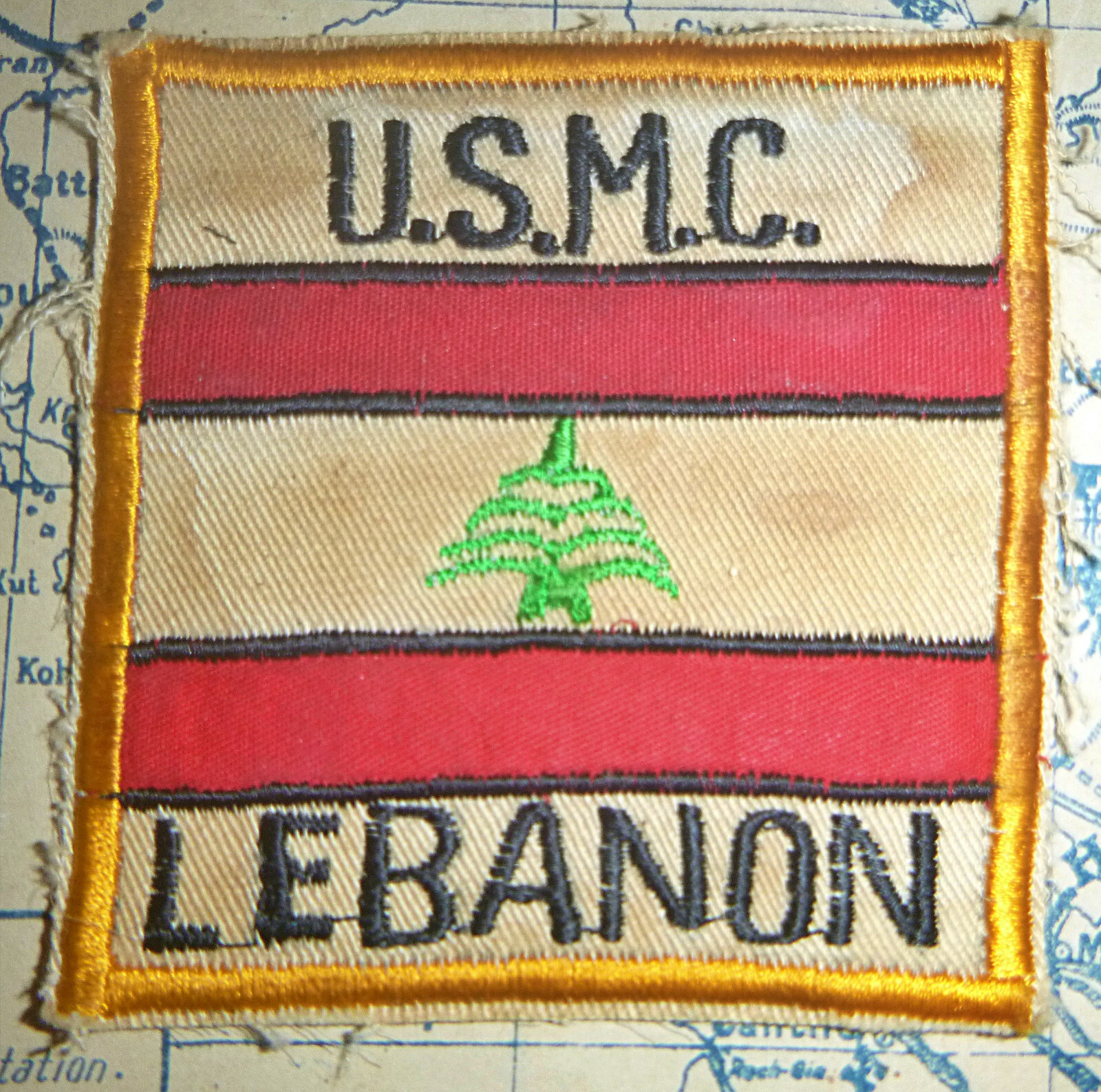
USMC Patch - Patch - United States Marine Corps - 1980\'sLebanon Tour - Original 1980\'s PatchMultinational Force - MNF - Peacekeepers - 1982 - 1984Measures - 3.2 x 3 inches (8 x 7.5 cms) - One Only AvailableNote From members in relation to this piece;
Patrick,This was made to be worn on civilian jackets or caps and sold by a surplus store outside of USMC Base Camp Lejeune, North Carolina, home base to those who deployed to Lebanon.
I think that they began showing up a few years later, mid- to late-1980s. I have one or two myself. Mine would\'ve been bought at a military surplus store in Jacksonville, North Carolina, called Saigon Sam\'s (still in business). As we all deployed from neighboring Camp Lejeune, the city has always remembered us. The Beirut Memorial, listing the names of those killed in the attack on our headquarters (it wasn\'t a barracks) and those killed during other combat there, is a focal point for us, and a memorial service is held there every October 23. Every five years, hundreds of veterans and families of those killed come in greater numbers.
Life Member, Beirut Veterans of AmericaUSMC - Lebanon
The history of the United States Marine Corps (USMC) in Lebanon is primarily centered around two key military interventions during the 1980s. These missions were influenced by Lebanon\'s complex civil war, regional tensions, and U.S. foreign policy objectives.
First Deployment (1958)
The first significant involvement of the USMC in Lebanon occurred in 1958. This deployment was part of Operation Blue Bat, aimed at stabilizing the Lebanese government amid fears of a coup by pro-Nasserist forces. Around 14,000 Marines landed in Lebanon to support the Lebanese government and ensure the safety of American citizens. The intervention lasted several months, ultimately helping to restore some stability before U.S. forces withdrew.
Second Deployment (1982-1984)
The second and more notable intervention occurred during the Lebanese Civil War. In 1982, Israel invaded Lebanon to expel the Palestine Liberation Organization (PLO), leading to a complex situation. The U.S. sought to stabilize the country and support the newly elected Lebanese government of President Bashir Gemayel.
Multinational Force (MNF): The U.S. Marines were part of a larger Multinational Force that included French, Italian, and British troops. The Marines landed in Beirut in August 1982, primarily to facilitate the PLO\'s withdrawal and maintain peace.
Challenges: The Marines faced numerous challenges, including sectarian violence, hostility from various factions, and the overarching instability of the region. Despite their initial mission of peacekeeping, the situation deteriorated.
Beirut Barracks Bombing: The most tragic event during this deployment occurred on October 23, 1983, when a suicide bomber drove a truck loaded with explosives into the Marine barracks in Beirut, killing 241 U.S. service members. This attack marked a significant turning point in U.S. involvement in Lebanon.
Withdrawal: Following the bombing and increased violence, the U.S. military began a phased withdrawal from Lebanon in early 1984. By February, all U.S. Marines had left the country.
Command Control, North, South, Central, MACV,Special Forces, SOG, Special Op’s, Special Operations Group, 5 th SpecialForces, Army Security Agency, Military Intelligence, Psy-Ops, US Army, DeOppresso Liber, Airborne, 1 st Special Forces, CIDG, Mike Force, MobileGuerrilla Force, Mobile Strike Force, Operations Detachment, Provincial ReconUnit, Recon Teams, RT, USMC, United States Marine Corps, Vietnam War, WWII,WWI, French Indochine War, French Foreign Legion, Legion Etrange, ProjectOmega, Recondo School, Rapid Fire, Project Delta, Special Missions AdvisoryForce, Project Gamma, Project Sigma, Indigenous Troops, MACV-SOG, CCC, CCS,CCN, USARV, SMAG, TAG, Field Training Command, Recon Team Leader, US Navy, AirForce, AATTV, Long Tan, Nui Dat, AAFV, ATF, New Zealand V Force, Big Red One,1st Infantry Division, 1st Cavalry Division, Tropic Lightning, 25th InfantryDivision, Subdued, Patch, Patches, Uniform, Helmet, Flash, Beret, Arc, Tab, 101st Airborne Division, 82nd Airborne, 173rd Airborne, Combat, Militaria, Medal,Badge, Map, 199th Infantry Brigade, Old Ironsides, 5th Infantry Division, MAAG,USARPAC, XXIV Corps, 23rd Infantry Division, Americal, 38th Infantry Division,Black Op’s, Clandestine, Non-Conventional Warfare, 11th Infantry Brigade, 11thArmored, 196th , 1st Aviation, 18th Engineers, Medic, Medical, Viet Cong, VC,Viet Minh, Dien Bien Phu, Saigon, Tiger Force Rangers, Ranger, LogisticalCommand, Khe Sanh, POW, RVN, ARVN, South Vietnam, North Vietnam, NVA, Hanoi,Siagon, Phan Rang, LLDB, Bright Light, Free World Forces, Company, Platoon,Patrol, Long Range, Special Forces, ARVN, Green Berets, Elite, Recon,Reconnaissance, CCN, CCC, CCS, MACV SOG, SOA, Paratrooper, Parachutist, VietnamWar, Special