When you click on links to various merchants on this site and make a purchase, this can result in this site earning a commission. Affiliate programs and affiliations include, but are not limited to, the eBay Partner Network.
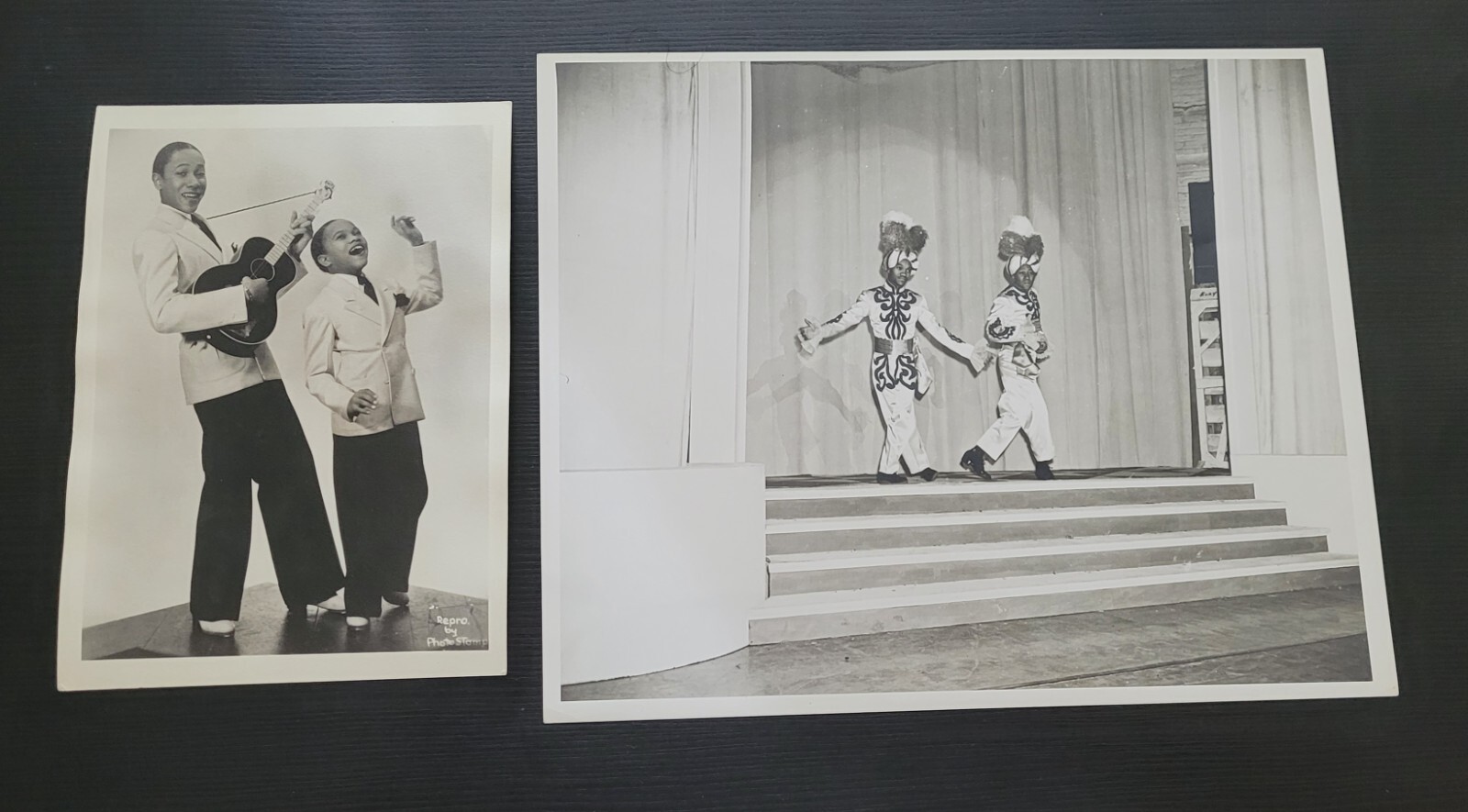
2 VINTAGE ORIGINAL PHOTOS OF LEGENDARY DANCERS THE NICHOLA BROTHERS. ONE MEASURING 8X10 INCHES AND THE OTHER 5X7 INCHESThe Nicholas Brothers were an entertainment act composed of brothers, Fayard and Harold, who excelled in a variety of dance techniques, primarily between the 1930s and 1950s.
The Nicholas Brothers were an entertainment act composed of brothers, Fayard (1914–2006) and Harold (1921–2000), who excelled in a variety of dance techniques, primarily between the 1930s and 1950s. Best known for their unique interpretation of a highly acrobatic technique known as \"flash dancing\", they were also considered by many to be the greatest tap dancers of their day, if not all time. Their virtuoso performance in the musical number \"Jumpin\' Jive\" (with Cab Calloway and his orchestra) featured in the 1943 movie Stormy Weather has been praised as one of the greatest dance routines ever captured on film.
Growing up surrounded by vaudeville acts as children, they became stars of the jazz circuit during the Harlem Renaissance and performed on stage, film, and television well into the 1990s. Diminutive in size, they were appreciated for their artistry, innovation, and soaring leaps.
Early livesFayard Antonio Nicholas was born October 20, 1914, in Mobile, Alabama,[1] and Harold Lloyd Nicholas was born March 17, 1921, in Winston-Salem, North Carolina,[1] to Viola Harden (maiden; 1893–1971), a pianist, and Ulysses Dominick Nicholas (1892–1935), a drummer.
The Nicholas Brothers grew up in Philadelphia, the sons of college-educated musicians who played in their own band at the Standard Theater. At the age of three, Fayard would always sit in the front row while his parents worked, and by the time he was ten, he had seen most of the great African-American vaudeville acts—particularly the dancers, including such notables of the time as Alice Whitman, Willie Bryant, and Bill Robinson.[2] The brothers were fascinated by the combination of tap dancing and acrobatics. Fayard often imitated their acrobatics and clowning for the kids in his neighborhood.[2]
Neither Fayard nor Harold had any formal dance training.[3] Fayard taught himself how to dance, sing, and perform by watching and imitating the professional entertainers on stage. He then taught his younger siblings, first performing with his sister Dorothy as the Nicholas Kids, later joined by Harold. Harold idolized his older brother and learned by copying his moves and distinct style. Dorothy later opted out of the act, and the Nicholas Kids became known as the Nicholas Brothers.[4]
CareerAs word spread of their talents, the Nicholas Brothers became known around Philadelphia. They were first hired for a radio program, The Horn and Hardart Kiddie Hour, and then by other local theatres such as the Standard and the Pearl. When they were performing at the Pearl, the manager of The Lafayette, a New York vaudeville showcase, saw them and immediately wanted them to perform for his theater.[2]
The brothers moved to Philadelphia in 1926 and gave their first performance at the Standard a few years later.[5] In 1932, they became the featured act at Harlem\'s Cotton Club when Harold was 11 and Fayard was 18. They astonished their mainly white audiences dancing to the jazz tempos of \"Bugle Call Rag\"; they were the only entertainers in the African-American cast allowed to mingle with white patrons.[3] They performed at the Cotton Club for two years, working with the orchestras of Lucky Millinder, Cab Calloway, Duke Ellington, and Jimmy Lunceford. During this time, they made their uncredited movie debut, in the 1932 short Pie, Pie Blackbird, featuring Eubie Blake and his orchestra.[2][6] The brothers attributed their success to their unique style of dancing - a hybrid of tap dance, ballet, and acrobatics sometimes called \"acrobatic dancing\" or \"flash dancing\" [1] - which was greatly in demand during this time.[7]
Producer Samuel Goldwyn saw them at the Cotton Club and invited them to California to be a part of Kid Millions (1934), their first performances in a Hollywood movie. The brothers made their Broadway debut in the Ziegfeld Follies of 1936 and also appeared in Richard Rodgers and Lorenz Hart\'s musical Babes in Arms in 1937. They impressed their choreographer, George Balanchine, who invited them to appear in Babes in Arms. With Balanchine\'s training, they learned many new stunts. Their talent led many to presume they were trained ballet dancers.[8]Ben Bernie with the Nicholas Brothers, photographed during a Radio City broadcast (Radio Mirror magazine, April 1936)By 1940, they had moved to Hollywood and for several decades divided their time between movies, nightclubs, concerts, Broadway, television, and extensive tours of Latin America, Africa, and Europe.[1] They toured England with a production of Blackbirds.[2] They gave a Royal Command Performance at the London Paladium for King George VI in 1948.[6]
In 1991, the Nicholas Brothers received Kennedy Center Honors in recognition of their six decades of achievements. A year later, a documentary film, We Sing & We Dance, celebrated their careers and included tributes from Mikhail Baryshnikov, Gregory Hines, M.C. Hammer, and Clarke Peters. In 1994, members of the cast of Hot Shoe Shuffle also paid them tribute.[9]
TeachingThe Nicholas Brothers taught master classes in tap dance as teachers-in-residence at Harvard University and Radcliffe at Ruth Page Visiting Artists. Among their known students are Debbie Allen, Janet Jackson, and Michael Jackson.[2] Several of today\'s master tap dancers have performed with or been taught by the brothers: Dianne Walker, Sam Weber, Lane Alexander, Mark Mendonca, Terry Brock,[10] Colburn Kids Tap/L.A, Channing Cook Holmes,[11] Chris Baker, Artis Brienzo, Chester Whitmore, Darlene Gist, Chris Scott, Tobius Tak,[12] Carol Zee, and Steve Zee.[13]
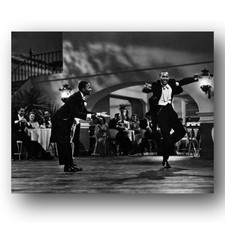
Style and movesExternal videoYouTube logoNicholas Brothers - Jumpin\' Jivevideo icon Stormy Weather in color - The Nicholas Brothers and Cab Calloway - Colorized with DeOldifyThe brothers were particularly known for their expressive use of their hands and arms while dancing, particularly tap. One of their signature moves was to leapfrog down a long, broad flight of stairs, while completing each step with a split. Its best remembered performance is in the finale of the movie Stormy Weather (1943).[3] In that routine, the Nicholas Brothers leapt exuberantly across the orchestra\'s music stands and danced on the top of a grand piano in a call and response act with the pianist, to the tune of \"Jumpin\' Jive\".[3] Fred Astaire once told the brothers that this dance number was the greatest movie musical sequence he had ever seen. Numerous articles have been written about this whole dance being filmed in one take and unrehearsed. As unbelievable as that sounds, the Nicholas Brothers confirmed it in an interview shortly before their recognition at the 14th Annual Kennedy Center Honors. The choreographer, Nick Castle, said, \"Just do it. Don`t rehearse it, just do it.\" And so it was done, unrehearsed and in one take, which relieved Harold Nicholas because he did not want to do the rigorous routine over and over all night.[14][3][15]
In another signature move, they would rise from a split without using their hands.[3] Gregory Hines declared that if their biography were ever filmed, their dance numbers would have to be computer-generated because no one now could emulate them.[3] Ballet legend Mikhail Baryshnikov once called them the most amazing dancers he had ever seen in his life.[16]
Personal livesFayardFayard married four times. His marriage to Geraldine Pate lasted from 1942 until their divorce in 1955.[17][18] That year, he married Mexican dancer Victoria Barron.[19][20] As of May 1960, that marriage remained intact, with \"Vicky\" also working alongside Fayard professionally.[21] He married Barbara January in 1967,[18] the same year he converted to the Baháʼí Faith,[22] and they remained together until her death in 1998. He married Katherine Hopkins in 2000.[23]
He died on January 24, 2006, of pneumonia contracted after a stroke.[3] His memorial service, presided over by Mary Jean Valente of A Ceremony of the Heart, was standing-room only and featured personal tributes, music, dance, and one last standing ovation.[24]
Two of Fayard\'s granddaughters dance as the \"Nicholas Sisters\" [25] and have won awards for their performances.[26]
HaroldHarold was married three times.[27] From 1942 to 1951, he was married to singer and actress Dorothy Dandridge, with whom he had one child, Harolyn Nicholas, who was born with a severe intellectual disability[28] In Paris, he had a son, Melih Nicholas, with his second wife Elayne Patronne. He lived on New York\'s Upper West Side for twenty years with his third wife, producer and former Miss Sweden, Rigmor Alfredsson Newman.[citation needed] Harold died July 3, 2000, of a heart attack following minor to a Los Angeles Times article on the brothers, \"Because of racial prejudice, they appeared as guest artists, isolated from the plot, in many of their films. This was a strategy that allowed their scenes to be easily deleted for screening in the Jim Crow-era South\".[31]
Pie, Pie Blackbird (1932) (short subject) (uncredited)The Emperor Jones (1933) (Harold Nicholas)Syncopancy (1933) (short subject) (Harold Nicholas)Kid Millions (1934)An All-Colored Vaudeville Show (1935) (short subject)Coronado (1935)The Big Broadcast of 1936 (1935)The Black Network (1936) (short subject)My American Wife (1936)Babes in Arms (1937)Calling All Stars (1937)My Son Is Guilty (1939)Down Argentine Way (1940)Tin Pan Alley (1940)The Great American Broadcast (1941)Sun Valley Serenade (1941)Orchestra Wives (1942)Stormy Weather (1943)Take It or Leave It (1944)The Reckless Age (1944) (Harold Nicholas)Carolina Blues (1944) (Harold Nicholas)Dixieland Jamboree (1946) (short subject)The Pirate (1948)Pathe Newsreel (1948)I\'m in the Revue (1950)El Misterio del carro express (1953)El Mensaje de la muerte (1953)Musik im Blut (1955)Bonjour Kathrin (1956)L\'Empire de la nuit (1963) (Harold Nicholas)The Liberation of L.B. Jones (1970) (Fayard Nicholas)Uptown Saturday Night (1974) (Harold Nicholas)That\'s Entertainment! (1974) (archive footage)Brother, Can You Spare a Dime? (1975) (archive footage)Disco 9000 (1976) (Harold Nicholas)That\'s Dancing! (1985) (archive footage)Tap (1989) (Harold Nicholas)That\'s Black Entertainment (1990) (archive footage)The Five Heartbeats (1990) (Harold Nicholas)\"Alright\" (Janet Jackson song) and video (1990)The Nicholas Brothers: We Sing and We Dance (1992)Funny Bones (1995) (Harold Nicholas)I Used to Be in Pictures (2000)Night at the Golden Eagle (2002) (Fayard Nicholas)Broadway: The Golden Age, by the Legends Who Were There (2003)Hard Four (2005)Carmen Miranda, something of a sensation on Broadway and therefore a subject for exploitation in this appearance, performs four characteristic numbers but plays no part in the film save as herself. Charlotte Greenwood contributes comedy and a bit of dancing, both in the vein she is known for, but it is the Nicholas Brothers, Negro dance team, which stops the show.[32]
— Down Argentine Way (20th Century-Fox) - REVIEW, Motion Picture HeraldAwards and honorsHarold received the DEA Award from the Dance Educators of America [33][34]Harold received the Bay Area Critics Circle Award (Best Principal Performance, Stompin\' at the Savoy)[33]Harold received the Harbor Performing Arts Center Lifetime Achievement Award [33]An honorary doctorate from Harvard University was awarded to both brothers [2]Black Filmmakers Hall of Fame (1978)[33]Ellie Award (1984), National Film Society for both brothers [33]Apollo Theater\'s Hall of Fame (1986), First Class Inductees for both brothers [33]Ebony Lifetime Achievement Award (1987) for both brothers [33]Fayard Nicholas received Broadway\'s 1989 Tony Award for Best Choreographer for Black and Blue along with his collaborators Cholly Atkins, Henry LeTang, and Frankie Manning.[35]Scripps American Dance Festival Award [36]Kennedy Center Honors in 1991 for both brothers who were in attendance [1][33]The National Black Media Coalition Lifetime Achievement Award (1992)[33]Flo-Bert Award (1992)[33]New York\'s Tap Dance Committee, Gypsy Award (1994)[33]A star on the Hollywood Walk of Fame at 7083 Hollywood Blvd (1994)[33]Professional Dancer\'s Society, Dance Magazine Award of (1995)[33]The 1998 Samuel H. Scripps American Dance Festival Award for Lifetime Achievement in Modern DanceNational Museum of Dance Mr. & Mrs. Cornelius Vanderbilt Whitney Hall of Fame Inductees (2001)[37]Other achievementsThe brothers gave a royal command performance for King George VI at the London Palladium in 1948A retrospective of their work in films appeared at the 1981 Academy Awards ceremony [34]Carnegie Hall sold out for a tribute to the brothers in 1998[citation needed]During the course of their lives, the brothers danced for nine different presidents of the United States[2]The brothers\' home movies were selected for inclusion in the National Film Registry in 2011 [38] Several of these home movies were preserved by the Academy Film Archive in 2016.[39]
Fayard Antonio Nicholas (October 20, 1914 – January 24, 2006) was an American choreographer, dancer and actor. He and his younger brother Harold Nicholas made up the Nicholas Brothers tap dance duo, who starred in the MGM musicals An All-Colored Vaudeville Show (1935), Stormy Weather (1943), The Pirate (1948), and Hard Four (2007). The Nicholas brothers also starred in the 20th Century-Fox musicals Down Argentine Way (1940), Sun Valley Serenade (1941), and Orchestra Wives (1942).[1]
Early lifeNicholas was born in Alabama, but grew up primarily in Philadelphia. He learned to dance while watching vaudeville shows with his brother while their musician parents played in the orchestra.[2] His father, Ulysses D. Nicholas, was a drummer and his mother, Viola Harden Nicholas, was a pianist.[3]
Career
Fayard Nicholas dances with Harold Nicholas and Bob Hope, 1965In 1932, when he was 18 and his brother was only 11, they became the featured act at Cotton Club in New York City. The brothers earned fame with a unique style of rhythm tap that blended \"masterful jazz steps with daredevil athletic moves and an elegance of motion worthy of ballet\". They appeared in the Ziegfeld Follies on Broadway and in London they worked with jazz choreographer Buddy Bradley. The performances led them to a career in film. Nicholas appeared in over 60 films, including the 1943 musical Stormy Weather with their signature staircase dance.[4]
His career was interrupted from 1943 to 1944 when he served in the U.S. Army during World War II.[3] Nicholas achieved the rank of Technician fifth grade while in WWII.[5]
After his dance career ended, Nicholas and his wife, Katherine Hopkins Nicholas, embarked on a lecture tour discussing dance. In 2003, Nicholas served as \"Festival Legend\" at the third \"Soul to Sole Tap Festival\" in Austin, Texas.[4]
Nicholas was inducted into the National Museum of Dance C.V. Whitney Hall of Fame in 2001.
Personal lifeNicholas was married three times. He remained friends with his first wife, Geraldine Pate, after their divorce. His second wife was Barbara January, and they remained married until her death in 1998. He married dancer Katherine Hopkins in 2000. He was a member of the Baháʼí Faith. Nicholas died of pneumonia following a stroke in 2006 at age 91.[6][7] His widow Katherine died in 2012.[8]
Harold Lloyd Nicholas (March 27, 1921 – July 3, 2000) was an American dancer specializing in tap. Nicholas was the younger half of the tap-dancing pair the Nicholas Brothers, known as two of the world\'s greatest dancers. His older brother was Fayard Nicholas. Nicholas was featured in such musicals as An All-Colored Vaudeville Show (1935), Stormy Weather (1943), The Pirate (1948), and The Five Heartbeats (1991).
Life and careerEarly yearsNicholas was born to drummer and orchestra leader Ulysses Domonick and pianist Viola Harden in Winston-Salem, North Carolina. By the age of three, his older brother Fayard enjoyed sitting in the audience of the black vaudeville theater where his parents performed, enraptured by the great performers on stage. Immersed in show business, when the Nicholases added a second son to the family, seven-year-old Fayard insisted that the child be named after his idol, Harold Lloyd, the silent-screen comedian. The two brothers soon began dancing, and they quickly gained acclaim for their elegant acrobatic moves and mastery of tap. When Fayard was 16 and Harold nine, they made their first appearance at the legendary Cotton Club in New York City and were a popular success immediately.
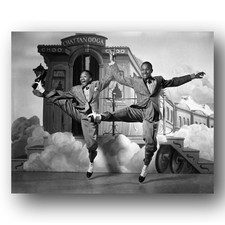
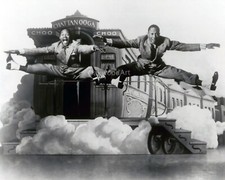
CareerTheir reputation grew rapidly, and Harold and Fayard became established superstars at Twentieth Century Fox with their astounding dance numbers in the studio\'s musicals features. The brothers began appearing in musical films with Eubie Blake. They performed in vaudeville, on Broadway, in nightclubs, on television, and in movie musicals. Harold appeared in more than 50 feature films, including The Big Broadcast (1936), Down Argentine Way (1940), Tin Pan Alley (1940), and Sun Valley Serenade (1941), which features the show-stopping \"Chattanooga Choo Choo\" tap dance number performed by Harold, Fayard, and Dorothy Dandridge.
Fred Astaire told the brothers that their dazzling footwork, leaps and splits in the Jumpin’ Jive dance in Stormy Weather (1943) produced the greatest movie musical number he had ever seen. In the number, the brothers dance on a piano and leap over performing musicians. The Nicholas Brothers’ Hollywood career began after movie mogul Samuel Goldwyn spotted them in a nightclub and cast them in Kid Millions (1934). The two became big film stars despite racial restrictions at the time prohibiting speaking parts and scenes with white co-stars. Their last film together was 1948\'s The Pirate, in which Gene Kelly danced with them, breaking the color barrier. Harold went on to work as a solo artist, moving to France and touring as a singer and dancer. He appeared in the French film L’Empire De La Nuit (1964).
Later lifeHarold returned to America occasionally to do shows with his brother. Harold also appeared in the films Uptown Saturday Night (1974), Tap (1989), The Five Heartbeats (1991) and Funny Bones (1995). In 1985–86, Nicholas played the role of \"Daddy Bates\" in the National Tour of the Broadway musical The Tap Dance Kid.[1] In 1993, he starred in the Milwaukee Repertory Theatre\'s world premiere of If These Shoes Could Talk,[2] which also starred Tony nominee Ted Levy, an original tap dance musical by Lee Summers and Kevin Ramsey. The leading character, a seasoned triple threat/hoofer, \"Dr Rhythm,\" was written for Nicholas and would be his farewell stage performance in a musical. Carnegie Hall sold out for a tribute to him and his brother in 1998, who were both present. By that time he had been living on New York\'s Upper West Side, where he lived for approximately 20 years with his third wife Rigmor Alfredsson Newman, a producer.
Personal lifeNicholas was married three times and had two children. His first marriage, on September 6, 1942, was to the actress, singer and dancer Dorothy Dandridge. They met at the Cotton Club in Harlem in 1938. Together they had a daughter, Harolyn Suzanne, who was born on September 2, 1943 (died in 2003), with severe brain damage that prevented her from speaking or even acknowledging her parents. By 1948, their marriage had deteriorated and Nicholas abandoned his family.[3] Their marriage lasted nine years, ending in 1951.[4] Nicholas had been linked briefly in Europe to Swiss actress Nyta Dover.[5] Nicholas had a son, Melih, with his second wife Elyanne Patronne.[6][citation needed] At the time of his death, he was married to Rigmor Newman Nicholas.[6]
Death and honorsNicholas died in New York City on July 3, 2000, at the age of 79, from heart failure. Nicholas was inducted into the National Museum of Dance C.V. Whitney Hall of Fame in 2001, along with his brother Fayard Nicholas.
FilmographyNicholas appeared in the following films dancing alongside his brother Fayard, with occasional solos:
Pie, Pie Blackbird (1932)The Emperor Jones (1933) [solo]Syncopancy (1933) [solo]Kid Millions (1934)An All-Colored Vaudeville Show (1935)The Big Broadcast of 1936 (1935)Coronado (1935)The Black Network (1936)My American Wife (1936)Calling All Stars (1937)Down Argentine Way (1940)Tin Pan Alley (1940)The Great American Broadcast (1941)Sun Valley Serenade (1941)Orchestra Wives (1942)Stormy Weather (1943)Take It or Leave It (1944)The Reckless Age (1944) [solo]Carolina Blues (1944) [solo]Dixieland Jamboree (1946)The Pirate (1948)Botta e Riposta (1951)Pathé News Reel (1948)L\'Empire de la nuit (1963) [solo]The Liberation of L.B. Jones (1970)Uptown Saturday Night (1974) [solo]That\'s Entertainment! (1974)Disco 9000 (1974) [solo]That\'s Dancing! (1985)Tap (1989) [solo]The Five Heartbeats (1990) [solo]A&E Special: The Nicholas Brothers (1992) [as self]Funny Bones (1995) [solo]Broadway: The Golden Age, by the Legends Who Were There (2002) [as self]
Flash dancing was a form of tap dance (tap was also called jazz dance at the time) that evolved in the 1920s–1930s, which combined dance with acrobatics.[1][2] Prominent flash dance acts of the time include the Nicholas Brothers, The Four Step Brothers and the Berry Brothers.[3]
Examples of such dance appeared in film predominantly between the 1920s and 1940s.[3] The Nicholas Brothers\' spectacular leap-frogging performance in the musical number \"Jumpin\' Jive\" (with Cab Calloway and his orchestra) featured in the 1943 movie Stormy Weather has been praised as one of the greatest dance routines ever captured on film.
Cabell Calloway III (December 25, 1907 – November 18, 1994) was an American jazz singer and bandleader. He was associated with the Cotton Club in Harlem, where he was a regular performer and became a popular vocalist of the swing era. His niche of mixing jazz and vaudeville won him acclaim during a career that spanned over 65 years.[2]
Calloway was a master of energetic scat singing and led one of the most popular dance bands in the United States from the early 1930s to the late 1940s. His band included trumpeters Dizzy Gillespie, Jonah Jones, and Adolphus \"Doc\" Cheatham, saxophonists Ben Webster and Leon \"Chu\" Berry, guitarist Danny Barker, bassist Milt Hinton, and drummer Cozy Cole.[3]
Calloway had several hit records in the 1930s and 1940s, becoming known as the \"Hi-de-ho\" man of jazz for his most famous song, \"Minnie the Moocher\", originally recorded in 1931. He reached the Billboard charts in five consecutive decades (1930s–1970s).[4] Calloway also made several stage, film, and television appearances until his death in 1994 at the age of 86. He had roles in Stormy Weather (1943), Porgy and Bess (1953), The Cincinnati Kid (1965), and Hello Dolly! (1967). His career saw renewed interest when he appeared in the 1980 film The Blues Brothers.
Calloway was the first African-American musician to sell a million records from a single and to have a nationally syndicated radio show.[5] In 1993, Calloway received the National Medal of Arts from the United States Congress.[6] He posthumously received the Grammy Lifetime Achievement Award in 2008. His song \"Minnie the Moocher\" was inducted into the Grammy Hall of Fame in 1999, and added to the Library of Congress\' National Recording Registry in 2019.[7] Three years later in 2022, the National Film Registry selected his home films for preservation as \"culturally, historically or aesthetically significant films\".[8] He is also inducted into the Big Band and Jazz Hall of Fame and the International Jazz Hall of Fame.
Early lifeCalloway was born in Rochester, New York, on December 25, 1907 to an African American family.[9] His mother, Martha Eulalia Reed, was a Morgan State College graduate, teacher, and church organist. His father, Cabell Calloway Jr., graduated from Lincoln University of Pennsylvania in 1898,[10][11] and worked as a lawyer and in real estate. The family moved to Baltimore, Maryland, when Calloway was 11.[12] Soon after, his father died and his mother remarried to John Nelson Fortune.[13]
Calloway grew up in the West Baltimore neighborhood of Druid Hill. He often skipped school to earn money by selling newspapers, shining shoes, and cooling down horses at the Pimlico racetrack where he developed an interest in racing and betting on horse races.[14][15] After he was caught playing dice on the church steps, his mother sent him to Downingtown Industrial and Agricultural School in 1921, a reform school run by his mother\'s uncle in Chester County, Pennsylvania.[15]
Calloway resumed hustling when he returned to Baltimore and worked as a caterer while he improved his studies in school.[15] He began private vocal lessons in 1922, and studied music throughout his formal schooling. Despite his parents\' and teachers\' disapproval of jazz, he began performing in nightclubs in Baltimore. His mentors included drummer Chick Webb and pianist Johnny Jones. Calloway joined his high school basketball team, and in his senior year he started playing professional basketball with the Baltimore Athenians, a team in the Negro Professional Basketball League.[16] He graduated from Frederick Douglass High School in 1925.[12][17]
Music career1927–1929: Early careerIn 1927, Calloway joined his older sister, Blanche Calloway, on tour for the popular black musical revue Plantation Days.[13] His sister became an accomplished bandleader before him, and he often credited her as his inspiration for entering show business.[18] Calloway\'s mother wanted him to be a lawyer like his father, so once the tour ended he enrolled at Crane College in Chicago, but he was more interested in singing and entertaining. While at Crane he refused the opportunity to play basketball for the Harlem Globetrotters to pursue a singing career.[15]
Calloway spent most of his nights at Chicago\'s Dreamland Café, Sunset Cafe, and Club Berlin, performing as a singer, drummer, and master of ceremonies.[13] At Sunset Cafe, he was an understudy for singer Adelaide Hall. There he met and performed with Louis Armstrong, who taught him to sing in the scat style. He left school to sing with the Alabamians band.[19]
In 1929, Calloway relocated to New York with the band. They opened at the Savoy Ballroom on September 20, 1929. When the Alabamians broke up, Armstrong recommended Calloway as a replacement singer in the musical revue Connie\'s Hot Chocolates.[13] He established himself as a vocalist singing \"Ain\'t Misbehavin\'\" by Fats Waller.[20] While Calloway was performing in the revue, the Missourians asked him to front their band.[21]
1930–1955: SuccessIn 1930, the Missourians became known as Cab Calloway and His Orchestra. At the Cotton Club in Harlem, New York, the band was hired in 1931 to substitute for the Duke Ellington Orchestra while Ellington\'s band was on tour. Their popularity led to a permanent position. The band also performed twice a week for radio broadcasts on NBC. Calloway appeared on radio programs with Walter Winchell and Bing Crosby and was the first African American to have a nationally syndicated radio show.[5] During the depths of the Great Depression, Calloway was earning $50,000 a year at 23 years old.[20]Calloway by Carl Van Vechten, 1933In 1931, Calloway recorded his most famous song, \"Minnie the Moocher.\" It was the first single record by an African American to sell a million copies.[5] Calloway performed the song and two others, \"St. James Infirmary Blues\" and \"The Old Man of the Mountain,\" in the Betty Boop cartoons Minnie the Moocher (1932), Snow-White (1933), and The Old Man of the Mountain (1933). Calloway performed voice-over for these cartoons, and through rotoscoping, his dance steps were the basis of the characters\' movements.[22]
As a result of the success of \"Minnie the Moocher\", Calloway became identified with its chorus, gaining the nickname \"The Hi De Ho Man\".[23] He performed in the 1930s in a series of short films for Paramount. Calloway\'s and Ellington\'s groups were featured on film more than any other jazz orchestras of the era. In these films, Calloway can be seen performing a gliding backstep dance move, which some observers have described as the precursor to Michael Jackson\'s moonwalk. Calloway said 50 years later, \"it was called The Buzz back then.\"[24] The 1933 film International House featured Calloway performing his classic song, \"Reefer Man\", a tune about a man who smokes marijuana.[25] Fredi Washington was cast as Calloway\'s love interest in Cab Calloway\'s Hi-De-Ho (1934).[26] Lena Horne made her film debut as a dancer in Cab Calloway\'s Jitterbug Party (1935).[27]
Calloway made his first Hollywood feature film appearance opposite Al Jolson in The Singing Kid (1936). He sang several duets with Jolson, and the film included Calloway\'s band and 22 Cotton Club dancers from New York.[28] According to film critic Arthur Knight, the creators of the film intended to \"erase and celebrate boundaries and differences, including most emphatically the color line...when Calloway begins singing in his characteristic style – in which the words are tools for exploring rhythm and stretching melody – it becomes clear that American culture is changing around Jolson and with (and through) band recorded for Brunswick and the ARC dime-store labels (Banner, Cameo, Conqueror, Perfect, Melotone, Banner, Oriole) from 1930 to 1932, when he signed with RCA Victor for a year. He returned to Brunswick in late 1934 through 1936, then moved to Variety, run by his manager, Irving Mills. He remained with Mills when the label collapsed during the Depression. Their sessions were continued by Vocalion through 1939 and OKeh through 1942. After an AFM recording ban due to the 1942–44 musicians\' strike, Calloway continued to record.
In 1938, Calloway released Cab Calloway\'s Cat-ologue: A \"Hepster\'s\" Dictionary, the first dictionary published by an African American. It became the official jive language reference book of the New York Public Library.[31] A revised version of the book was released with Professor Cab Calloway\'s Swingformation Bureau in 1939. He released the last edition, The New Cab Calloway\'s Hepsters Dictionary: Language of Jive, in 1944.[32] On a BBC Radio documentary about the dictionary in 2014, Poet Lemn Sissay stated, \"Cab Calloway was taking ownership of language for a people who, just a few generations before, had their own languages taken away.\"[33]
Calloway\'s band in the 1930s and 1940s included many notable musicians, such as Ben Webster, Illinois Jacquet, Milt Hinton, Danny Barker, Doc Cheatham, Ed Swayze, Cozy Cole, Eddie Barefield, and Dizzy Gillespie. Calloway later recalled, \"What I expected from my musicians was what I was selling: the right notes with precision, because I would build a whole song around a scat or dance step.\"[20] Calloway and his band formed baseball and basketball teams.[34][35] They played each other while on the road, play against local semi-pro teams, and play charity games.[36] His renown as a talented musician was such that, in the opening scene of the 1940 musical film Strike Up the Band, starring Mickey Rooney and Judy Garland, Rooney\'s character is admonished by his music teacher, \"You are not Cab Calloway,\" after playing an improvised drum riff in the middle of a band lesson.
In 1941, Calloway fired Gillespie from his orchestra after an onstage fracas erupted when Calloway was hit with spitballs. He wrongly accused Gillespie, who stabbed Calloway in the leg with a small knife.[37]
From 1941 to 1942, Calloway hosted a weekly radio quiz show called The Cab Calloway Quizzicale.[38] Calling himself \"Doctor\" Calloway, it was a parody of The College of Musical Knowledge, a radio contest created by bandleader Kay Kyser.[39] During the years of World War II, Calloway entertained troops in United States before they departed overseas.[40] The Calloway Orchestra also recorded songs full of social commentary including \"Doing the Reactionary,\" \"The Führer\'s Got the Jitters,\"[41] \"The Great Lie,\" \"We\'ll Gather Lilacs,\" and \"My Lament for V Day.\"[42]
In 1943, Calloway appeared in the film Stormy Weather, one of the first mainstream Hollywood films with a black cast.[43] The film featured other top performers of the time, including Bill \"Bojangles\" Robinson, Lena Horne, the Nicholas Brothers, and Fats Waller. Calloway would host Horne\'s character Selina Rogers as she performed the film\'s title song as part of a big all-star revue for World War II soldiers.[44]
Calloway wrote a humorous pseudo-gossip column called \"Coastin\' with Cab\" for Song Hits magazine. It was a collection of celebrity snippets, such as the following in the May 1946 issue: \"Benny Goodman was dining at Ciro\'s steak house in New York when a very homely girl entered. \'If her face is her fortune,\' Benny quipped, \'she\'d be tax-free.\'\" In the late 1940s, however, Calloway\'s bad financial decisions and his gambling caused his band to break up.[19]One of Cab Calloway\'s zoot suits on display in Baltimore\'s City Hall, October 2007In 1953, he played the prominent role of Sportin\' Life in a production of Porgy and Bess with William Warfield and Leontyne Price as the title characters.
1956–1960: Cotton Club RevueCalloway and his daughter Lael recorded \"Little Child\", an adaption of \"Little Boy and the Old Man\". Released on ABC-Paramount, the single charted on the Billboard Hot 100 in 1956.[45][4]
In 1956, Clarence Robinson, who produced revues at the original Cotton Club and the Apollo Theater, and choreographed the movie Stormy Weather, cast Calloway as the main attraction for his project in Miami. The Cotton Club of Miami featured a troupe of 48 people, including singer Sallie Blair, George Kirby, Abbey Lincoln, and the dance troupe of Norma Miller. The success of the shows led to the Cotton Club Revue of 1957 which had stops at the Royal Nevada Hotel in Las Vegas, the Theatre Under The Sky in Central Park, Town Casino in Buffalo.
For the second season, Lee Sherman was the choreographer of The Cotton Club Revue of 1958, which starred Calloway. The revue featured tap dancing prodigies Maurice Hines and Gregory Hines.[46]
In March 1958, Calloway released his album Cotton Club Revue of 1958 on Gone Records. It was produced by George Goldner, conducted and arranged by Eddie Barefield. That year, Calloway appeared in the film St. Louis Blues, the life story of W.C. Handy, featuring Nat King Cole and Eartha Kitt.[47]
The Cotton Club Revue of 1959 traveled to South America for engagements in Rio de Janeiro and São Paulo. They also stopped in Uruguay and Argentina before returning to North America which included a run on Broadway.[48] Directed by Mervyn Nelson and choreographed by Joel Nobel, this edition featured Ketty Lester, The Three Chocolateers. The revue toured Europe in 1959 and 1960, bringing their act to Madrid, Paris, and London.
1961–1993: Later yearsCalloway remained a household name due to TV appearances and occasional concerts in the US and Europe. In 1961 and 1962, he toured with the Harlem Globetrotters, providing halftime entertainment during games.[49][50]
Calloway was cast as \"Yeller\" in the film The Cincinnati Kid (1965) with Steve McQueen, Ann-Margret, and Edward G. Robinson. Calloway appeared on The Ed Sullivan Show on March 19, 1967, with his daughter Chris Calloway.[51] In 1967, he co-starred with Pearl Bailey as Horace Vandergelder in an all-black cast of Hello, Dolly! on Broadway during its original run. Chris Calloway also joined the cast as Minnie Fay.[52] The new cast revived the flagging business for the show[53] and RCA Victor released a new cast recording, rare for the time. In 1973–74, Calloway was featured in an unsuccessful Broadway revival of The Pajama Game with Hal Linden and Barbara McNair.
His autobiography, Of Minnie the Moocher and Me was published in 1976. It included his complete Hepster\'s Dictionary as an appendix. In 1978, Calloway released a disco version of \"Minnie the Moocher\" on RCA which reached the Billboard R&B chart.[54][4] Calloway was introduced to a new generation when he appeared in the 1980 film The Blues Brothers performing \"Minnie the Moocher\".[3]
In 1985, Calloway and his Orchestra appeared at The Ritz London Hotel where he was filmed for a 60-minute BBC TV show called The Cotton Club Comes to the Ritz. Adelaide Hall, Doc Cheatham, Max Roach, and the Nicholas Brothers also appeared on the bill.[55][56] A performance with the Cincinnati Pops Orchestra directed by Erich Kunzel in August 1988 was recorded on video and features a classic presentation of \"Minnie the Moocher\", 57 years after he first recorded it.[57]
In January 1990, Calloway performed at the Meyerhoff Symphony Hall, with the Baltimore Symphony.[58] That year he made a cameo in Janet Jackson\'s music video \"Alright\".[3][59] He continued to perform at Jazz festivals, including the New Orleans Jazz & Heritage Festival and Greenwood Jazz.[60][61] In 1992, he embarked on a month-long tour of European jazz festivals.[62] He was booked to headline \"The Jazz Connection: The Jewish and African-American Relationship,\" at New York City\'s Avery Fisher Hall in 1993, but he pulled out due to a fall at home.[63]
Personal lifeMarriages and childrenIn January 1927, Calloway had a daughter named Camay with Zelma Proctor, a fellow student.[64][15] His daughter was one of the first African-Americans to teach in a white school in Virginia.[65] Calloway married his first wife Wenonah \"Betty\" Conacher in July 1928.[64] They adopted a daughter named Constance and divorced in 1949.[66] Calloway married Zulme \"Nuffie\" MacNeal on October 7, 1949. They lived in Long Beach on the South Shore of Long Island, New York, on the border with neighboring Lido Beach. In the 1950s, Calloway moved his family to Westchester County, New York, where he and Nuffie raised their daughters Chris Calloway (1945–2008),[67] Cecilia \"Lael\" Eulalia Calloway,[68] and Cabella Calloway (1952–2023).
Legal issuesIn December 1945, Calloway and his friend Felix H. Payne Jr. were beaten by a police officer, William E. Todd, and arrested in Kansas City, Missouri after attempting to visit bandleader Lionel Hampton at the whites-only Pla-Mor Ballroom. They were taken to the hospital for injuries, then charged with intoxication and resisting arrest. When Hampton learned of the incident he refused to continue the concert.[69] Todd said he was informed by the manager, who did not recognize Calloway, that they were attempting to enter. He claimed they refused to leave and struck him. Calloway and Payne denied his claims and maintained they had been sober; the charges were dismissed. In February 1946, six civil rights organizations, including the NAACP, demanded that Todd be fired, but he had already resigned after a pay cut.[70]
In 1952, Calloway was arrested in Leesburg, Virginia on his way to the race track in Charles Town, West Virginia. He was charged with speeding and attempted bribery of a policeman.[71]
DeathOn June 12, 1994, Calloway suffered a stroke at his home in Westchester County, New York.[58] He died five months later from pneumonia on November 18, 1994, at age 86, at a nursing home in Hockessin, Delaware.[23] He was survived by his wife, five daughters, and seven grandsons. Calloway was buried at Ferncliff Cemetery in Hartsdale, New York.[14][3]
LegacyMusic critics have written of his influence on later generations of entertainers such as James Brown, Michael Jackson, Janet Jackson, as well as modern-day hip-hop performers.[72][2] John Landis, who directed Calloway in the 1980 film The Blues Brothers, stated, \"Cab Calloway is hip-hop.\"[12] Journalist Timothy White noted in Billboard (August 14, 1993): \"No living pathfinder in American popular music or its jazz and rock \'n\' roll capillaries is so frequently emulated yet so seldom acknowledged as Cabell \"Cab\" Calloway. He arguably did more things first and better than any other band leader of his generation.\"[20]
In 1998, the Cab Calloway Orchestra directed by Calloway\'s grandson Chris \"CB\" Calloway Brooks was formed.[73][74] In 2009, Big Bad Voodoo Daddy released an album covering Calloway\'s music titled How Big Can You Get?: The Music of Cab Calloway.[75] In 2012, Calloway\'s legacy was celebrated in an episode of PBS\'s American Masters titled \"Cab Calloway: Sketches\".[12][72]Calloway\'s boyhood home in Baltimore, before its demolition in September 2020In 2019, plans were announced to demolish Calloway\'s boyhood home at 2216 Druid Hill Avenue in Baltimore, replacing the abandoned structure and the rest of that block with a park to be named Cab Calloway Legends Park in his honor.[76][77] Family members and the National Trust for Historic Preservation advocated preservation of the house, however, as a significant artifact of African-American cultural heritage. Although the block is designated \"historically significant\" on the National Register of Historic Places, Baltimore City officials said at a hearing on July 9, 2019, that there is \"extensive structural damage\" to the Calloway house as well as adjacent ones.[78] The Commission on Historical and Architectural Preservation\'s executive director, however, said that properties in worse condition than the Calloway House have been restored with financial support from a city tax credit program. Maryland Governor Larry Hogan also urged that demolition of the Calloway House be forestalled for its potential preservation as a historic house museum akin to the Louis Armstrong House in New York.[5][78] Design options for the planned Cab Calloway Square may include an archway from the facade (pictured) as part of the Square\'s entrance, as proposed by architects working with Baltimore City and the Druid Heights Community Development Corporation, a Non-Profit community oriented group.[79] Despite objections, the house was razed on September 5, 2020.[80]
Awards and honorsIn 1985, Town Supervisor Anthony F. Veteran issued a proclamation, declaring a \'\'Cab Calloway Day\'\' in Greenburgh, New York.[81]
In 1990, Calloway was presented with the Beacons in Jazz Award from The New School in New York City. New York City Mayor David Dinkins proclaimed the day \"Cab Calloway Day\".[82]
In 1992, the Cab Calloway School of the Arts was founded in Wilmington, Delaware.
In 1994, Calloway\'s daughter Camay Calloway Murphy founded the Cab Calloway Museum at Coppin State College in Baltimore, Maryland.[83][12]
The New York Racing Association (NYRA) annually honors the jazz legend, a native of Rochester, N.Y., with a stakes races restricted to NY-bred three-year-olds, as part of their New York Stallion Series. First run in 2003, The Calloway has since undergone various distance and surface changes. The race is currently run at Saratoga Racecourse, Saratoga Springs, NY, one of America\'s most popular, premier racetracks. The Cab Calloway Stakes celebrated its 13th renewal on July 24, 2019, and was won by Rinaldi. In 2020 Calloway was inducted into the National Rhythm & Blues Hall of Fame
Calloway received the following accolades:
1967: Best Performance, Outer Critics Circle Awards (Hello, Dolly)1987: Inducted into Big Band and Jazz Hall of Fame[84]1990: Beacons in Jazz Award, The New School[82]1993: National Medal of Arts[85][6]1993: Honorary Doctorate of Fine Arts, University of Rochester1993: Cab Calloway School of the Arts dedicated in his name in Wilmington, Delaware[86]1995: Inducted into International Jazz Hall of Fame[87]1999: Grammy Hall of Fame Award for \"Minnie the Moocher\"2008: Grammy Lifetime Achievement Award[88]2019: \"Minnie the Moocher\" added to the Library of Congress National Recording Registry[89]DiscographyAlbums1943: Cab Calloway And His Orchestra (Brunswick)1956: Cab Calloway (Epic)1958: Cotton Club Revue 1958 (Gone Records)1959: Hi De Hi De Ho (RCA Victor)1962: Blues Makes Me Happy (Coral)1968: Cab Calloway \'68 (Pickwick International)Select compilations1974: Hi De Ho Man (Columbia)1983: Mr. Hi. De. Ho. 1930–1931 (MCA)1990: Cab Calloway: Best Of The Big Bands (Columbia)1992: The King Of Hi-De-Ho 1934–1947 (Giants of Jazz)1998: Jumpin\' Jive (Camden)2001: Cab Calloway and His Orchestra Volume 1: The Early Years 1930–1934 (JSP)2003: Cab Calloway & His Orchestra Volume 2: 1935–1940 (JSP)Charting singlesReleasedate Title Chartpositions
[90][91][4]
1930 \"Saint Louis Blues\" 161931 \"Minnie the Moocher\" 1\"Saint James Infirmary\" 3\"Nobody\'s Sweetheart\" 13\"Six or Seven Times\" 14\"You Rascal, You\" 17\"Kicking the Gong Around\" 4\"Between the Devil and the Deep Blue Sea\" 15\"Trickeration\" 81932 \"Cabin in the Cotton\" 17\"Strictly Cullud Affair\" 11\"Minnie the Moocher\'s Wedding Day\" 8\"Reefer Man\" 11\"Hot Toddy\" 14\"I\'ve Got the World on a String\" 181933 \"I Gotta Right to Sing the Blues\" 171934 \"Jitter Bug\" 20\"Moon Glow\" 7\"Chinese Rhythm\" 71935 \"Keep That Hi-De-Hi in Your Soul\" 201936 \"You\'re the Cure for What Ails Me\" 20\"Copper Colored Gal\" 131937 \"Wake up and Live\" 17\"Congo\" 17\"Peckin\'\" 18\"She\'s Tall, She\'s Tan, She\'s Terrific\" 17\"Moon at Sea\" 19\"Mama, I want to Make Rhythm\" 201938 \"Every Day\'s a Holiday\" 18\"Mister Toscanini, Swing for Minnie\" 19\"F.D.R. Jones\" 14\"Angels With Dirty Faces\" 31939 \"The Ghost of Smokey Joe\" 13\"(Hep Hep!) The Jumpin\' Jive\" 21940 \"Fifteen Minute Intermission\" 231941 \"Bye Bye Blues\" 24\"Geechee Joe\" 23\"I See a Million People\" 231942 \"Blues in the Night\" 81943 \"Ogeechee River Lullaby\" 181944 \"The Moment I Laid My Eyes on You\" 281945 \"Let\'s Take the Long Way Home\" 281946 \"The Honeydripper\" 3(R&B)1948 \"The Calloway Boogie\" 13(R&B)1956 \"Little Child\" 621966 \"History Repeats Itself\" 891978 \"Minnie the Moocher\" (disco version) 91(R&B)Vaudeville (/ˈvɔːd(ə)vɪl, ˈvoʊ-/;[1] French: [vodvil]) is a theatrical genre of variety entertainment born in France at the end of the 19th century. A vaudeville was originally a comedy without psychological or moral intentions, based on a comical situation: a dramatic composition or light poetry, interspersed with songs or ballets. It became popular in the United States and Canada from the early 1880s until the early 1930s, but the idea of vaudeville\'s theatre changed radically from its French antecedent.
In some ways analogous to music hall from Victorian Britain,[2] a typical North American vaudeville performance was made up of a series of separate, unrelated acts grouped together on a common bill. Types of acts have included popular and classical musicians, singers, dancers, comedians, trained animals, magicians, ventriloquists, strongmen, female and male impersonators, acrobats, clowns, illustrated songs, jugglers, one-act plays or scenes from plays, athletes, lecturing celebrities, minstrels, and films. A vaudeville performer is often referred to as a \"vaudevillian\".
Vaudeville developed from many sources, also including the concert saloon, minstrelsy, freak shows, dime museums, and literary American burlesque. Called \"the heart of American show business\", vaudeville was one of the most popular types of entertainment in North America for several decades.[3]
EtymologyThe origin of the term is obscure but often explained as being derived from the French expression voix de ville (\"voice of the city\"). A second speculation is that it comes from the 15th-century songs on satire by poet Olivier Basselin, \"Vau de Vire\".[4] In his Connections television series, science historian James Burke argues that the term is a corruption of the French \"Vau de Vire\" (\"Vire River Valley\", in English), an area known for its bawdy drinking songs and where Basselin lived.[5] The Oxford English Dictionary also endorses the vau de vire origin, a truncated form of chanson du Vau de Vire (\"song of the Valley of the Vire\"). Around 1610, Jean le Houx collected these works as Le Livre des Chants nouveaux de Vaudevire [fr], which is probably the direct origin of the word. Some, however, preferred the earlier term \"variety\" to what manager Tony Pastor called its \"sissy and Frenchified\" successor. Thus, vaudeville marketed itself as \"variety\" well into the 20th century.
BeginningsSee also: Comédie en vaudevilles
From newspaper promotional for vaudeville character actor Charles Grapewin, c. 1900With its first subtle appearances within the early 1860s, vaudeville was not initially a common form of entertainment. The form gradually evolved from the concert saloon and variety hall into its mature form throughout the 1870s and 1880s. This more gentle form was known as \"Polite Vaudeville\".[6]
In the years before the American Civil War, entertainment existed on a different scale. Certainly, variety theatre existed before 1860 in Europe and elsewhere. In the US, as early as the first decades of the 19th century, theatergoers could enjoy a performance consisting of Shakespeare plays, acrobatics, singing, dancing, and comedy.[citation needed] As the years progressed, people seeking diversified amusement found an increasing number of ways to be entertained. Vaudeville was characterized by traveling companies touring through cities and towns.[7] A handful of circuses regularly toured the country; dime museums appealed to the curious; amusement parks, riverboats, and town halls often featured \"cleaner\" presentations of variety entertainment; compared to saloons, music halls, and burlesque houses, which catered to those with a taste for the risqué. In the 1840s, the minstrel show, another type of variety performance, and \"the first emanation of a pervasive and purely American mass culture\", grew to enormous popularity and formed what Nick Tosches called \"the heart of 19th-century show business\".[8] A significant influence also came from \"Dutch\" (i.e., German or faux-German) minstrels and comedians.[9] Medicine shows traveled the countryside offering programs of comedy, music, jugglers, and other novelties along with displays of tonics, salves, and miracle elixirs, while \"Wild West\" shows provided romantic vistas of the disappearing frontier, complete with trick riding, music and drama. Vaudeville incorporated these various itinerant amusements into a stable, institutionalized form centered in America\'s growing urban hubs.
From the mid-1860s, impresario Tony Pastor, a former singing circus clown who had become a prominent variety theater performer and manager, capitalized on middle class sensibilities and spending power when he began to feature \"polite\" variety programs in his New York City theatres.[10] Pastor opened his first \"Opera House\" on the Bowery in 1865, later moving his variety theater operation to Broadway and, finally, to Fourteenth Street near Union Square. He only began to use the term \"vaudeville\" in place of \"variety\" in early 1876.[11] Hoping to draw a potential audience from female and family-based shopping traffic uptown, Pastor barred the sale of liquor in his theatres, eliminated bawdy material from his shows, and offered gifts of coal and hams to attendees. Pastor\'s experiment proved successful, and other managers soon followed suit.
PopularityPerformance bill for Temple Theatre, Detroit, 1 December 1902The manager\'s comments, sent back to the circuit\'s central office weekly, follow each act\'s description. The bill illustrates the typical pattern of opening the show with a \"dumb\" act to allow patrons to find their seats, placing strong acts in second and penultimate positions, and leaving the weakest act for the end, to clear the house.
As well, note that in this bill, as in many vaudeville shows, acts often associated with \"lowbrow\" or popular entertainment (acrobats, a trained mule) shared a stage with acts more usually regarded as \"highbrow\" or classical entertainment (opera vocalists, classical musicians).
(1) Burt Jordan and Rosa Crouch. \"Sensational, grotesque and \'buck\' dancers. A good act ...\"(2) The White Tscherkess Trio. \"A man and two women who do a singing turn of the operatic order. They carry special scenery which is very artistic and their costumes are original and neat. Their voices are good and blend exceedingly well. The act goes big with the audience.\"(3) Sarah Midgely and Gertie Carlisle. \"Presenting the sketch \'After School.\' ... they are a \'knockout.\'\"(4) Theodor F. Smith and Jenny St. George-Fuller. \"Refined instrumentalists.\"(5) Milly Capell. \"European equestrienne. This is her second week. On account of the very pretty picture that she makes she goes as strong as she did last week.\"(6) R. J. Jose. \"Tenor singer. The very best of them all.\"(7) The Nelson Family of Acrobats. \"This act is composed of three men, two young women, three boys and two small girls. The greatest acrobatic act extant.\"(8) James Thornton. \"Monologist and vocalist. He goes like a cyclone. It is a case of continuous laughter from his entrance to his exit.\"(9) Burk and Andrus and Their Trained Mule. \"This act, if it can be so classed, was closed after the evening performance.\"\"The Opera\" in Kirksville, Missouri was on the Vaudeville circuit. Vaudeville played in both large and small venues in cities and towns.B. F. Keith took the next step, starting in Boston, where he built an empire of theatres and brought vaudeville to the United States and Canada. Later, E. F. Albee, adoptive grandfather of the Pulitzer Prize-winning playwright Edward Albee, managed the chain to its greatest success. Circuits such as those managed by Keith-Albee provided vaudeville\'s greatest economic innovation and the principal source of its industrial strength. They enabled a chain of allied vaudeville houses that remedied the chaos of the single-theatre booking system by contracting acts for regional and national tours. These could easily be lengthened from a few weeks to two years.
Albee also gave national prominence to vaudeville\'s trumpeting \"polite\" entertainment, a commitment to entertainment equally inoffensive to men, women and children. Acts that violated this ethos (e.g., those that used words such as \"hell\") were admonished and threatened with expulsion from the week\'s remaining performances or were canceled altogether. In spite of such threats, performers routinely flouted this censorship, often to the delight of the very audience members whose sensibilities were supposedly endangered. He eventually instituted a set of guidelines to be an audience member at his show, and these were reinforced by the ushers working in the theatre.[4]
This \"polite entertainment\" also extended to Keith\'s company members. He went to extreme measures to maintain this level of modesty. Keith even went as far as posting warnings backstage such as this: \"Don\'t say \'slob\' or \'son of a gun\' or \'hully gee\' on the stage unless you want to be canceled peremptorily... if you are guilty of uttering anything sacrilegious or even suggestive you will be immediately closed and will never again be allowed in a theatre where Mr. Keith is in authority.\" Along these same lines of discipline, Keith\'s theatre managers would occasionally send out blue envelopes with orders to omit certain suggestive lines of songs and possible substitutions for those words. If actors chose to ignore these orders or quit, they would get \"a black mark\" on their name and would never again be allowed to work on the Keith Circuit. Thus, actors learned to follow the instructions given to them by B. F. Keith for fear of losing their careers forever.[4]
By the late 1890s, vaudeville had large circuits, houses (small and large) in almost every sizable location, standardized booking, broad pools of skilled acts, and a loyal national following. One of the biggest circuits was Martin Beck\'s Orpheum Circuit. It incorporated in 1919 and brought together 45 vaudeville theatres in 36 cities throughout the United States and Canada and a large interest in two vaudeville circuits. Another major circuit was that of Alexander Pantages. In his heyday, Pantages owned more than 30 vaudeville theatres and controlled, through management contracts, perhaps 60 more in both the United States and Canada.This 1913 how-to booklet for would-be vaudevillians was recently republished.At its height, vaudeville played across multiple strata of economic class and auditorium size. On the vaudeville circuit, it was said that if an act would succeed in Peoria, Illinois, it would work anywhere.[12][13][14][15] The question \"Will it play in Peoria?\" has now become a metaphor for whether something appeals to the American mainstream public. The three most common levels were the \"small time\" (lower-paying contracts for more frequent performances in rougher, often converted theatres), the \"medium time\" (moderate wages for two performances each day in purpose-built theatres), and the \"big time\" (possible remuneration of several thousand dollars per week in large, urban theatres largely patronized by the middle and upper-middle classes). As performers rose in renown and established regional and national followings, they worked their way into the less arduous working conditions and better pay of the big time. The capital of the big time was New York City\'s Palace Theatre (or just \"The Palace\" in the slang of vaudevillians), built by Martin Beck in 1913 and operated by Keith. Featuring a bill stocked with inventive novelty acts, national celebrities, and acknowledged masters of vaudeville performance (such as comedian and trick roper Will Rogers), the Palace provided what many vaudevillians considered the apotheosis of remarkable careers. A standard show bill would begin with a sketch, follow with a single (an individual male or female performer); next would be an alley-oop (an acrobatic act); then another single, followed by yet another sketch such as a blackface comedy. The acts that followed these for the rest of the show would vary from musicals to jugglers to song-and-dance singles and end with a final extravaganza – either musical or drama – with the full company. These shows would feature such stars as ragtime and jazz pianist Eubie Blake, the famous and magical Harry Houdini, and child star Baby Rose Marie.[16] In the New-York Tribune\'s article about Vaudeville, it is said that at any given time, Vaudeville was employing over twelve thousand different people throughout its entire industry. Each entertainer would be on the road 42 weeks at a time while working a particular \"Circuit\" – or an individual theatre chain of a major company.[17]
While the neighborhood character of vaudeville attendance had always promoted a tendency to tailor fare to specific audiences, mature vaudeville grew to feature houses and circuits specifically aimed at certain demographic groups. Black patrons, often segregated into the rear of the second gallery in white-oriented theatres, had their own smaller circuits, as did speakers of Italian and Yiddish. (For a brief discussion of Black vaudeville, see Theatre Owners Booking Association.) This foreign addition combined with comedy produced such acts as \"minstrel shows of antebellum America\" and Yiddish theatre. Many ethnic families joined in on this entertainment business, and for them, this traveling lifestyle was simply a continuation of the circumstances that brought them to America. Through these acts, they were able to assimilate themselves into their new home while also bringing bits of their own culture into this new world.[18] White-oriented regional circuits, such as New England\'s \"Peanut Circuit\", also provided essential training grounds for new artists while allowing established acts to experiment with and polish new material. At its height, vaudeville was rivaled only by churches and public schools among the nation\'s premiere public gathering places.
Another slightly different aspect of Vaudeville was an increasing interest in the female figure. The previously mentioned ominous idea of \"the blue envelopes\" led to the phrase \"blue\" material, which described the provocative subject matter present in many Vaudeville acts of the time.[4] Many managers even saw this scandalous material as a marketing strategy to attract many different audiences. As stated in Andrew Erdman\'s book Blue Vaudeville, the Vaudeville stage was \"a highly sexualized space ... where unclad bodies, provocative dancers, and singers of \'blue\' lyrics all vied for attention.\" Such performances highlighted and objectified the female body as a \"sexual delight\", but more than that, historians think that Vaudeville marked a time in which the female body became its own \"sexual spectacle\". This sexual image began sprouting everywhere an American went: the shops, a restaurant, the grocery store, etc.[citation needed] The more this image brought in the highest revenue, the more Vaudeville focused on acts involving women. Even acts that were as innocent as a sister act were higher sellers than a good brother act. Consequently, Erdman adds that female Vaudeville performers such as Julie Mackey and Gibson\'s Bathing Girls began to focus less on talent and more on physical appeal through their figure, tight gowns, and other revealing attire. It eventually came as a surprise to audience members when such beautiful women actually possessed talent in addition to their appealing looks. This element of surprise colored much of the reaction to the female entertainment of this time.[19]
WomenIn the 1920s, announcements seeking all-girl bands for vaudeville performances appeared in industry publications like Billboard, Variety and in newspapers. Bands like The Ingenues and The Dixie Sweethearts were well-publicized, while other groups were simply described as \"all-girl Revue\". According to Feminist Theory, similar trends in theater and film objectified women, an example of male gaze, as women\'s role in public life was expanding.[20] These expectations for women in the 19th century played a big role in the compelling aspects of vaudeville. Through vaudeville, many women were allowed to join their male counterparts on the stage and found success in their acts.
Leila Marie Koerber, later Marie Dressler, was a Canadian actress who specialized in vaudeville comedy, and eventually won an Academy Award for Best Actress later in her career. Being the daughter of a musician, she moved to the United States of America in her childhood. At just fourteen years old, she left home to begin her career, lying about her age and sending her mother half of her paycheck. Dressler found great success and was known for her comedic timing and physical comedy, like carrying her male co-stars. She eventually worked on Broadway, where she had a great desire to become a serious actress but was advised to remain in comedy.[21] She went on to star in a few films but again returned to vaudeville, her original career.
Another famous vaudevillian actress was Trixi Friganza, originally born Delia O\'Callaghan. She had a famous catchphrase; \"You know Trixi with her bag of tricks.\"[22] She began her career in opera, performing to help provide for her family. The oldest of three daughters, she wanted to help her family financially but had to do it secretly, as female performers were frowned on at the time. She worked largely in comedy and gained acclaim and success due to her willingness to step into other\'s roles who had fallen ill, and were otherwise unable to perform. In her acts, she often emphasized her plus-size figure, calling herself the \"perfect forty-six\". Friganza was also a poet and writer. She used many of her performances as ways to raise money to support the poor or disenfranchised and went on record publicly numerous times to support these social causes. Friganza also spent much of her life fighting for women\'s equality and pushing for self-acceptance for women, both publicly and within themselves, as well as their rights in comparison to men.
Another famous comedienne, one who brought in thousands of audience members with her signature improvisational skills, was May Irwin. She worked from about 1875 to 1914. Originally born Ada Campbell, she began her life on the stage at thirteen years old following the death of her father. She and her older sister created a singing act called the \"Irwin Sisters\". Many years later, their act had taken off and with performances in both vaudeville and burlesque at famous music halls, until Irwin decided to continue her career on her own. She then changed her approach to vaudeville, performing African-American-influenced songs, even later writing her songs.[23] She introduced her signature in vaudeville, \"The Bully Song\", which was performed in a Broadway show. This is when she began experimenting with improvisational comedy and quickly found her unique success, even taking her performances global with acts in the U.K.
Selected vaudeville artistsMain articles: List of vaudeville performers: A–K and List of vaudeville performers: L–ZImmigrant AmericaIn addition to vaudeville\'s prominence as a form of American entertainment, it reflected the newly evolving urban inner-city culture and interaction of its operators and audience. Making up a large portion of immigration to the United States in the mid-19th century, Irish Americans interacted with established Americans, with the Irish becoming subject to discrimination due to their ethnic physical and cultural characteristics. The ethnic stereotypes of Irish through their greenhorn depiction alluded to their newly arrived status as immigrant Americans, with the stereotype portrayed in avenues of entertainment.[24]
Following the Irish immigration wave, several waves followed in which new immigrants from different backgrounds came in contact with the Irish in America\'s urban centers. Already settled and being native English speakers, Irish Americans took hold of these advantages and began to assert their positions in the immigrant racial hierarchy based on skin tone and assimilation status, cementing job positions that were previously unavailable to them as recently arrived immigrants.[25] As a result, Irish Americans became prominent in vaudeville entertainment as curators and actors, creating a unique ethnic interplay between Irish American use of self-deprecation as humor and their diverse inner city surroundings.[26]Harry Houdini and Jennie, the Vanishing Elephant, January 7, 1918The interactions between newly arrived immigrants and settled immigrants within the backdrop of the unknown American urban landscape allowed vaudeville to be utilized as an avenue for expression and understanding. The often hostile immigrant experience in their new country was now used for comic relief on the vaudeville stage, where stereotypes of different ethnic groups were perpetuated.[27] The crude stereotypes that emerged were easily identifiable not only by their distinct ethnic cultural attributes, but how those attributes differed from the mainstream established American culture and identity.[28]
Coupled with their historical presence on the English stage for comic relief,[26] and as operators and actors of the vaudeville stage, Irish Americans became interpreters of immigrant cultural images in American popular culture. New arrivals found their ethnic group status defined within the immigrant population and in their new country as a whole by the Irish on stage.[29] Unfortunately, the same interactions between ethnic groups within the close living conditions of cities also created racial tensions which were reflected in vaudeville. Conflict between Irish and African Americans saw the promotion of black-face minstrelsy on the stage, purposefully used to place African Americans beneath the Irish in the racial and social urban hierarchy.[30]
Although the Irish had a strong Celtic presence in vaudeville and in the promotion of ethnic stereotypes, the ethnic groups that they were characterizing also utilized the same humor. As the Irish donned their ethnic costumes, groups such as the Chinese, Italians, Germans and Jews utilized ethnic caricatures to understand themselves as well as the Irish.[31] The urban diversity within the vaudeville stage and audience also reflected their societal status, with the working class constituting two-thirds of the typical vaudeville audience.[31]
The ethnic caricatures that now comprised American humor reflected the positive and negative interactions between ethnic groups in America\'s cities. The caricatures served as a method of understanding different groups and their societal positions within their cities.[31] The use of the greenhorn immigrant for comedic effect showcased how immigrants were viewed as new arrivals, but also what they could aspire to be. In addition to interpreting visual ethnic caricatures, the Irish American ideal of transitioning from the shanty[32] to the lace curtain[28] became a model of economic upward mobility for immigrant groups.
Decline
The neutrality of this section is disputed. Relevant discussion may be found on the talk page. Please do not remove this message until conditions to do so are met. (February 2022) (Learn how and when to remove this template message)
Styles of Lucy, Lady Duff-Gordon, as presented in a vaudeville circuit pantomime and sketched by Marguerite Martyn of the St. Louis Post-Dispatch in April 1918The continued growth of the lower-priced cinema in the early 1910s dealt the heaviest blow to vaudeville. This was similar to the advent of free broadcast television\'s diminishing the cultural and economic strength of the cinema. Cinema was first regularly commercially presented in the US in vaudeville halls. The first public showing of movies projected on a screen took place at Koster and Bial\'s Music Hall in 1896. Lured by greater salaries and less arduous working conditions, many performers and personalities, such as Al Jolson, W. C. Fields, Mae West, Buster Keaton, the Marx Brothers, Jimmy Durante, Bill \"Bojangles\" Robinson, Edgar Bergen, Fanny Brice, Burns and Allen, and Eddie Cantor, used the prominence gained in live variety performance to vault into the new medium of cinema. In doing so, such performers often exhausted in a few moments of screen time the novelty of an act that might have kept them on tour for several years. Other performers who entered in vaudeville\'s later years, including Jack Benny, Abbott and Costello, Kate Smith, Cary Grant, Bob Hope, Milton Berle, Judy Garland, Rose Marie, Sammy Davis Jr., Red Skelton, Larry Storch and The Three Stooges, used vaudeville only as a launching pad for later careers. They left live performance before achieving the national celebrity of earlier vaudeville stars, and found fame in new venues.
The line between live and filmed performances was blurred by the number of vaudeville entrepreneurs who made more or less successful forays into the movie business. For example, Alexander Pantages quickly realized the importance of motion pictures as a form of entertainment. He incorporated them in his shows as early as 1902. Later, he entered into a partnership with the Famous Players–Lasky, a major Hollywood production company and an affiliate of Paramount Pictures.
By the late 1920s, most vaudeville shows included a healthy selection of cinema. Earlier in the century, many vaudevillians, cognizant of the threat represented by cinema, held out hope that the silent nature of the \"flickering shadow sweethearts\" would preclude their usurpation of the paramount place in the public\'s affection. With the introduction of talking pictures in 1926, the burgeoning film studios removed what had remained the chief difference in favor of live theatrical performance: spoken dialogue. Historian John Kenrick wrote:
Top vaudeville stars filmed their acts for one-time pay-offs, inadvertently helping to speed the death of vaudeville. After all, when \"small time\" theatres could offer \"big time\" performers on screen at a nickel a seat, who could ask audiences to pay higher amounts for less impressive live talent? The newly-formed RKO studios took over the famed Orpheum vaudeville circuit and swiftly turned it into a chain of full-time movie theatres. The half-century tradition of vaudeville was effectively wiped out within less than four years.[33]
Inevitably, managers further trimmed costs by eliminating the last of the live performances. Vaudeville also suffered due to the rise of broadcast radio following the greater availability of inexpensive receiver sets later in the decade. Even the hardiest in the vaudeville industry realized the form was in decline; the perceptive understood the condition to be terminal. The standardized film distribution and talking pictures of the 1930s confirmed the end of vaudeville. By 1930, the vast majority of formerly live theatres had been wired for sound, and none of the major studios were producing silent pictures. For a time, the most luxurious theatres continued to offer live entertainment, but most theatres were forced by the Great Depression to economize.
Some in the industry blamed cinema\'s drain of talent from the vaudeville circuits for the medium\'s demise. Others argued that vaudeville had allowed its performances to become too familiar to its famously loyal, now seemingly fickle audiences.
There was no abrupt end to vaudeville, though the form was clearly sagging by the late 1920s. Joseph Kennedy Sr. in a hostile buyout, acquired the Keith-Albee-Orpheum Theatres Corporation (KAO), which had more than 700 vaudeville theatres across the United States which had begun showing movies. The shift of New York City\'s Palace Theatre, vaudeville\'s center, to an exclusively cinema presentation on 16 November 1932, is often considered to have been the death knell of vaudeville.[34]
Though talk of its resurrection was heard during the 1930s and later, the demise of the supporting apparatus of the circuits and the higher cost of live performance made any large-scale renewal of vaudeville unrealistic.
ArchitectureThe most striking examples of Gilded Age theatre architecture were commissioned by the big time vaudeville magnates and stood as monuments of their wealth and ambition. Examples of such architecture are the theatres built by impresario Alexander Pantages. Pantages often used architect B. Marcus Priteca (1881–1971), who in turn regularly worked with muralist Anthony Heinsbergen. Priteca devised an exotic, neo-classical style that his employer called \"Pantages Greek\".
Though classic vaudeville reached a zenith of capitalization and sophistication in urban areas dominated by national chains and commodious theatres, small-time vaudeville included countless more intimate and locally controlled houses. Small-time houses were often converted saloons, rough-hewn theatres, or multi-purpose halls, together catering to a wide range of clientele. Many small towns had purpose-built theatres. A small yet interesting example might include what is called Grange Halls in northern New England, still being used. These are old-fashioned, wooden buildings with creaky, dimly-lit, wooden stages all of which is which is meant to offset the isolation of a farming lifestyle. These stages can offer anything from child performers to something called contra-dances to visits by Santa to local, musical talent, to homemade foods such as whoopee pies.
Vaudeville\'s cultural influence and legacySome of the most prominent vaudevillians successfully made the transition to cinema, though others were not as successful. Some performers such as Bert Lahr fashioned careers out of combining live performance with radio and film roles. Many others later appeared in the Catskill resorts that constituted the \"Borscht Belt\".
Vaudeville was instrumental in the success of the newer media of film, radio, and television. Comedies of the new era adopted many of the dramatic and musical tropes of classic vaudeville acts. Film comedies of the 1920s through the 1940s used talent from the vaudeville stage and followed a vaudeville aesthetic of variety entertainment, both in Hollywood and in Asia, including China.[35]
The rich repertoire of the vaudeville tradition was mined for prominent prime-time radio variety shows such as The Rudy Vallée Show. The structure of a single host introducing a series of acts became a popular television style and can be seen consistently in the development of television, from The Milton Berle Show in 1948 to Late Night with David Letterman in the 1980s.[36] The multi-act format had renewed success in shows such as Your Show of Shows with Sid Caesar and The Ed Sullivan Show. Today, performers such as Bill Irwin, a MacArthur Fellow and Tony Award-winning actor, are frequently lauded as \"New Vaudevillians\".[37][38]
References to vaudeville and the use of its distinctive argot continue throughout Western popular culture. Words such as \"flop\" and \"gag\" were terms created from the vaudeville era and have entered the American idiom. Though not credited often, vaudevillian techniques can commonly be witnessed on television and in movies, remarkably in the recent, worldwide phenomenon of TV shows such as America\'s Got Talent.
In professional wrestling, there was a noted tag team, based in WWE, called The Vaudevillains.[39]
In 2018, noted film director Christopher Annino, maker of a new silent feature film, Silent Times, founded Vaudeville Con, a gathering to celebrate the history of vaudeville. The first meeting was held in Pawcatuck, Connecticut.[40][41]
ArchivesThe records of the Tivoli Theatre are housed at the State Library of Victoria, Melbourne, Australia, with additional personal papers of vaudevillian performers from the Tivoli Theatre, including extensive costume and set design holdings, held by the Performing Arts Collection, Arts Centre Melbourne.
The American Vaudeville Museum, one of the largest collections of vaudeville memorabilia, is located at the University of Arizona.[42]
The Elgin and Winter Garden Theatres in Toronto houses the world\'s largest collection of vaudeville props and scenery.
The Benjamin Franklin Keith and Edward F. Albee Collection housed at the University of Iowa includes a large collection of managers\' report books recording and commenting on the lineup and quality of the acts each night.[43]
See also
\"How can they tell that I\'m Irish?\"2:141910 Edison Records recording of vaudeville performer Edward M. Favor\'s rendition of Clarence Wainwright Murphy\'s song \"How can they tell that I\'m Irish?\"Problems playing this file? See media help.American burlesqueBlackfaceBorscht party (entertainment)Concert saloonFor Me and My Gal (film)Music hallMedicine showMinstrel showNightclubRevueTab showTivoli circuitTom showVariety showVaudeville Bellydance
The Harlem Renaissance was an intellectual and cultural revival of African-American music, dance, art, fashion, literature, theater, politics and scholarship centered in Harlem, Manhattan, New York City, spanning the 1920s and 1930s. At the time, it was known as the \"New Negro Movement\", named after The New Negro, a 1925 anthology edited by Alain Locke. The movement also included the new African-American cultural expressions across the urban areas in the Northeast and Midwest United States affected by a renewed militancy in the general struggle for civil rights, combined with the Great Migration of African-American workers fleeing the racist conditions of the Jim Crow Deep South,[1] as Harlem was the final destination of the largest number of those who migrated north.
Though it was centered in the Harlem neighborhood, many francophone black writers from African and Caribbean colonies who lived in Paris were also influenced by the movement,[2][3][4][5] which spanned from about 1918 until the mid-1930s.[6] Many of its ideas lived on much longer. The zenith of this \"flowering of Negro literature\", as James Weldon Johnson preferred to call the Harlem Renaissance, took place between 1924—when Opportunity: A Journal of Negro Life hosted a party for black writers where many white publishers were in attendance—and 1929, the year of the stock-market crash and the beginning of the Great Depression. The Harlem Renaissance is considered to have been a rebirth of the African-American arts.[7]
BackgroundA map of Upper Manhattan with pink sections for HarlemHarlem in Upper ManhattanUntil the end of the Civil War, the majority of African Americans had been enslaved and lived in the South. During the Reconstruction Era, the emancipated African Americans began to strive for civic participation, political equality, and economic and cultural self-determination. Soon after the end of the Civil War, the Ku Klux Klan Act of 1871 gave rise to speeches by African-American Congressmen addressing this Bill.[8] By 1875, sixteen African Americans had been elected and served in Congress and gave numerous speeches with their newfound civil empowerment.[9]
The Ku Klux Klan Act of 1871 was followed by the passage of the Civil Rights Act of 1875, part of Reconstruction legislation by Republicans. During the mid-to-late 1870s, racist whites organized in the Democratic Party launched a murderous campaign of racist terrorism to regain political power throughout the South. From 1890 to 1908, they proceeded to pass legislation that disenfranchised most African Americans and many poor whites, trapping them without representation. They established white supremacist regimes of Jim Crow segregation in the South and one-party block voting behind Southern Democrats.
Democratic Party politicians (many having been former slaveowners and political and military leaders of the Confederacy) conspired to deny African Americans their exercise of civil and political rights by terrorizing black communities with lynch mobs and other forms of vigilante violence[10] as well as by instituting a convict labor system that forced many thousands of African Americans back into unpaid labor in mines, plantations and on public works projects such as roads and levees. Convict laborers were typically subject to brutal forms of corporal punishment, overwork and disease from unsanitary conditions. Death rates were extraordinarily high.[11] While a small number of African Americans were able to acquire land shortly after the Civil War, most were exploited as sharecroppers.[12] Whether sharecropping or on their own acreage, most of the black population was closely financially dependent on agriculture. This added another impetus for the Migration: The arrival of the boll weevil. The beetle eventually came to waste 8% of the country\'s cotton yield annually and thus disproportionately impacted this part of America\'s citizenry.[13] As life in the South became increasingly difficult, African Americans began to migrate north in great numbers.
Most of the future leading lights of what was to become known as the \"Harlem Renaissance\" movement arose from a generation that had memories of the gains and losses of Reconstruction after the Civil War. Sometimes their parents, grandparents – or they themselves – had been slaves. Their ancestors had sometimes benefited by paternal investment in cultural capital, including better-than-average education.
Many in the Harlem Renaissance were part of the early 20th century Great Migration out of the South into the African-American neighborhoods of the Northeast and Midwest. African Americans sought a better standard of living and relief from the institutionalized racism in the South. Others were people of African descent from racially stratified communities in the Caribbean who came to the United States hoping for a better life. Uniting most of them was their convergence in Harlem.
Development15:11A silent short documentary on the Negro Artist. Richmond Barthé working on Kalombwan (1934)During the early portion of the 20th century, Harlem was the destination for migrants from around the country, attracting both people from the South seeking work and an educated class who made the area a center of culture, as well as a growing \"Negro\" middle class. These people were looking for a fresh start in life and this was a good place to go. The district had originally been developed in the 19th century as an exclusive suburb for the white middle and upper middle classes; its affluent beginnings led to the development of stately houses, grand avenues, and world-class amenities such as the Polo Grounds and the Harlem Opera House. During the enormous influx of European immigrants in the late 19th century, the once exclusive district was abandoned by the white middle class, who moved farther north.
Harlem became an African-American neighborhood in the early 1900s. In 1910, a large block along 135th Street and Fifth Avenue was bought by various African-American realtors and a church group.[14][citation needed] Many more African Americans arrived during the First World War. Due to the war, the migration of laborers from Europe virtually ceased, while the war effort resulted in a massive demand for unskilled industrial labor. The Great Migration brought hundreds of thousands of African Americans to cities such as Chicago, Philadelphia, Detroit, Washington, D.C., and New York.
Despite the increasing popularity of Negro culture, virulent white racism, often by more recent ethnic immigrants, continued to affect African-American communities, even in the North.[15] After the end of World War I, many African-American soldiers—who fought in segregated units such as the Harlem Hellfighters—came home to a nation whose citizens often did not respect their accomplishments.[16] Race riots and other civil uprisings occurred throughout the United States during the Red Summer of 1919, reflecting economic competition over jobs and housing in many cities, as well as tensions over social territories.
Mainstream recognition of Harlem cultureThe first stage of the Harlem Renaissance started in the late 1910s. In 1917, the premiere of Granny Maumee, The Rider of Dreams, Simon the Cyrenian: Plays for a Negro Theater took place. These plays, written by white playwright Ridgely Torrence, featured African-American actors conveying complex human emotions and yearnings. They rejected the stereotypes of the blackface and minstrel show traditions. In 1917, James Weldon Johnson called the premieres of these plays \"the most important single event in the entire history of the Negro in the American Theater\".[17]
Another landmark came in 1919, when the communist poet Claude McKay published his militant sonnet \"If We Must Die\", which introduced a dramatically political dimension to the themes of African cultural inheritance and modern urban experience featured in his 1917 poems \"Invocation\" and \"Harlem Dancer\". Published under the pseudonym Eli Edwards, these were his first appearance in print in the United States after immigrating from Jamaica.[18] Although \"If We Must Die\" never alluded to race, African-American readers heard its note of defiance in the face of racism and the nationwide race riots and lynchings then taking place. By the end of the First World War, the fiction of James Weldon Johnson and the poetry of Claude McKay were describing the reality of contemporary African-American life in America.
The Harlem Renaissance grew out of the changes that had taken place in the African-American community since the abolition of slavery, as the expansion of communities in the North. These accelerated as a consequence of World War I and the great social and cultural changes in early 20th-century United States. Industrialization was attracting people to cities from rural areas and gave rise to a new mass culture. Contributing factors leading to the Harlem Renaissance were the Great Migration of African Americans to Northern cities, which concentrated ambitious people in places where they could encourage each other, and the First World War, which had created new industrial work opportunities for tens of thousands of people. Factors leading to the decline of this era include the Great Depression.
LiteratureIn 1917, Hubert Harrison, \"The Father of Harlem Radicalism\", founded the Liberty League and The Voice, the first organization and the first newspaper, respectively, of the \"New Negro Movement\". Harrison\'s organization and newspaper were political, but also emphasized the arts (his newspaper had \"Poetry for the People\" and book review sections). In 1927, in the Pittsburgh Courier, Harrison challenged the notion of the renaissance. He argued that the \"Negro Literary Renaissance\" notion overlooked \"the stream of literary and artistic products which had flowed uninterruptedly from Negro writers from 1850 to the present,\" and said the so-called \"renaissance\" was largely a white invention.[citation needed] Alternatively, a writer like the Chicago-based author, Fenton Johnson, who began publishing in the early 1900s, is called a \"forerunner\" of the renaissance,[19][20] \"one of the first negro revolutionary poets\".[21]
Nevertheless, with the Harlem Renaissance came a sense of acceptance for African-American writers; as Langston Hughes put it, with Harlem came the courage \"to express our individual dark-skinned selves without fear or shame.\"[22] Alain Locke\'s anthology The New Negro was considered the cornerstone of this cultural revolution.[23] The anthology featured several African-American writers and poets, from the well-known, such as Zora Neale Hurston and communists Langston Hughes and Claude McKay, to the lesser-known, like the poet Anne Spencer.[24]
Many poets of the Harlem Renaissance were inspired to tie in threads of African-American culture into their poems; as a result, jazz poetry was heavily developed during this time. \"The Weary Blues\" was a notable jazz poem written by Langston Hughes.[25] Through their works of literature, black authors were able to give a voice to the African-American identity, as well as strive for a community of support and acceptance.
ReligionChristianity played a major role in the Harlem Renaissance. Many of the writers and social critics discussed the role of Christianity in African-American lives. For example, a famous poem by Langston Hughes, \"Madam and the Minister\", reflects the temperature and mood towards religion in the Harlem Renaissance.[26] The cover story for The Crisis magazine\'s publication in May 1936 explains how important Christianity was regarding the proposed union of the three largest Methodist churches of 1936. This article shows the controversial question of unification for these churches.[27] The article \"The Catholic Church and the Negro Priest\", also published in The Crisis, January 1920, demonstrates the obstacles that African-American priests faced in the Catholic Church. The article confronts what it saw as policies based on race that excluded African Americans from higher positions in the Church.[28]
Discourse
Religion and Evolution AdVarious forms of religious worship existed during this time of African-American intellectual reawakening.
Although there were racist attitudes within the current Abrahamic religious arenas, many African Americans continued to push towards the practice of a more inclusive doctrine. For example, George Joseph MacWilliam presents various experiences of rejection on the basis of his color and race during his pursuit towards priesthood, yet he shares his frustration in attempts to incite action on the part of The Crisis magazine community.[28]
There were other forms of spiritualism practiced among African Americans during the Harlem Renaissance. Some of these religions and philosophies were inherited from African ancestry. For example, the religion of Islam was present in Africa as early as the 8th century through the Trans-Saharan trade. Islam came to Harlem likely through the migration of members of the Moorish Science Temple of America, which was established in 1913 in New Jersey.[citation needed] Various forms of Judaism were practiced, including Orthodox, Conservative and Reform Judaism, but it was Black Hebrew Israelites that founded their religious belief system during the early 20th century in the Harlem Renaissance.[citation needed] Traditional forms of religion acquired from various parts of Africa were inherited and practiced during this era. Some common examples were Voodoo and Santeria.[citation needed]
CriticismReligious critique during this era was found in music, literature, art, theater and poetry. The Harlem Renaissance encouraged analytic dialogue that included the open critique and the adjustment of current religious ideas.
One of the major contributors to the discussion of African-American renaissance culture was Aaron Douglas, who, with his artwork, also reflected the revisions African Americans were making to the Christian dogma. Douglas uses biblical imagery as inspiration to various pieces of art work, but with the rebellious twist of an African influence.[29]
Countee Cullen\'s poem \"Heritage\" expresses the inner struggle of an African American between his past African heritage and the new Christian culture.[30] A more severe criticism of the Christian religion can be found in Langston Hughes\'s poem \"Merry Christmas\", where he exposes the irony of religion as a symbol for good and yet a force for oppression and injustice.[31]
Music
The multi-talented Adelaide Hall and Bill \'Bojangles\' Robinson in the musical comedy Brown Buddies on Broadway, 1930A new way of playing the piano called the Harlem Stride style was created during the Harlem Renaissance helping to blur the lines between the poor African Americans and socially elite African Americans. The traditional jazz band was composed primarily of brass instruments and was considered a symbol of the South, but the piano was considered an instrument of the wealthy. With this instrumental modification to the existing genre, the wealthy African Americans now had more access to jazz music. Its popularity soon spread throughout the country and was consequently at an all-time high.
Innovation and liveliness were important characteristics of performers in the beginnings of jazz. Jazz performers and composers at the time such as Eubie Blake, Noble Sissle, Jelly Roll Morton, Luckey Roberts, James P. Johnson, Willie \"The Lion\" Smith, Andy Razaf, Fats Waller, Ethel Waters, Adelaide Hall,[32] Florence Mills and bandleaders Duke Ellington, Louis Armstrong and Fletcher Henderson were extremely talented, skillful, competitive and inspirational. They are still considered as having laid great parts of the foundations for future musicians of their genre.[33][34][35]
Duke Ellington gained popularity during the Harlem Renaissance. According to Charles Garrett, \"The resulting portrait of Ellington reveals him to be not only the gifted composer, bandleader, and musician we have come to know, but also an earthly person with basic desires, weaknesses, and eccentricities.\"[7] Ellington did not let his popularity get to him. He remained calm and focused on his music.
During this period, the musical style of blacks was becoming more and more attractive to whites. White novelists, dramatists and composers started to exploit the musical tendencies and themes of African Americans in their works. Composers (including William Grant Still, William L. Dawson and Florence Price) used poems written by African-American poets in their songs, and would implement the rhythms, harmonies and melodies of African-American music—such as blues, spirituals and jazz—into their concert pieces. African Americans began to merge with whites into the classical world of musical composition. The first African-American male to gain wide recognition as a concert artist in both his region and internationally was Roland Hayes. He trained with Arthur Calhoun in Chattanooga, and at Fisk University in Nashville. Later, he studied with Arthur Hubbard in Boston and with George Henschel and Amanda Ira Aldridge in London, England. Hayes began singing in public as a student, and he toured with the Fisk Jubilee Singers in 1911.[36]
Musical theatre
Poster for Run, Little ChillunAccording to James Vernon Hatch and Leo Hamalian, all-black review, Run, Little Chillun, is considered one of the most successful musical dramas of the Harlem Renaissance.[37]
FashionDuring the Harlem Renaissance, the African-American clothing scene took a dramatic turn from the prim and proper many young women preferred, from short skirts and silk stockings to drop-waisted dresses and cloche hats.[38] Women wore loose-fitted garments and accessorized with long strand pearl bead necklaces, feather boas and cigarette holders. The fashion of the Harlem Renaissance was used to convey elegance and flamboyancy and needed to be created with the vibrant dance style of the 1920s in mind.[39] Popular by the 1930s was a trendy, egret-trimmed beret.
Men wore loose suits that led to the later style known as the \"Zoot\", which consisted of wide-legged, high-waisted, peg-top trousers, and a long coat with padded shoulders and wide lapels. Men also wore wide-brimmed hats, colored socks,[40] white gloves and velvet-collared Chesterfield coats. During this period, African Americans expressed respect for their heritage through a fad for leopard-skin coats, indicating the power of the African animal.
The extraordinarily successful black dancer Josephine Baker, though performing in Paris during the height of the Renaissance, was a major fashion trendsetter for black and white women alike. Her gowns from the couturier Jean Patou were much copied, especially her stage costumes, which Vogue magazine called \"startling\". Josephine Baker is also credited for highlighting the \"art deco\" fashion era after she performed the \"Danse Sauvage\". During this Paris performance, she adorned a skirt made of string and artificial bananas. Ethel Moses was another popular black performer. Moses starred in silent films in the 1920s and 1930s and was recognizable by her signature bob hairstyle.
PhotographyJames Van Der Zee\'s photography played an important role in shaping and documenting the cultural and social life of Harlem during the Harlem Renaissance. His photographs were instrumental in shaping the image and identity of the African-American community during the Harlem Renaissance. His work documented the achievements of cultural figures and helped to challenge stereotypes and racist attitudes,[41] which in turn promoted pride and dignity among African Americans in Harlem and beyond.
Van Der Zee\'s studio was not just a place for taking photographs; it was also a social and cultural hub for Harlem residents.[42] People would come to his studio not only to have their portraits taken, but also to socialize and to participate in the community events that he hosted. Van Der Zee\'s studio played an important role in the cultural life of Harlem during the early 20th century, and helped to foster a sense of community and pride among its residents.
Some notable persons photographed are Marcus Garvey, the leader of the Universal Negro Improvement Association (UNIA), a black nationalist organization that promoted Pan-Africanism and economic independence for African Americans. Other notable black persons he photographed are Countee Cullen, a poet and writer who was associated with the Harlem Renaissance; Josephine Baker, a dancer and entertainer who became famous in France and was known for her provocative performances; W.E.B. Du Bois, a sociologist, historian and civil rights activist who was a leading figure in the African-American community in the early 20th century; Langston Hughes, a poet, novelist and playwright who was one of the most important writers of the Harlem Renaissance; and Madam C.J. Walker, an entrepreneur and philanthropist who was one of the first African-American women to become a self-made millionaire, as well as her daughter, Dorthy Waring, an artist and author of 12 novels.
Van Der Zee\'s work gained renewed attention in the 1960s and 1970s, when interest in the Harlem Renaissance was revived. Van Der Zee\'s photographs have been featured in numerous exhibitions over the years. One notable exhibition was \"Harlem on My Mind: Cultural Capital of Black America, 1900-1968,\"[43] which was organized by the Metropolitan Museum of Art in 1969. The exhibit included over 300 photographs, many of which were by Van Der Zee, and was one of the first major exhibitions to focus on the cultural achievements of African Americans in Harlem.
Van Der Zee\'s work was the eyes of Harlem. His photographs are recognized as important documents of African American life and culture during the early 20th century. They serve as a visual record of the achievements of the Harlem Renaissance.[44] His portraits of writers, musicians, artists and other cultural figures helped to promote their work and bring attention to the vibrant creative scene known as Harlem.
Characteristics and themesA jazz combo playingTrumpeter Dizzy Gillespie is emblematic of the mixture of high class society, popular art, and virtuosity of jazz.Characterizing the Harlem Renaissance was an overt racial pride that came to be represented in the idea of the New Negro, who through intellect and production of literature, art and music could challenge the pervading racism and stereotypes to promote progressive or socialist politics, and racial and social integration. The creation of art and literature would serve to \"uplift\" the race.
There would be no uniting form singularly characterizing the art that emerged from the Harlem Renaissance. Rather, it encompassed a wide variety of cultural elements and styles, including a Pan-African perspective, \"high-culture\" and \"low-culture\" or \"low-life\", from the traditional form of music to the blues and jazz, traditional and new experimental forms in literature such as modernism and the new form of jazz poetry. This duality meant that numerous African-American artists came into conflict with conservatives in the black intelligentsia, who took issue with certain depictions of black life.
Some common themes represented during the Harlem Renaissance were the influence of the experience of slavery and emerging African-American folk traditions on black identity, the effects of institutional racism, the dilemmas inherent in performing and writing for elite white audiences, and the question of how to convey the experience of modern black life in the urban North.
The Harlem Renaissance was one of primarily African-American involvement. It rested on a support system of black patrons and black-owned businesses and publications. However, it also depended on the patronage of white Americans, such as Carl Van Vechten and Charlotte Osgood Mason, who provided various forms of assistance, opening doors which otherwise might have remained closed to the publication of work outside the black American community. This support often took the form of patronage or publication. Carl Van Vechten was one of the most noteworthy white Americans involved with the Harlem Renaissance. He allowed for assistance to the black American community because he wanted racial sameness.
There were other whites interested in so-called \"primitive\" cultures, as many whites viewed black American culture at that time, and wanted to see such \"primitivism\" in the work coming out of the Harlem Renaissance. As with most fads, some people may have been exploited in the rush for publicity.
Interest in African-American lives also generated experimental but lasting collaborative work, such as the all-black productions of George Gershwin\'s opera Porgy and Bess, and Virgil Thomson and Gertrude Stein\'s Four Saints in Three Acts. In both productions the choral conductor Eva Jessye was part of the creative team. Her choir was featured in Four Saints.[45] The music world also found white band leaders defying racist attitudes to include the best and the brightest African-American stars of music and song in their productions.
The African Americans used art to prove their humanity and demand for equality. The Harlem Renaissance led to more opportunities for blacks to be published by mainstream houses. Many authors began to publish novels, magazines and newspapers during this time. The new fiction attracted a great amount of attention from the nation at large. Among authors who became nationally known were Jean Toomer, Jessie Fauset, Claude McKay, Zora Neale Hurston, James Weldon Johnson, Alain Locke, Omar Al Amiri, Eric D. Walrond and Langston Hughes.
Richard Bruce Nugent (1906–1987), who wrote \"Smoke, Lilies, and Jade\", made an important contribution, especially in relation to experimental form and LGBT themes in the period.[46]
The Harlem Renaissance helped lay the foundation for the post-World War II protest movement of the Civil Rights movement. Moreover, many black artists who rose to creative maturity afterward were inspired by this literary movement.
The Renaissance was more than a literary or artistic movement, as it possessed a certain sociological development—particularly through a new racial consciousness—through ethnic pride, as seen in the Back to Africa movement led by Jamaican Marcus Garvey. At the same time, a different expression of ethnic pride, promoted by W. E. B. Du Bois, introduced the notion of the \"talented tenth\". Du Bois wrote of the Talented Tenth:
The Negro race, like all races, is going to be saved by its exceptional men. The problem of education, then, among Negroes must first of all deal with the Talented Tenth; it is the problem of developing the best of this race that they may guide the mass away from the contamination and death of the worst.[47]
These \"talented tenth\" were considered the finest examples of the worth of black Americans as a response to the rampant racism of the period. No particular leadership was assigned to the talented tenth, but they were to be emulated. In both literature and popular discussion, complex ideas such as Du Bois\'s concept of \"twoness\" (dualism) were introduced (see The Souls of Black Folk; 1903).[48] Du Bois explored a divided awareness of one\'s identity that was a unique critique of the social ramifications of racial consciousness. This exploration was later revived during the Black Pride movement of the early 1970s.
InfluenceA new Black identity
Langston Hughes, communist novelist and poet, photographed by Carl Van Vechten, 1936The Harlem Renaissance was successful in that it brought the black experience clearly within the corpus of American cultural history. Not only through an explosion of culture, but on a sociological level, the legacy of the Harlem Renaissance redefined how America, and the world, viewed African Americans. The migration of Southern blacks to the North changed the image of the African American from rural, undereducated peasants to one of urban, cosmopolitan sophistication. This new identity led to a greater social consciousness, and African Americans became players on the world stage, expanding intellectual and social contacts internationally.
The progress—both symbolic and real—during this period became a point of reference from which the African-American community gained a spirit of self-determination that provided a growing sense of both black urbanity and black militancy, as well as a foundation for the community to build upon for the Civil Rights struggles in the 1950s and 1960s.
The urban setting of rapidly developing Harlem provided a venue for African Americans of all backgrounds to appreciate the variety of black life and culture. Through this expression, the Harlem Renaissance encouraged the new appreciation of folk roots and culture. For instance, folk materials and spirituals provided a rich source for the artistic and intellectual imagination, which freed blacks from the establishment of past condition. Through sharing in these cultural experiences, a consciousness sprung forth in the form of a united racial identity.
However, there was some pressure within certain groups of the Harlem Renaissance to adopt sentiments of conservative white America in order to be taken seriously by the mainstream. The result being that queer culture, while far-more accepted in Harlem than most places in the country at the time, was most fully lived out in the smoky dark lights of bars, nightclubs and cabarets in the city.[49] It was within these venues that the blues music scene boomed, and, since it had not yet gained recognition within popular culture, queer artists used it as a way to express themselves honestly.[49]
Even though there were factions within the Renaissance that were accepting of queer culture/lifestyles, one could still be arrested for engaging in homosexual acts. Many people, including author Alice Dunbar Nelson and \"The Mother of Blues\" Gertrude \"Ma\" Rainey,[50] had husbands but were romantically linked to other women as well.[51]
Harlem Renaissance influence from Women and the LGBTQ community
The neutrality of this section is disputed. Relevant discussion may be found on the talk page. Please do not remove this message until conditions to do so are met. (December 2022) (Learn how and when to remove this template message)
The neutrality of the style of writing in this article is questioned. Please do not remove this message until conditions to do so are met. (December 2022) (Learn how and when to remove this template message)It is critical that the roles of lesbian and transgender women in history receive more close and critical inquiry. Recognition of the intersectionality of race, gender and sexuality, and its effects on larger societal perceptions of identity, establishes the greater and fuller historical context of this period. Many leading literary, musical and theatrical figures of the Harlem Renaissance are believed to have, at some point, engaged in lesbian, gay or bisexual relations; but that did not mean there was a widespread tolerance.[52]
Although 1920s and 1930s queer blackness is often rendered invisible, the Harlem Renaissance also presented a new space for queer African American artists to showcase their work without fear of social backlash. Many historical Harlem renaissance artists, such as ClaudeMckay, Langston Hughesm and Ethel Waters, engaged in private queer relations, although it was not public knowledge.[53]
Many integrated communities, and homosexual and heterosexual people, gathered in the same recreational spaces. Places such as the Cotton Club and Rockland Palace routinely held drag shows in addition to straight performances of art. Lesbian or bisexual performers, such as blues singers Gladys Bently and Bessie Smith, were a part of the Harlem music scene. This style of music helped to renew black interest in African American\'s culture, while also introducing it for the first time to others.[54]
Women during this time were seen as too blinkered by their middle-class location to identify the \'real\' issues of African-American life. There are, of course, exceptions to this categorization: legendary blues women like Bessie Smith and Florence Mills. Furthermore, there has been considerable effort on the part of black feminist critics in recent years to shift perceptions of women\'s cultural production during the Harlem years, and authors such as Nella Larsen and Jessie Fauset have gained a renewed degree of critical credence. But, overall, women were not seen as expressing genuine issues and were never taken seriously.[55]
Many famous black women of the early 20th century, such as Gertrude \"Ma\" Rainey, Bessie Smith and Bessie Jackson, turned being lesbian into socially acceptable instead of a taboo for not only the black community but for women all over.[citation needed]
Ma Rainey was known to dress in traditionally male clothing, and her blues lyrics often reflected her sexual proclivities for women, which was extremely radical at the time. Ma Rainey was also the first person to introduce blues music into vaudeville.[56] Rainey\'s protégé, Bessie Smith, was another artist who used the blues as a way to express herself with such lines as \"When you see two women walking hand in hand, just look em\' over and try to understand: They\'ll go to those parties – have the lights down low – only those parties where women can go.\"[49]Blues singer Gladys BentleyAnother prominent blues singer was Gladys Bentley, who was known to cross-dress. Bentley was the club owner of Clam House on 133rd Street in Harlem, which was a hub for queer patrons. The Hamilton Lodge in Harlem hosted an annual drag ball that attracted thousands to watch as a couple of hundred young men came to dance the night away in drag. Though there were safe havens within Harlem, there were prominent voices, such as that of Abyssinian Baptist Church\'s minister Adam Clayton Powell Sr., who actively campaigned against homosexuality.[51]
The Harlem Renaissance gave birth to the idea of The New Negro. The New Negro movement was an effort to define what it meant to be African American by African Americans rather than let the degrading stereotypes and caricatures found in black-face minstrelsy practices to do so. There was also The Neo-New Negro movement, which not only challenged racial definitions and stereotypes, but also sought to challenge gender roles, normative sexuality and sexism in America in general. In this respect, the Harlem Renaissance was far ahead of the rest of America in terms of embracing feminism and queer culture.[57]
These ideals received some push back as freedom of sexuality, particularly pertaining to women (which during the time in Harlem was known as women-loving women),[50] was seen as confirming the stereotype that black women were loose and lacked sexual discernment. The black bourgeoisie saw this as hampering the cause of black people in America and giving fuel to the fire of racist sentiments around the country. Yet, for all of the efforts by both sectors of white and conservative black America, queer culture and artists defined major portions of not only the Harlem Renaissance, but also define so much of our culture today. Author of \"The Black Man\'s Burden\", Henry Louis Gates Jr. wrote that the Harlem Renaissance \"was surely as gay as it was black\".[57]
Criticism of the movementMany critics point out that the Harlem Renaissance could not escape its history and culture in its attempt to create a new one, or sufficiently separate from the foundational elements of white, European culture. Often Harlem intellectuals, while proclaiming a new racial consciousness, resorted to mimicry of their white counterparts by adopting their clothing, sophisticated manners and etiquette. This \"mimicry\" may also be called assimilation, as that is typically what minority members of any social construct must do in order to fit social norms created by that construct\'s majority.[58] This could be seen as a reason that the artistic and cultural products of the Harlem Renaissance did not overcome the presence of white-American values, and did not reject these values.[citation needed] In this regard, the creation of the \"New Negro\", as the Harlem intellectuals sought, was considered a success.[by whom?]
The Harlem Renaissance appealed to a mixed audience. The literature appealed to the African-American middle class and to whites. Magazines such as The Crisis, a monthly journal of the NAACP, and Opportunity, an official publication of the National Urban League, employed Harlem Renaissance writers on their editorial staffs, published poetry and short stories by black writers, and promoted African-American literature through articles, reviews and annual literary prizes. However, as important as these literary outlets were, the Renaissance relied heavily on white publishing houses and white-owned magazines.[59]
A major accomplishment of the Renaissance was to open the door to mainstream white periodicals and publishing houses, although the relationship between the Renaissance writers and white publishers and audiences created some controversy. W. E. B. Du Bois did not oppose the relationship between black writers and white publishers, but he was critical of works such as Claude McKay\'s bestselling novel Home to Harlem (1928) for appealing to the \"prurient demand[s]\" of white readers and publishers for portrayals of black \"licentiousness\".[59]
Langston Hughes spoke for most of the writers and artists when he wrote in his essay \"The Negro Artist and the Racial Mountain\" (1926) that black artists intended to express themselves freely, no matter what the black public or white public thought.[60] Hughes in his writings also returned to the theme of racial passing, but, during the Harlem Renaissance, he began to explore the topic of homosexuality and homophobia. He began to use disruptive language in his writings. He explored this topic because it was a theme that during this time period was not discussed.[61]
African-American musicians and writers were among mixed audiences as well, having experienced positive and negative outcomes throughout the New Negro Movement. For musicians, Harlem, New York\'s cabarets and nightclubs shined a light on black performers and allowed for black residents to enjoy music and dancing. However, some of the most popular clubs (that showcased black musicians) were exclusively for white audiences; one of the most famous white-only nightclubs in Harlem was the Cotton Club, where popular black musicians like Duke Ellington frequently performed.[62] Ultimately, the black musicians who appeared at these white-only clubs became far more successful and became a part of the mainstream music scene.[citation needed]
Similarly, black writers were given the opportunity to shine once the New Negro Movement gained traction as short stories, novels and poems by black authors began taking form and getting into various print publications in the 1910s and 1920s.[63] Although a seemingly good way to establish their identities and culture, many authors note how hard it was for any of their work to actually go anywhere. Writer Charles Chesnutt in 1877, for example, notes that there was no indication of his race alongside his publication in Atlantic Monthly (at the publisher\'s request).[64]
A prominent factor in the New Negro\'s struggle was that their work had been made out to be \"different\" or \"exotic\" to white audiences, making a necessity for black writers to appeal to them and compete with each other to get their work out.[63] Famous black author and poet Langston Hughes explained that black-authored works were placed in a similar fashion to those of oriental or foreign origin, only being used occasionally in comparison to their white-made counterparts: Once a spot for a black work was \"taken\", black authors had to look elsewhere to publish.[64]
Certain aspects of the Harlem Renaissance were accepted without debate, and without scrutiny. One of these was the future of the \"New Negro\". Artists and intellectuals of the Harlem Renaissance echoed American progressivism in its faith in democratic reform, in its belief in art and literature as agents of change, and in its almost uncritical belief in itself and its future. This progressivist worldview rendered black intellectuals—just like their white counterparts—unprepared for the rude shock of the Great Depression, and the Harlem Renaissance ended abruptly because of naïve assumptions about the centrality of culture, unrelated to economic and social realities.[65]
Works associated with the Harlem RenaissanceBlackbirds of 1928Encyclopedia of the Harlem Renaissance (book)The New Negro: The Life of Alain LockeShuffle Along, musicalUntitled (The Birth), paintingVoodoo (opera)When Washington Was in VogueThe Negro in ArtTaboo (1922 play)There\'ll Be Some Changes MadeSee alsoflag New York City portalflag United States portal 1920s portalicon Jazz portalBlack Arts Movement, 1960s and 1970sBlack Renaissance in D.C.Chicago Black RenaissanceList of female entertainers of the Harlem RenaissanceList of figures from the Harlem RenaissanceNew NegroNiggeratiWilliam E. Harmon Foundation awardCotton Club, nightclubGeneral:
Roaring TwentiesAfrican-American artAfrican-American cultureAfrican-American literatureList of African-American visual artistsAfrican Americans, also known as Black Americans and formerly called Afro-Americans, or, historically, Negroes or Colored (both now considered to be pejorative), are an American racial and ethnic group who, as defined by the United States census, consists of Americans who have ancestry from \"any of the Black racial groups of Africa\".[3] African Americans constitute the second largest racial and ethnic group in the U.S. after White Americans.[4] The term \"African American\" generally denotes descendants of Africans enslaved in the United States.[5][6] According to annual estimates from the U.S. Census Bureau, as of July 1, 2024, the overall Black population was estimated at 42,951,595, representing approximately 12.63% of the total U.S. population.[7]
African-American history began in the 16th century, when mainly West African and Central African slave traders sold African artisans, farmers, and warriors to European slave traders, who transported them across the Atlantic to the Western Hemisphere. They were sold as slaves to European colonists and put to work on plantations, particularly in the southern colonies. A few were able to achieve freedom through manumission or escape, and founded independent communities before and during the American Revolution. After the United States was founded in 1783, most American Black people continued to be enslaved, primarily in the American South, with four million enslaved people only liberated after the Northern victory over the South in the Civil War of 1861 to 1865.[8]
During Reconstruction, African Americans gained citizenship and adult-males the right to vote; however, due to widespread belief in White supremacy, they were treated as second-class citizens and soon effectively disenfranchised in the South. These circumstances changed due to participation in the military conflicts of the United States, substantial migration out of the South, the elimination of legal racial segregation, and the civil rights movement which sought political and social freedom. However, racism against African Americans and racial socioeconomic disparity remain a problem into the 21st century.
In the 20th and 21st centuries, immigration has played an increasingly significant role in the African-American community. As of 2022, 10% of the U.S. Black population were immigrants, and 20% were either immigrants or the children of immigrants.[9] While some Black immigrants or their children may also come to identify as African American, the majority of first-generation immigrants do not, preferring to identify with their nation of origin.[10][11] Most African Americans are of West African and coastal Central African ancestry, with varying amounts of Western European and Native American ancestry.[12]
African-American culture has had a significant influence on worldwide culture, making numerous contributions to the English language, literature, politics, cuisine, sports, and music. The African-American contribution to popular music is so profound that most American popular music, including gospel, blues, jazz, rock and roll, R&B, soul, funk, disco, hip hop, and house has its origins either partially or entirely in the African-American community.[13][14]
HistoryMain article: African American historySee also: African immigration to the United StatesColonial eraMain article: Slavery in the colonial history of the United StatesSee also: Atlantic slave trade
Major slave trading regions of Africa, 15th?19th centuriesThe vast majority of those who were enslaved and transported in the transatlantic slave trade were people from several Central and West African ethnic groups. They had been captured directly by European slave traders in coastal raids,[15] or captured and sold by West African slave traders or by half-European \"merchant princes\"[16] to European slave traders, who brought them to the Americas.[17]
The first African slaves in what is now the United States arrived in the early 16th century. Africans were among Juan Ponce de León\'s 1513 voyage that landed in what would become Spanish Florida, and enslaved Africans arrived around the same time to Spanish Puerto Rico.[18][19]
Africans also came via Santo Domingo in the Caribbean to the San Miguel de Gualdape colony (most likely located in the Winyah Bay area of present-day South Carolina), founded by Spanish explorer Lucas Vázquez de Ayllón in 1526.[20] The ill-fated colony was almost immediately disrupted by a fight over leadership, during which the slaves revolted and fled the colony to seek refuge among local Native Americans. De Ayllón and many of the colonists died shortly afterward, due to an epidemic and the colony was abandoned. The settlers and the slaves who had not escaped returned to the Island of Hispaniola, whence they had come.[20]
The enslaved explorer Esteban arrived in Florida with the Narváez expedition in 1528, a journey that first landed in Santo Domingo and later traveled into Spanish Texas and the Southwest before ending in Mexico.[21]
The marriage between Luisa de Abrego, a free Black domestic servant from Seville, and Miguel Rodríguez, a White Segovian conquistador in 1565 in St. Augustine (Spanish Florida), is the first known and recorded Christian marriage anywhere in what is now the continental United States.[22]Slaves processing tobacco in 17th-century Virginia, illustration from 1670The first recorded Africans in English America (including most of the future United States) were \"20 and odd negroes\" who arrived in Jamestown, Virginia via Cape Comfort in August 1619 as indentured servants.[23] As many Virginian settlers began to die from harsh conditions, more and more Africans were brought to work as laborers.[24]
An indentured servant (who could be White or Black) would work for several years (usually four to seven) without wages. The status of indentured servants in early Virginia and Maryland was similar to slavery. Servants could be bought, sold, or leased, and they could be physically beaten for disobedience or attempting to running away. Unlike slaves, they were freed after their term of service expired or if their freedom was purchased. Their children did not inherit their status, and on their release from contract they received \"a year\'s provision of corn, double apparel, tools necessary\", and a small cash payment called \"freedom dues\".[25] Africans could legally raise crops and cattle to purchase their freedom.[26] They raised families, married other Africans and sometimes intermarried with Native Americans or European settlers.[27]The first slave sale at New Amsterdam in 1655; illustration from 1895 by Howard Pyle[28]By the 1640s and 1650s, several African families owned farms around Jamestown, and some became wealthy by colonial standards and purchased indentured servants of their own. In 1640, the Virginia General Court recorded the earliest documentation of lifetime slavery when they sentenced John Punch, a Negro, to lifetime servitude under his master Hugh Gwyn, for running away.[29][30]
In Spanish Florida, some Spanish married or had unions with Pensacola, Creek or African women, both enslaved and free, and their descendants created a mixed-race population of mestizos and mulattos. The Spanish encouraged slaves from the colony of Georgia to come to Florida as a refuge, promising freedom in exchange for conversion to Catholicism. King Charles II issued a royal proclamation freeing all slaves who fled to Spanish Florida and accepted conversion and baptism. Most went to the area around St. Augustine, but escaped slaves also reached Pensacola. St. Augustine had mustered an all-Black militia unit defending Spanish Florida as early as 1683.[31]Reproduction of a handbill advertising a slave sale in Charleston, South Carolina, in 1769One of the Dutch African arrivals, Anthony Johnson, would later own one of the first Black \"slaves\", John Casor, resulting from the court ruling of a civil case.[32][33]
The popular conception of a race-based slave system did not fully develop until the 18th century. The Dutch West India Company introduced slavery in 1625 with the importation of eleven Black slaves into New Amsterdam (present-day New York City). All the colony\'s slaves, however, were freed upon its surrender to the English.[34]
Massachusetts was the first English colony to legally recognize slavery in 1641. In 1662, Virginia passed a law that children of enslaved women would take the status of the mother, rather than that of the father, as was the case under common law. This legal principle was called partus sequitur ventrum.[35][36]
By an act of 1699, Virginia ordered the deportation of all free Blacks, effectively defining all people of African descent who remained in the colony as slaves.[37] In 1670, the colonial assembly passed a law prohibiting free and baptized Blacks (and Native Americans) from purchasing Christians (in this act meaning White Europeans) but allowing them to buy people \"of their owne nation\".[38]1774 image of a fugitive slave in a New York newspaper, offering a $10 reward (equivalent to $288 in 2024). Slave owners, including George Washington and Thomas Jefferson, placed around 200,000 runaway slave adverts in newspapers across the US before slavery ended in 1865.[39][40]In Spanish Louisiana, although there was no movement toward abolition of the African slave trade, Spanish rule introduced a new law called coartación, which allowed slaves to buy their freedom, and that of others.[41] Although some did not have the money to do so, government measures on slavery enabled the existence of many free Blacks. This caused problems to the Spaniards with the French creoles (French who had settled in New France) who had also populated Spanish Louisiana. The French creoles cited that measure as one of the system\'s worst elements.[42]
First established in South Carolina in 1704, groups of armed White men?slave patrols?were formed to monitor enslaved Black people.[43] Their function was to police slaves, especially fugitives. Slave owners feared that slaves might organize revolts or slave rebellions, so state militias were formed to provide a military command structure and discipline within the slave patrols. These patrols were used to detect, encounter, and crush any organized slave meetings which might lead to revolts or rebellions.[43]
The earliest African American congregations and churches were organized before 1800 in both northern and southern cities following the Great Awakening. By 1775, Africans made up 20% of the population in the American colonies, which made them the second largest ethnic group after English Americans.[44]
From the American Revolution to the Civil WarMain article: Slavery in the United States
Crispus Attucks, the first \"martyr\" of the American Revolution. He was of Native American and African American descent.During the 1770s, Africans, both enslaved and free, helped rebellious American colonists secure their independence by defeating the British in the American Revolutionary War.[45] Blacks played a role in both sides in the American Revolution. Activists in the Patriot cause included James Armistead, Prince Whipple, and Oliver Cromwell.[46][47] Around 15,000 Black Loyalists left with the British after the war, most of them ending up as free Black people in England[48] or its colonies, such as the Black Nova Scotians and the Sierra Leone Creole people.[49][50]
In the Spanish Louisiana, Governor Bernardo de Gálvez organized Spanish free Black men into two militia companies to defend New Orleans during the American Revolution. They fought in the 1779 battle in which Spain captured Baton Rouge from the British. Gálvez also commanded them in campaigns against the British outposts in Mobile, Alabama, and Pensacola, Florida. He recruited slaves for the militia by pledging to free anyone who was seriously wounded and promised to secure a low price for coartación (buy their freedom and that of others) for those who received lesser wounds. During the 1790s, Governor Francisco Luis Héctor, baron of Carondelet reinforced local fortifications and recruit even more free Black men for the militia. Carondelet doubled the number of free Black men who served, creating two more militia companies?one made up of Black members and the other of pardo (mixed race). Serving in the militia brought free Black men one step closer to equality with Whites, allowing them, for example, the right to carry arms and boosting their earning power. However, actually these privileges distanced free Black men from enslaved Blacks and encouraged them to identify with Whites.[42]
Slavery had been tacitly enshrined in the US Constitution through provisions such as Article I, Section 2, Clause 3, commonly known as the 3/5 compromise. Due to the restrictions of Section 9, Clause 1, Congress was unable to pass an Act Prohibiting Importation of Slaves until 1807.[51] Fugitive slave laws (derived from the Fugitive Slave Clause of the Constitution?Article IV, Section 2, Clause 3) were passed by Congress in both 1793 and 1850, guaranteeing the right of a slaveholder to recover an escaped slave anywhere within the US.[40] Slave owners, who viewed enslaved people as property, ensured that it became a federal crime to aid or assist those who had fled slavery or to interfere with their capture.[39] By that time, slavery, which almost exclusively targeted Black people, had become the most critical and contentious political issue in the Antebellum United States, repeatedly sparking crises and conflicts. Among these were the Missouri Compromise, the Compromise of 1850, the infamous Dred Scott decision, and John Brown\'s raid on Harpers Ferry.Frederick Douglass, c.?1850Prior to the Civil War, eight serving presidents had owned slaves, a practice that was legally protected under the US Constitution.[52] By 1860, the number of enslaved Black people in the US had grown to between 3.5 and 4.4 million, largely as a result of the Atlantic slave trade. In addition, 488,000?500,000 Black people lived free (with legislated limits)[53] across the country.[54] With legislated limits imposed upon them in addition to \"unconquerable prejudice\" from Whites according to Henry Clay.[55] In response to these conditions, some free Black people chose to leave the US and emigrate to Liberia in West Africa.[53] Liberia had been established in 1821 as a settlement by the American Colonization Society (ACS), with many abolitionist members of the ACS believing Black Americans would have greater opportunities for freedom and equality in Africa than they would in the US.[53]
Slaves not only represented a significant financial investment for their owners, but they also played a crucial role in producing the country\'s most valuable product and export: cotton. Enslaved people were instrumental in the construction of several prominent structures such as, the United States Capitol, the White House and other Washington, D.C.?based buildings.[56] Similar building projects existed in the slave states.Slaves Waiting for Sale: Richmond, Virginia, 1853. Note the new clothes. The domestic slave trade broke up many families, and individuals lost their connection to families and clans.By 1815, the domestic slave trade had become a significant and major economic activity in the United States, continuing to flourish until the 1860s.[57] Historians estimate that nearly one million individuals were subjected to this forced migration, which was often referred to as a new \"Middle Passage\". The historian Ira Berlin described this internal forced migration of enslaved people as the \"central event\" in the life of a slave during the period between the American Revolution and the Civil War. Berlin emphasized that whether enslaved individuals were directly uprooted or lived in constant fear that they or their families would be involuntarily relocated, \"the massive deportation traumatized Black people\" throughout the US.[58] As a result of this large-scale forced movement, countless individuals lost their connection to families and clans, and many ethnic Africans lost their knowledge of varying tribal origins in Africa.[57]
The 1863 photograph of Wilson Chinn, a branded slave from Louisiana, along with the famous image of Gordon and his scarred back, served as two of the earliest and most powerful examples of how the newborn medium of photography could be used to visually document and encapsulate the brutality and cruelty of slavery.[59]Slave trader\'s business on Whitehall Street Atlanta, Georgia, 1864 during the American Civil War with a Union corporal of the United States Colored Troops sitting by the doorEmigration of free Blacks to their continent of origin had been proposed since the Revolutionary war. After Haiti became independent, it tried to recruit African Americans to migrate there after it re-established trade relations with the United States. The Haitian Union was a group formed to promote relations between the countries.[60] After riots against Blacks in Cincinnati, its Black community sponsored founding of the Wilberforce Colony, an initially successful settlement of African American immigrants to Canada. The colony was one of the first such independent political entities. It lasted for a number of decades and provided a destination for about 200 Black families emigrating from a number of locations in the United States.[60]
In 1863, during the American Civil War, President Abraham Lincoln signed the Emancipation Proclamation. The proclamation declared that all slaves in Confederate-held territory were free.[61] Advancing Union troops enforced the proclamation, with Texas being the last state to be emancipated, in 1865.[62]Harriet Tubman, c.?1869Slavery in a few border states continued until the ratification of the Thirteenth Amendment in December 1865.[63] While the Naturalization Act of 1790 limited US citizenship to Whites only,[64][65] the 14th Amendment (1868) gave Black people citizenship, and the 15th Amendment (1870) gave Black men the right to vote.[66]
Reconstruction era and Jim CrowMain articles: Reconstruction era and Jim Crow lawsAfrican Americans quickly set up congregations for themselves, as well as schools and community/civic associations, to have space away from White control or oversight. While the post-war Reconstruction era was initially a time of progress for African Americans, that period ended in 1876. By the late 1890s, Southern states enacted Jim Crow laws to enforce racial segregation and disenfranchisement.[67] Segregation was now imposed with Jim Crow laws, using signs used to show Blacks where they could legally walk, talk, drink, rest, or eat.[68] For those places that were racially mixed, non-Whites had to wait until all White customers were dealt with.[68] Most African Americans obeyed the Jim Crow laws, to avoid racially motivated violence. To maintain self-esteem and dignity, African Americans such as Anthony Overton and Mary McLeod Bethune continued to build their own schools, churches, banks, social clubs, and other businesses.[69]
In the last decade of the 19th century, racially discriminatory laws and racial violence aimed at African Americans began to mushroom in the United States, a period often referred to as the \"nadir of American race relations\". These discriminatory acts included racial segregation?upheld by the United States Supreme Court decision in Plessy v. Ferguson in 1896?which was legally mandated by southern states and nationwide at the local level of government, voter suppression or disenfranchisement in the southern states, denial of economic opportunity or resources nationwide, and private acts of violence and mass racial violence aimed at African Americans unhindered or encouraged by government authorities.[70]
Great migration and civil rights movementMain articles: Great Migration and civil rights movement
A group of White men pose for a 1919 photograph as they stand over the Black victim, Will Brown, who had been lynched and had his body mutilated and burned during the Omaha race riot of 1919 in Omaha, Nebraska. Postcards and photographs of lynchings were popular souvenirs in the US.[71]The desperate conditions of African Americans in the South sparked the Great Migration during the first half of the 20th century which led to a growing African American community in Northern and Western United States.[72] The rapid influx of Blacks disturbed the racial balance within Northern and Western cities, exacerbating hostility between both Blacks and Whites in the two regions.[73] The Red Summer of 1919 was marked by hundreds of deaths and higher casualties across the US as a result of race riots that occurred in more than three dozen cities, such as the Chicago race riot of 1919 and the Omaha race riot of 1919. Overall, Blacks in Northern and Western cities experienced systemic discrimination in a plethora of aspects of life. Within employment, economic opportunities for Blacks were routed to the lowest-status and restrictive in potential mobility. At the 1900 Hampton Negro Conference, Reverend Matthew Anderson said: \"...the lines along most of the avenues of wage earning are more rigidly drawn in the North than in the South.\"[74] Within the housing market, stronger discriminatory measures were used in correlation to the influx, resulting in a mix of \"targeted violence, restrictive covenants, redlining and racial steering\".[75] While many Whites defended their space with violence, intimidation, or legal tactics toward African Americans, many other Whites migrated to more racially homogeneous suburban or exurban regions, a process known as White flight.[76]Rosa Parks being fingerprinted after being arrested for not giving up her seat on a bus to a White personDespite discrimination, drawing cards for leaving the hopelessness in the South were the growth of African American institutions and communities in Northern cities. Institutions included Black oriented organizations (e.g., Urban League, NAACP), churches, businesses, and newspapers, as well as successes in the development in African American intellectual culture, music, and popular culture (e.g., Harlem Renaissance, Chicago Black Renaissance). The Cotton Club in Harlem was a Whites-only establishment, with Blacks (such as Duke Ellington) allowed to perform, but to a White audience.[77] Black Americans also found a new ground for political power in Northern cities, without the enforced disabilities of Jim Crow.[78][79]
By the 1950s, the civil rights movement was gaining momentum. A 1955 lynching that sparked public outrage about injustice was that of Emmett Till, a 14-year-old boy from Chicago. Spending the summer with relatives in Money, Mississippi, Till was killed for allegedly having wolf-whistled at a White woman. Till had been badly beaten, one of his eyes was gouged out, and he was shot in the head. The visceral response to his mother\'s decision to have an open-casket funeral mobilized the Black community throughout the US.[80] Vann Newkirk wrote \"the trial of his killers became a pageant illuminating the tyranny of White supremacy\".[80] The state of Mississippi tried two defendants, but they were speedily acquitted by an all-White jury.[81] One hundred days after Emmett Till\'s murder, Rosa Parks refused to give up her seat on the bus in Alabama?indeed, Parks told Emmett\'s mother Mamie Till that \"the photograph of Emmett\'s disfigured face in the casket was set in her mind when she refused to give up her seat on the Montgomery bus.\"[82]March on Washington for Jobs and Freedom, August 28, 1963, shows civil rights leaders and union leaders.The March on Washington for Jobs and Freedom and the conditions which brought it into being are credited with putting pressure on presidents John F. Kennedy and Lyndon B. Johnson. Johnson put his support behind passage of the Civil Rights Act of 1964 that banned discrimination in public accommodations, employment, and labor unions, and the Voting Rights Act of 1965, which expanded federal authority over states to ensure Black political participation through protection of voter registration and elections.[83] By 1966, the emergence of the Black Power movement, which lasted from 1966 to 1975, expanded upon the aims of the civil rights movement to include economic and political self-sufficiency, and freedom from White authority.[84]
During the post-war period, many African Americans continued to be economically disadvantaged relative to other Americans. Average Black income stood at 54 percent of that of White workers in 1947, and 55 percent in 1962. In 1959, median family income for Whites was $5,600 (equivalent to $60,405 in 2024), compared with $2,900 (equivalent to $31,281 in 2024) for non-White families. In 1965, 43 percent of all Black families fell into the poverty bracket, earning under $3,000 (equivalent to $29,933 in 2024) a year. The 1960s saw improvements in the social and economic conditions of many Black Americans.[85]
From 1965 to 1969, Black family income rose from 54 to 60 percent of White family income. In 1968, 23 percent of Black families earned under $3,000 (equivalent to $27,126 in 2024) a year, compared with 41 percent in 1960. In 1965, 19 percent of Black Americans had incomes equal to the national median, a proportion that rose to 27 percent by 1967. In 1960, the median level of education for Blacks had been 10.8 years, and by the late 1960s, the figure rose to 12.2 years, half a year behind the median for Whites.[85]
Post?civil rights eraMain article: Post?civil rights era in African-American history
U.S. President Barack Obama\'s official photograph in the Oval Office on 6 December 2012.Politically and economically, African Americans have made substantial strides during the post?civil rights era. In 1967, Thurgood Marshall became the first African American Supreme Court Justice. In 1968, Shirley Chisholm became the first Black woman elected to the US Congress. In 1989, Douglas Wilder became the first African American elected governor in US history. Clarence Thomas succeeded Marshall to become the second African American Supreme Court Justice in 1991. In 1992, Carol Moseley-Braun of Illinois became the first African American woman elected to the US Senate. There were 8,936 Black officeholders in the United States in 2000, showing a net increase of 7,467 since 1970. In 2001, there were 484 Black mayors.[86]
In 2005, the number of Africans immigrating to the United States, in a single year, surpassed the peak number who were involuntarily brought to the United States during the Atlantic slave trade.[87] On November 4, 2008, Democratic Senator Barack Obama?the son of a White American mother and a Kenyan father?defeated Republican Senator John McCain to become the first African American to be elected president. At least 95 percent of African American voters voted for Obama.[88][89] He also received overwhelming support from young and educated Whites, a majority of Asians,[90] and Hispanics,[90] picking up a number of new states in the Democratic electoral column.[88][89] Obama lost the overall White vote, although he won a larger proportion of White votes than any previous non-incumbent Democratic presidential candidate since Jimmy Carter.[91] Obama was reelected for a second and final term, by a similar margin on November 6, 2012.[92] In 2021, Kamala Harris, the daughter of a Jamaican father and Indian mother, became the first woman, the first African American, and the first Asian American to serve as Vice President of the United States.[93][failed verification] In June 2021, Juneteenth, a day which commemorates the end of slavery in the US, became a federal holiday.[94]
DemographicsFurther information: Historical racial and ethnic demographics of the United States § Black population as a percentage of the total population by U.S. region and state (1790?2010), List of U.S. communities with African-American majority populations, List of U.S. counties with African-American majority populations, and List of U.S. states by African-American population
Black Americans (alone) population pyramid in 2020
Proportion of African Americans in each US state, Washington, D.C., and Puerto Rico as of the 2020 United States Census
Proportion of Black Americans (alone or in combination) in each county of the fifty states, Washington, D.C., and Puerto Rico as of the 2020 United States census
Majority Black American counties in the United States according to the 2020 census
US census map indicating US counties with fewer than 25 Black or African American inhabitants
Graph showing the percentage of the African American population living in the American South, 1790?2010. Note the major declines between 1910 and 1940 and 1940?1970, and the reverse trend post-1970. Nonetheless, the absolute majority of the African American population has always lived in the American South.In 1790, when the first US census was taken, Africans (including slaves and free people) numbered about 760,000?about 19.3% of the population. In 1860, at the start of the Civil War, the African American population had increased to 4.4 million, but the percentage rate dropped to 14% of the overall population of the country. The vast majority were slaves, with only 488,000 counted as \"freemen\". By 1900, the Black population had doubled and reached 8.8 million.[95]
In 1910, about 90% of African Americans lived in the South. Large numbers began migrating north looking for better job opportunities and living conditions, and to escape Jim Crow laws and racial violence. The Great Migration, as it was called, spanned the 1890s to the 1970s. From 1916 through the 1960s, more than 6 million Black people moved north. But in the 1970s and 1980s, that trend reversed, with more African Americans moving south to the Sun Belt than leaving it.[96]
The African American population in the United States declined over time as a percentage of the total population until 1930, and has been rising since then:
African Americans in the United States[97]Year Number % of totalpopulation % Change(10 yr) Slaves % in slavery1790 757,208 19.3% (highest) ? 697,681 92%1800 1,002,037 18.9% 32.3% 893,602 89%1810 1,377,808 19.0% 37.5% 1,191,362 86%1820 1,771,656 18.4% 28.6% 1,538,022 87%1830 2,328,642 18.1% 31.4% 2,009,043 86%1840 2,873,648 16.8% 23.4% 2,487,355 87%1850 3,638,808 15.7% 26.6% 3,204,287 88%1860 4,441,830 14.1% 22.1% 3,953,731 89%1870 4,880,009 12.7% 9.9% ? ?1880 6,580,793 13.1% 34.9% ? ?1890 7,488,788 11.9% 13.8% ? ?1900 8,833,994 11.6% 18.0% ? ?1910 9,827,763 10.7% 11.2% ? ?1920 10.5 million 9.9% 6.8% ? ?1930 11.9 million 9.7% (lowest) 13% ? ?1940 12.9 million 9.8% 8.4% ? ?1950 15.0 million 10.0% 16% ? ?1960 18.9 million 10.5% 26% ? ?1970 22.6 million 11.1% 20% ? ?1980 26.5 million 11.7% 17% ? ?1990 30.0 million 12.1% 13% ? ?2000 34.6 million 12.3% 15% ? ?2010 38.9 million 12.6% 12% ? ?2020 41.1 million 12.4% 5.6% ? ?By 1990, the African American population reached about 30 million and represented 12% of the US population, roughly the same proportion as in 1900.[98]
African American groups in the USAYears Non-Hispanic Blacks Black Hispanics Total# % # %2020 39,940,338 12.1% 1,163,862 0.3% 41,104,200At the time of the 2000 US census, 54.8% of African Americans lived in the South. In that year, 17.6% of African Americans lived in the Northeast and 18.7% in the Midwest, while only 8.9% lived in the Western states. The west does have a sizable Black population in certain areas, however. California, the nation\'s most populous state, has the fifth largest African American population, only behind New York, Texas, Georgia, and Florida. According to the 2000 census, approximately 2.05% of African Americans identified as Hispanic or Latino in origin,[99] many of whom may be of Brazilian, Puerto Rican, Dominican, Cuban, Haitian, or other Latin American descent. The only self-reported ancestral groups larger than African Americans are the Irish and Germans.[100]Band rehearsal on 125th Street in Harlem, the historic epicenter of African American culture. New York City is home by a significant margin to the world\'s largest Black population of any city outside Africa, at over 2.2 million. African immigration to New York City is now driving the growth of the city\'s Black population.[101]According to the 2010 census, nearly 3% of people who self-identified as Black had recent ancestors who immigrated from another country. Self-reported non-Hispanic Black immigrants from the Caribbean, mostly from Jamaica and Haiti, represented 0.9% of the US population, at 2.6 million.[102] Self-reported Black immigrants from sub-Saharan Africa also represented 0.9%, at about 2.8 million.[102] Additionally, self-identified Black Hispanics represented 0.4% of the United States population, at about 1.2 million people, largely found within the Puerto Rican and Dominican communities.[103] Self-reported Black immigrants hailing from other countries in the Americas, such as Brazil and Canada, as well as several European countries, represented less than 0.1% of the population. Mixed-race Hispanic and non-Hispanic Americans who identified as being part Black, represented 0.9% of the population. Of the 12.6% of United States residents who identified as Black, around 10.3% were \"native Black American\" or ethnic African Americans, who are direct descendants of West/Central Africans brought to the US as slaves. These individuals make up well over 80% of all Blacks in the country. When including people of mixed-race origin, about 13.5% of the US population self-identified as Black or \"mixed with Black\".[104] However, according to the US Census Bureau, evidence from the 2000 census indicates that many African and Caribbean immigrant ethnic groups do not identify as \"Black, African Am., or Negro\". Instead, they wrote in their own respective ethnic groups in the \"Some Other Race\" write-in entry. As a result, the census bureau devised a new, separate \"African American\" ethnic group category in 2010 for ethnic African Americans.[105] Nigerian Americans and Ethiopian Americans were the most reported sub-Saharan African groups in the United States.[106]
In the 2020 census, the African American population was undercounted at an estimated rate of 3.3%, up from 2.1% in 2010.[107]
Proportion in each countyAfrican American (Alone) population distribution over has the largest African American population by state with approximately 4 million.[108] Followed by Texas is Florida, with 3.8 million, and Georgia, with 3.6 million.[109] Mississippi is the state with the highest African American share of the population at 39%. Followed by Mississippi is Louisiana at 34%, and Georgia at 32%.[108]
US citiesFurther information: List of U.S. cities with large Black populations and List of U.S. metropolitan areas with large African-American populationsAfter 100 years of African Americans leaving the south in large numbers seeking better opportunities and treatment in the west and north, a movement known as the Great Migration, there is now a reverse trend, called the New Great Migration. As with the earlier Great Migration, the New Great Migration is primarily directed toward cities and large urban areas, such as Charlotte, Houston, Dallas, Fort Worth, Huntsville, Raleigh, Tampa, San Antonio, New Orleans, Memphis, Nashville, Jacksonville, and so forth.[110] A growing percentage of African Americans from the west and north are migrating to the southern region of the US for economic and cultural reasons. In 2020, New York City, Chicago, and Los Angeles metropolitan areas had the highest decline in African Americans, while Atlanta, Dallas, and Houston had the highest increase respectively.[111][112] Despite recent declines, as of 2020, the New York City metropolitan area still has the largest African American metropolitan population in the United States and the only to have over 3 million African Americans.[113][114]
Among cities of 100,000 or more, South Fulton, Georgia had the highest percentage of Black residents of any large US city in 2020, with 93%. Other large cities with African American majorities include Jackson, Mississippi (80%), Detroit, Michigan (80%), Birmingham, Alabama (70%), Miami Gardens, Florida (67%), Memphis, Tennessee (63%), Montgomery, Alabama (62%), Baltimore, Maryland (60%), Augusta, Georgia (59%), Shreveport, Louisiana (58%), New Orleans, Louisiana (57%), Macon, Georgia (56%), Baton Rouge, Louisiana (55%), Hampton, Virginia (53%), Newark, New Jersey (53%), Mobile, Alabama (53%), Cleveland, Ohio (52%), and Brockton, Massachusetts (51%).
Claiborne County, Mississippi is the Blackest county in the U.S. at 87% Black in 2020. Cook County, Illinois has the largest Black population in the U.S. with 1,185,601 Black residents in 2020.
The nation\'s most affluent community with an African American majority resides in View Park?Windsor Hills, California, with an annual median household income of $159,618 and median home price of about $1.5 million in 2025.[115][116] Other largely affluent and African American communities include Prince George\'s County (namely Mitchellville, Woodmore, Upper Marlboro) and Charles County in Maryland,[117] DeKalb County (namely Stonecrest, Lithonia, Smoke Rise) and South Fulton in Georgia, Charles City County in Virginia, Baldwin Hills in California, Hillcrest and Uniondale in New York, and Cedar Hill, DeSoto, and Missouri City in Texas. Additionally, there is a significant affluent Black presence in the southern Chicago suburbs of Cook County, Illinois. A report from the National Association of Real Estate Brokers (NAREB) indicated that 5 of the top 10 municipalities nationwide (with at least 500 Black households) registering the highest Black homeownership rates were in this area - including Olympia Fields, South Holland, Flossmoor, Matteson, and Lynwood.[118] In 2006, Queens County, New York was the only county with a population of 65,000 or more where African Americans had a higher median household income than White Americans.[119]
Seatack, Virginia is currently the oldest African American community in the United States.[120] It survives today with a vibrant and active civic community.[121]
EducationMain article: History of African-American education
Former slave reading, 1870During slavery, anti-literacy laws were enacted in the US that prohibited education for Black people. Slave owners saw literacy as a threat to the institution of slavery. As a North Carolina statute stated, \"Teaching slaves to read and write, tends to excite dissatisfaction in their minds, and to produce insurrection and rebellion.\"[122]
When slavery was finally abolished in 1865, public educational systems were expanding across the country. By 1870, around seventy-four institutions in the south provided a form of advanced education for African American students. By 1900, over a hundred programs at these schools provided training for Black professionals, including teachers. Many of the students at Fisk University, including the young W. E. B. Du Bois, taught school during the summers to support their studies.[123]
African Americans were very concerned to provide quality education for their children, but White supremacy limited their ability to participate in educational policymaking on the political level. State governments soon moved to undermine their citizenship by restricting their right to vote. By the late 1870s, Blacks were disenfranchised and segregated across the American South.[124] White politicians in Mississippi and other states withheld financial resources and supplies from Black schools. Nevertheless, the presence of Black teachers, and their engagement with their communities both inside and outside the classroom, ensured that Black students had access to education despite these external constraints.[125][126]
During World War II, demands for unity and racial tolerance on the home front provided an opening for the first Black history curriculum in the country.[127] For example, during the early 1940s, Madeline Morgan, a Black teacher in the Chicago public schools, created a curriculum for students in grades one through eight highlighting the contributions of Black people to the history of the United States. At the close of the war, Chicago\'s Board of Education downgraded the curriculum\'s status from mandatory to optional.[128]
Predominantly Black schools for kindergarten through twelfth grade students were common throughout the US before the 1970s. By 1972, however, desegregation efforts meant that only 25% of Black students were in schools with more than 90% non-White students. However, since then, a trend towards re-segregation affected communities across the country: by 2011, 2.9 million African American students were in such overwhelmingly minority schools, including 53% of Black students in school districts that were formerly under desegregation orders.[129][130]
As late as 1947, about one third of African Americans over 65 were considered to lack the literacy to read and write their own names. By 1969, illiteracy as it had been traditionally defined, had been largely eradicated among younger African Americans.[131]Astrophysicist Neil deGrasse Tyson is director of New York City\'s Hayden Planetarium.Between 1995 and 2009, freshmen college enrollment for African Americans increased by 73 percent and only 15 percent for Whites.[132] Black women are enrolled in college more than any other race and gender group, leading all with 9.7% enrolled according to the 2011 US census.[133][134] The average high school graduation rate of Blacks in the United States has steadily increased to 71% in 2013.[135] Separating this statistic into component parts shows it varies greatly depending upon the state and the school district examined. 38% of Black males graduated in the state of New York but in Maine 97% graduated and exceeded the White male graduation rate by 11 percentage points.[136] In much of the southeastern United States and some parts of the southwestern United States the graduation rate of White males was in fact below 70% such as in Florida where 62% of White males graduated from high school. Examining specific school districts paints an even more complex picture. In the Detroit school district, the graduation rate of Black males was 20% but 7% for White males. In the New York City school district 28% of Black males graduate from high school compared to 57% of White males. In Newark County[where?] 76% of Black males graduated compared to 67% for White males. Further academic improvement has occurred in 2015. Roughly 23% of all Blacks have bachelor\'s degrees. In 1988, 21% of Whites had obtained a bachelor\'s degree versus 11% of Blacks. In 2015, 23% of Blacks had obtained a bachelor\'s degree versus 36% of Whites.[137] Foreign born Blacks, 9% of the Black population, made even greater strides. They exceed native born Blacks by 10 percentage points.[137]
College Board, which runs the official college-level advanced placement (AP) programs in American high schools, have has received criticism in recent years that its curricula have focused too much on Euro-centric history.[138] In 2020, College Board reshaped some curricula among history-based courses to further reflect the African diaspora.[139] In 2021, College Board announced it would be piloting an AP African American Studies course between 2022 and 2024. The course officially launched in August 2024.[140][141]
In June 2023, the Supreme Court ended race-based affirmative action at American colleges and universities. This landmark Supreme Court decision is widely believed to contribute to a decline in African American enrollment at the nation\'s most selective and prominent colleges and universities, where African American applicants often have, on average, lower standardized test scores and GPAs compared to the overall applicant pool. In response, many of the nation\'s most popular historically black colleges and universities (HBCUs) have reported a significant surge in applications and to a 2025 study, African Americans have the highest average student debt. African Americans with bachelor\'s degrees owe an average of $52,726 in student loans. Nearly 70% of African Americans took out a loan to fund their undergraduate education.[146]
Historically Black colleges and universitiesMain articles: Historically black colleges and universities, List of historically black colleges and universities, and African American student access to medical schoolsHistorically black colleges and universities (HBCUs), which were founded when segregated institutions of higher learning did not admit African Americans, continue to thrive and educate students of all races today. There are 107 HBCUs representing three percent of the nation\'s colleges and universities with the majority established in the Southeast.[147][148] HBCUs have been largely responsible for establishing and expanding the African American middle-class by providing more career opportunities for African Americans.[149][150]
Economic statusFurther information: Black-owned businessThe economic disparity between the races in the US has marginally improved since the end of slavery. In 1863, two years prior to emancipation, Black people owned 0.5 percent of the national wealth, while in 2019 it is just over 1.5 percent.[151] Racial disparity in poverty rates has narrowed since the civil rights era, with the poverty rate among African Americans decreasing from 24.7% in 2004 to 18.8% in 2020, compared to 10.5% for all Americans.[152][153] Poverty is associated with higher rates of marital stress and dissolution, physical and mental health problems, disability, cognitive deficits, low educational attainment, and crime.[154]
African Americans have a long and diverse history of business ownership. Although the first African American business is unknown, slaves captured from West Africa are believed to have established commercial enterprises as peddlers and skilled craftspeople as far back as the 17th century. Around 1900, Booker T. Washington became the most famous proponent of African American businesses. His critic and rival W. E. B. DuBois also commended business as a vehicle for African American advancement.[155]This graph shows the real median US household income by race: 1967 to 2011, in 2011 dollars.[156]African Americans had a combined buying power of over $1.6 trillion as of 2021, a 171% increase of their buying power in 2000 but lagging significantly in growth behind American Latinos and Asians in the same timer period (with 288% and 383%, respectively; for reference, US growth overall was 144% in the same period); however, African American net worth had shrunk 14% in the previous year despite strong growth in property prices and the S&P 500. In 2002, African American-owned businesses accounted for 1.2 million of the US\'s 23 million businesses.[157] As of 2011, African American-owned businesses account for approximately 2 million US businesses.[158] Black-owned businesses experienced the largest growth in number of businesses among minorities from 2002 to 2011.[158]
Twenty-five percent of Blacks had white-collar occupations (management, professional, and related fields) in 2000, compared with 33.6% of Americans overall.[159][160] In 2001, over half of African American households of married couples earned $50,000 or more.[160] Although in the same year African Americans were over-represented among the nation\'s poor, this was directly related to the disproportionate percentage of African American families headed by single women; such families are collectively poorer, regardless of ethnicity.[160]
In 2006, the median earnings of African American men was more than Black and non-Black American women overall, and in all educational levels.[161][162][163][164][165] At the same time, among American men, income disparities were significant; the median income of African American men was approximately 76 cents for every dollar of their European American counterparts, although the gap narrowed somewhat with a rise in educational level.[161][166]
Overall, the median earnings of African American men were 72 cents for every dollar earned of their Asian American counterparts, and $1.17 for every dollar earned by Hispanic men.[161][164][167] On the other hand, by 2006, among American women with post-secondary education, African American women have made significant advances; the median income of African American women was more than those of their Asian-, European- and Hispanic American counterparts with at least some college education.[162][163][168]
The US public sector is the single most important source of employment for African Americans.[169] During 2008?2010, 21.2% of all Black workers were public employees, compared with 16.3% of non-Black workers.[169] Both before and after the onset of the Great Recession, African Americans were 30% more likely than other workers to be employed in the public sector.[169] The public sector is also a critical source of decent-paying jobs for Black Americans. For both men and women, the median wage earned by Black employees is significantly higher in the public sector than in other industries.[169]
In 1999, the median income of African American families was $33,255 compared to $53,356 of European Americans. In times of economic hardship for the nation, African Americans suffer disproportionately from job loss and underemployment, with the Black underclass being hardest hit. The phrase \"last hired and first fired\" is reflected in the Bureau of Labor Statistics unemployment figures. Nationwide, the October 2008 unemployment rate for African Americans was 11.1%,[170] while the nationwide rate was 6.5%.[171] In 2007, the average income for African Americans was approximately $34,000, compared to $55,000 for Whites.[172] African Americans experience a higher rate of unemployment than the general population.[173]
The income gap between Black and White families is also significant. In 2005, employed Blacks earned 65% of the wages of Whites, down from 82% in 1975.[152] The New York Times reported in 2006 that in Queens, New York, the median income among African American families exceeded that of White families, which the newspaper attributed to the growth in the number of two-parent Black families. It noted that Queens was the only county with more than 65,000 residents where that was true.[119] In 2011, it was reported that 72% of Black babies were born to unwed mothers.[174] The poverty rate among single-parent Black families was 39.5% in 2005, according to Walter E. Williams, while it was 9.9% among married-couple Black families. Among White families, the respective rates were 26.4% and 6% in poverty.[175]
Collectively, African Americans are more involved in the American political process than other minority groups in the United States, indicated by the highest level of voter registration and participation in elections among these groups in 2004.[176] African Americans also have the highest level of Congressional representation of any minority group in the US.[177]
African American homeownership
The US homeownership rate according to race[178]Homeownership in the US is the strongest indicator of financial stability and the primary asset most Americans use to generate wealth. African Americans continue to lag behind other racial groups in homeownership.[179] In the first quarter of 2021, 45.1% of African Americans owned their homes, compared to 65.3% of all Americans.[180] The African American homeownership rate has remained relatively flat since the 1970s despite an increase in anti-discrimination housing laws and protections.[181] The African American homeownership rate peaked in 2004 at 49.7%.[182]
The average White high school drop-out still has a slightly better chance of owning a home than the average African American college graduate usually due to unfavorable debt-to-income ratios or credit scores among most African American college graduates.[183][184] Since 2000, fast-growing housing costs in most cities have made it even more difficult for the US African American homeownership rate to significantly grow and reach over 50% for the first time in history. From 2000 to 2022, the median home price in the US grew 160%, outpacing average annual household income growth in that same period, which only grew about 30%.[185][186][187] South Carolina is the state with the most African American homeownership, with about 55% of African Americans owning their own homes.[188][189]
Black people, who make up 12% of the total U.S. population, make up 32% of all people experiencing homelessness, according to the data.[190]
PoliticsYear Candidate ofthe plurality Politicalparty % ofBlackvote Result1980 Jimmy Carter Democratic 83% Lost1984 Walter Mondale Democratic 91% Lost1988 Michael Dukakis Democratic 89% Lost1992 Bill Clinton Democratic 83% Won1996 Bill Clinton Democratic 84% Won2000 Al Gore Democratic 90% Lost2004 John Kerry Democratic 88% Lost2008 Barack Obama Democratic 95% Won2012 Barack Obama Democratic 93% Won2016 Hillary Clinton Democratic 88% Lost2020 Joe offeren Democratic 87% Won2024 Kamala Harris Democratic 85% LostSince the mid 20th century, a large majority of African Americans support the Democratic Party. In the 2024 Presidential election, 86% of African American voters supported Democrat Kamala Harris, while 13% supported Republican Donald Trump.[191] Although there is an African American lobby in foreign policy, it has not had the impact that African American organizations have had in domestic policy.[192]
Many African Americans were excluded from electoral politics in the decades following the end of Reconstruction. For those that could participate, until the New Deal, African Americans were supporters of the Republican Party because it was Republican President Abraham Lincoln who helped in granting freedom to American slaves; at the time, the Republicans and Democrats represented the sectional interests of the North and South, respectively, rather than any specific ideology, and both conservative and liberal were represented equally in both parties.
The African American trend of voting for Democrats can be traced back to the 1930s during the Great Depression, when Franklin D. Roosevelt\'s New Deal program provided economic relief to African Americans. Roosevelt\'s New Deal coalition turned the Democratic Party into an organization of the working class and their liberal allies, regardless of region. The African American vote became even more solidly Democratic when Democratic presidents John F. Kennedy and Lyndon B. Johnson pushed for civil rights legislation during the 1960s. In 1960, nearly a third of African Americans voted for Republican Richard Nixon.[193]
Conservatism has been growing among African Americans, particularly since the 2020 Presidential election. In the 2024 election, Trump secured a slightly larger share of the African American vote compared to his 2020 performance.[194][195][196]
Black national anthem
\"Lift Every Voice and Sing\" being sung by the family of Barack Obama, Smokey Robinson and others in the White House in 2014\"Lift Every Voice and Sing\" is often referred to as the Black national anthem in the United States.[197] In 1919, the National Association for the Advancement of Colored People (NAACP) had dubbed it the \"Negro national anthem\" for its power in voicing a cry for liberation and affirmation for African-American people.[198]
ReligionReligious affiliation of African Americans in 2007[199]Black Protestant (59.0%)Evangelical Protestant (15.0%)Mainline Protestant (4.00%)Roman Catholic (5.00%)Jehovah\'s Witness (1.00%)Other Christian (1.00%)Muslim (1.00%)Other religion (1.00%)Unaffiliated (11.0%)Atheist or agnostic (2.00%)Main article: Religion of Black AmericansFurther information: Black church, Hoodoo (folk magic), and Louisiana Voodoo
Mount Zion United Methodist Church is the oldest African American congregation in Washington, D.C.
Masjid Malcolm Shabazz in Harlem, New York CityThe majority of African Americans are Protestant, many of whom follow the historically Black churches.[200] The term Black church refers to churches which minister to predominantly African American congregations. Black congregations were first established by freed slaves at the end of the 17th century, and later when slavery was abolished more African Americans were allowed to create a unique form of Christianity that was culturally influenced by African spiritual traditions.[201] One of these early African American Christian cultural traditions in the Black Church is the Watchnight service, also called Freedom\'s Eve, where African American congregations all over the nation come together on New Year\'s Eve through New Years morning in remembrance of the eve and New Year of their emancipation, sharing testimonies, being baptized and partaking in praise and worship.[202]
According to a 2007 survey, more than half of the African American population are part of the historically Black churches.[203] The largest Protestant denomination among African Americans are the Baptists,[204] distributed mainly in four denominations, the largest being the National Baptist Convention, USA and the National Baptist Convention of America.[205] The second largest are the Methodists,[206] the largest denominations are the African Methodist Episcopal Church and the African Methodist Episcopal Zion Church.[205][207]
Pentecostals are distributed among several different religious bodies, with the Church of God in Christ as the largest among them by far.[205] About 16% of African American Christians are members of White Protestant communions,[206] these denominations (which include the United Church of Christ) mostly have a 2 to 3% African American membership.[208] There are also large numbers of Catholics, constituting 5% of the African American population.[203] Of the total number of Jehovah\'s Witnesses, 22% are Black.[200]
Some African Americans follow Islam. Historically, between 15 and 30% of enslaved Africans brought to the Americas were Muslims, but most of these Africans were converted to Christianity during the era of American slavery.[209] During the twentieth century, some African Americans converted to Islam, mainly through the influence of Black nationalist groups that preached with distinctive Islamic practices; including the Moorish Science Temple of America, and the largest organization, the Nation of Islam, founded in the 1930s, which attracted at least 20,000 people by 1963.[210][211] Prominent members included activist Malcolm X and boxer Muhammad Ali.[212]Muhammad Ali converted to Islam in 1964.Malcolm X is considered the first person to start the movement among African Americans towards mainstream Islam, after he left the Nation and made the pilgrimage to Mecca.[213] In 1975, Warith Deen Mohammed, the son of Elijah Muhammad took control of the Nation after his father\'s death and guided the majority of its members to orthodox Islam.[214]
African American Muslims constitute 20% of the total US Muslim population,[215] the majority are Sunni or orthodox Muslims, some of these identify under the community of W. Deen Mohammed.[216][217] The Nation of Islam led by Louis Farrakhan has a membership ranging from 20,000 to 50,000 members.[218]
There is also a small but growing group of African American Jews, making up less than 0.5% of African Americans or about 2% of the Jewish population in the United States. The majority of African-American Jews are Ashkenazi, while smaller numbers identify as Sephardi, Mizrahi, or other.[219][220][221] Many African-American Jews are affiliated with denominations such as the Reform, Conservative, Reconstructionist, or Orthodox branches of Judaism, but the majority identify as \"Jews of no religion\", commonly known as secular Jews. A significant number of people who identify themselves as \"Black Jews\" are affiliated with syncretic religious groups, largely the Black Hebrew Israelites, whose beliefs include the claim that African Americans are descended from the Biblical Israelites.[222] Jews of all races typically do not accept Black Hebrew Israelites as Jews, in part because they are usually not Jewish according to Jewish law,[223] and in part because these groups are sometimes associated with antisemitism.[224][225] African-American Jews have criticized the Black Hebrew Israelites, regarding the movement as primarily composed of Black non-Jews who have appropriated Black-Jewish identity.[226]
Confirmed atheists are less than one half of one percent, similar to numbers for also: African-American LGBT communityAccording to a Gallup survey, 4.6% of Black or African Americans self-identified as LGBT in 2016,[230] while the total portion of American adults in all ethnic groups identifying as LGBT was 4.1% in 2016.[230] African Americans are more likely to identify themselves as lesbian, gay, bisexual, or transgender than any other racial or ethnic group in the United States.[231]
HealthFurther information: Race and health in the United States § African AmericansSee also: Impact of the COVID-19 pandemic on black people § United StatesGeneral healthSee also: Alzheimer\'s disease in African AmericansThe life expectancy for Black men in 2008 was 70.8 years.[232] Life expectancy for Black women was 77.5 years in 2008.[232] In 1900, when information on Black life expectancy started being collated, a Black man could expect to live to 32.5 years and a Black woman 33.5 years.[232] In 1900, White men lived an average of 46.3 years and White women lived an average of 48.3 years.[232] African American life expectancy at birth is persistently five to seven years lower than European Americans.[233] Black men have shorter lifespans than any other group in the US besides Native American men.[234]
Black people have higher rates of obesity, diabetes, and hypertension than the US average.[232] For adult Black men, the rate of obesity was 31.6% in 2010.[235] For adult Black women, the rate of obesity was 41.2% in 2010.[235] African Americans have higher rates of mortality than any other racial or ethnic group for 8 of the top 10 causes of death.[236] In 2013, among men, Black men had the highest rate of getting cancer, followed by White, Hispanic, Asian/Pacific Islander (A/PI), and American Indian/Alaska Native (AI/AN) men. Among women, White women had the highest rate of getting cancer, followed by Black, Hispanic, Asian/Pacific Islander, and American Indian/Alaska Native women.[237] African Americans also have higher prevalence and incidence of Alzheimer\'s disease compared to the overall average.[238][239]
Black women lead the nation in abortions. According to a 2022 report, Black women made up 40% of abortions despite making up 13% of the U.S. woman population.[240][241] African-Americans are more likely than White Americans to die due to health-related problems developed by alcoholism. Alcohol abuse is the main contributor to the top 3 causes of death among African Americans.[242]
In December 2020, African Americans were less likely to be vaccinated against COVID-19 due to mistrust in the US medical system. From 2021 to 2022, there was an increase in African Americans who became vaccinated.[243][244][245] Still, in 2022, COVID-19 complications became the third leading cause of death for African Americans.[246]
Violence is a major problem within the African American community.[247][248] A report from the US Department of Justice states \"In 2005, homicide victimization rates for Blacks were 6 times higher than the rates for Whites\".[249] The report also found that \"94% of Black victims were killed by Blacks.\"[249] Of the nearly 20,000 recorded US homicides in 2022, African Americans made up the majority of offenders and victims despite making up less than 15% of the population.[250] In 2024, all of the top 5 most dangerous US cities have a significant Black population and highly concerning Black-on-Black violent crime rate.[251] Black males age 15?44 are the only race/sex category for which homicide is a top 5 cause of death.[234] Black women are 3 times more likely to be killed by an intimate partner than White women.[247] Black children are 3 times more likely to die due to parental abuse and neglect than White children.[252]
Sexual healthAccording to the Centers for Disease Control and Prevention, African Americans have higher rates of sexually transmitted infections (STIs) compared to Whites, with 5 times the rates of syphilis and chlamydia, and 7.5 times the rate of gonorrhea.[253]
The disproportionately high incidence of HIV/AIDS among African Americans has been attributed to homophobic influences, lack of condom usage, and lack of proper healthcare.[254] The prevalence of HIV/AIDS among Black men is seven times higher than the prevalence for White men, and Black men are more than nine times as likely to die from HIV/AIDS-related illness than White men.[234] The prevalence of HIV/AIDS among Black women is 20 times higher than White women, and Black women are more than 15 times as likely to die from HIV/AIDS-related illness than White women.[255][256]
Mental healthAfrican Americans have several barriers for accessing mental health services. Counseling has been frowned upon and distant in utility and proximity to many people in the African American community. In 2004, a qualitative research study explored the disconnect with African Americans and mental health. The study was conducted as a semi-structured discussion which allowed the focus group to express their opinions and life experiences. The results revealed a couple key variables that create barriers for many African American communities to seek mental health services such as the stigma, lack of four important necessities; trust, affordability, cultural understanding and impersonal services.[257]
Historically, many African American communities did not seek counseling because religion was a part of the family values.[258] African American who have a faith background are more likely to seek prayer as a coping mechanism for mental issues rather than seeking professional mental health services.[257] In 2015 a study concluded, African Americans with high value in religion are less likely to utilize mental health services compared to those who have low value in religion.[259]
In the United States, counseling approaches are based on the experience of White Americans and do not fit within the African American culture. African American families tend to resolve concerns within the family, and it is viewed by the family as a strength. On the other hand, when African Americans seek counseling, they face a social backlash and are criticized. They may be labeled \"crazy\", viewed as weak, and their pride is diminished.[257] Because of this, many African Americans instead seek mentorship within communities they trust.
Terminology is another barrier in relation to African Americans and mental health. There is more stigma on the term psychotherapy versus counseling. In one study, psychotherapy is associated with mental illness whereas counseling approaches problem-solving, guidance and help.[257] More African Americans seek assistance when it is called counseling and not psychotherapy because it is more welcoming within the cultural and community.[260] Counselors are encouraged to be aware of such barriers for the well-being of African American clients. Without cultural competency training in health care, many African Americans go unheard and misunderstood.[257]
In 2021, African Americans had the third highest suicide rate trailing American Indians/Alaska Natives and White Americans. However, African Americans had the second highest increase of its suicide rate from 2011 to 2021, growing 58%.[261] As of 2024, suicide is the second leading cause of death among African-Americans between the ages of 15 and 24, with Black men being four times more likely to kill themselves than Black women.[262]
GeneticsSee also: Genetic history of the African diasporaGenome-wide studies
Genetic clustering of 128 African Americans, by Zakharia et al. (2009). Each vertical bar represents an individual. The color scheme of the bar plot matches that in the PCA plot.[263]Recent studies of African Americans using genetic testing have found ancestry to vary by region and sex of ancestors. These studies found that on average, African Americans have 73.2?82.1% Sub-Saharan African, 16.7?24% European, and 0.8?1.2% Native American genetic ancestry, with large variation between individuals.[264][265][266] Commercial testing services have reported similar variation, with ranges from 0.6 to 2 percent Native American, 19 to 29 percent European, and 65 to 80 percent Sub-Saharan African ancestry.[267]
According to a genome-wide study by Bryc et al. (2009), the mixed ancestry of African Americans in varying ratios came about as the result of sexual contact between West/Central Africans (more frequently females) and Europeans (more frequently males). This can be understood as being the result of enslaved African American females being raped by White males.[268] Consequently, the 365 African Americans in their sample have a genome-wide average of 78.1% West African ancestry and 18.5% European ancestry, with large variation among individuals (ranging from 99% to 1% West African ancestry). The West African ancestral component in African Americans is most similar to that in present-day speakers from the non-Bantu branches of the Niger-Congo family.[264][note 2]
Correspondingly, Montinaro et al. (2014) observed that around 50% of the overall ancestry of African Americans traces comes from a population similar to the Niger-Congo-speaking Yoruba of southern Nigeria and southern Benin, reflecting the centrality of this West African region in the Atlantic slave trade. The next most frequent ancestral component found among African Americans was derived from Great Britain, in keeping with historical records. It constitutes a little over 10% of their overall ancestry and is most similar to the Northwest European ancestral component also carried by Barbadians.[270] Zakharia et al. (2009) found a similar proportion of Yoruba-like ancestry in their African American samples, with a minority also drawn from Mandenka and Bantu populations. Additionally, the researchers observed an average European ancestry of 21.9%, again with significant variation between individuals.[263] Bryc et al. (2009) note that populations from other parts of the continent may also constitute adequate proxies for the ancestors of some African American individuals; namely, ancestral populations from Guinea Bissau, Senegal and Sierra Leone in West Africa and Angola in Southern Africa.[264] An individual African American person can have over fifteen African ethnic groups in their genetic makeup alone due to the slave trade covering such vast areas.[271]
Altogether, genetic studies suggest that African Americans are a genetically diverse people. According to DNA analysis led in 2006 by Penn State geneticist Mark D. Shriver, around 58 percent of African Americans have at least 12.5% European ancestry (equivalent to one European great-grandparent and their forebears), 19.6 percent of African Americans have at least 25% European ancestry (equivalent to one European grandparent and their forebears), and 1 percent of African Americans have at least 50% European ancestry (equivalent to one European parent and their forebears).[272][273] According to Shriver, around 5 percent of African Americans also have at least 12.5% Native American ancestry (equivalent to one Native American great-grandparent and their forebears).[274][275] Research suggests that Native American ancestry among people who identify as African American is a result of relationships that occurred soon after slave ships arrived in the American colonies, and European ancestry is of more recent origin, often from the decades before the Civil War.[276]
Y-DNAAfricans bearing the E-V38 (E1b1a) likely traversed across the Sahara, from east to west, approximately 19,000 years ago.[277] E-M2 (E1b1a1) likely originated in West Africa or Central Africa.[278] According to a Y-DNA study by Sims et al. (2007), the majority (?60%) of African Americans belong to various subclades of the E-M2 (E1b1a1, formerly E3a) paternal haplogroup. This is the most common genetic paternal lineage found today among West/Central African males and is also a signature of the historical Bantu migrations. The next most frequent Y-DNA haplogroup observed among African Americans is the R1b clade, which around 15% of African Americans carry. This lineage is most common today among Northwestern European males. The remaining African Americans mainly belong to the paternal haplogroup I (?7%), which is also frequent in Northwestern Europe.[279]
mtDNAAccording to an mtDNA study by Salas et al. (2005), the maternal lineages of African Americans are most similar to haplogroups that are today especially common in West Africa (>55%), followed closely by West-Central Africa and Southwestern Africa (<41%). The characteristic West African haplogroups L1b, L2b,c,d, and L3b,d and West-Central African haplogroups L1c and L3e in particular occur at high frequencies among African Americans. As with the paternal DNA of African Americans, contributions from other parts of the continent to their maternal gene pool are insignificant.[280]
Racism and social statusSee also: Income inequality in the United StatesFormal political, economic and social discrimination against minorities has been present throughout American history. Leland T. Saito, Associate Professor of Sociology and American Studies & Ethnicity at the University of Southern California, writes, \"Political rights have been circumscribed by race, class and gender since the founding of the United States, when the right to vote was restricted to White men of property. Throughout the history of the United States, race has been used by Whites for legitimizing and creating difference and social, economic and political exclusion.\"[65]
Those who economically gained the most from slavery were the planter class, owners of large-scale plantations where large numbers of enslaved Africans were held captive and forced to produce crops to create wealth for a White elite.[281] Having a prominent role in politics with eight presidents owning slaves while in office, upon the end of the Civil War the planter class kept control of their land and remained politically influential, with the London School of Economics stating, \"this persistence in \"de facto power\" in turn allowed them to block economic reforms, disenfranchise Black voters, and restrict the mobility of workers.\"[282]
Although they have gained a greater degree of social equality since the civil rights movement, African Americans have remained stagnant economically, which has hindered their ability to break into the middle class and beyond. As of 2020, the racial wealth gap between Whites and Blacks remains as large as it was in 1968, with the typical net worth of a White household equivalent to that of 11.5 Black households.[283] Despite this, African Americans have increased employment rates and gained representation in the highest levels of American government in the post?civil rights era.[284] However, widespread racism remains an issue that continues to undermine the development of social status.[284][285]
Economically, of all the racially Black ethnic groups on the globe, African Americans are the wealthiest and most successful, with one in every fifty African American families being millionaires.[286] This equates in 2023 to approximately 1.79 million African American millionaires in the United States,[287][288] which is more than the number of millionaires in any racially Black country, and many other countries, around the world.
Policing and criminal justiceSee also: Race and crime in the United States and Racial profiling in the United StatesIn the US, which has the largest per-capita prison population in the world, African Americans are overrepresented as the second largest population of prison inmates (38%) in 2023, coming second to Whites who made up 57% of the prison population.[289] According to the National Registry of Exonerations, Blacks are roughly 7.5 times more likely to be wrongfully convicted of murder in the US than Whites.[290] In 2012, the New York City Police Department detained people more than 500,000 times under the city\'s stop-and-frisk law. Of the total detained, 55% were African-Americans, while Black people made up 20% of the city\'s population.[291]Al Sharpton led the Commitment March: Get Your Knee Off Our Necks protest on August 28, 2020.African American males are more likely to be killed by police when compared to other races.[292] This is one of the factors that led to the creation of the Black Lives Matter movement in 2013.[293] A historical issue in the US where women have weaponized their White privilege in the country by reporting on Black people, often instigating racial violence,[294][295] difficult White women?who have been given a different name over the centuries by African Americans?calling the police on Black people became widely publicized in 2020.[296][297] According to The Guardian, \"The specter of Karen persisted as Black Lives Matter protests and civil unrest spread around the country following Floyd\'s murder and reckonings with racism began to roil institutions, toppling careers as well as statues\".[298]
In the aftermath of the peak Black Lives Matter protests and widespread police reform efforts in the early 2020s, crime rates surged across the nation, especially in predominantly Black neighborhoods. Many cities experienced near-record or record levels of violence and other criminal activity. As a result, numerous municipalities scaled back police reform initiatives and increased funding for law enforcement.[299][300][301]
Social issuesAfter over 50 years, marriage rates for all Americans began to decline while divorce rates and out-of-wedlock births have climbed.[302] These changes have been greatest among African Americans. After more than 70 years of racial parity Black marriage rates began to fall behind Whites.[302] Single-parent households have become common, and according to US census figures released in January 2010, only 38 percent of Black children live with both their parents.[303] In 2021, statistics show that over 80 percent marriages in the African American ethnic group marry within their ethnic group.[304]Although the ban on interracial marriage ended in California in 1948, entertainer Sammy Davis Jr. faced a backlash for his involvement with a White woman in 1957.The first ever anti-miscegenation law was passed by the Maryland General Assembly in 1691, criminalizing interracial marriage.[305] In a speech in Charleston, Illinois in 1858, Abraham Lincoln stated, \"I am not, nor ever have been in favor of making voters or jurors of negroes, nor of qualifying them to hold office, nor to intermarry with white people\".[306] By the late 1800s, 38 US states had anti-miscegenation statutes.[305] By 1924, the ban on interracial marriage was still in force in 29 states.[305] While interracial marriage had been legal in California since 1948, in 1957 actor Sammy Davis Jr. faced a backlash for his involvement with White actress Kim Novak.[307] Harry Cohn, the president of Columbia Pictures, with whom Novak was under contract, gave in to his concerns that a racist backlash against the relationship could hurt the studio.[307] Davis briefly married Black dancer Loray White in 1958 to protect himself from mob violence.[307] Inebriated at the wedding ceremony, Davis despairingly said to his best friend, Arthur Silber Jr., \"Why won\'t they let me live my life?\" The couple never lived together, and commenced divorce proceedings in September 1958.[307] In 1958, officers in Virginia entered the home of Mildred and Richard Loving and dragged them out of bed for living together as an interracial couple, on the basis that \"any white person intermarry with a colored person\"?or vice versa?each party \"shall be guilty of a felony\" and face prison terms of five years.[305] In 1967 the law was ruled unconstitutional (via the 14th Amendment adopted in 1868) by the US Supreme Court in Loving v. Virginia.[305]
In 2008, Democrats overwhelmingly voted 70% against California Proposition 8, African Americans voted 58% in favor of it while 42% voted against Proposition 8.[308] On May 9, 2012, Barack Obama, the first Black president, became the first US president to support same-sex marriage. Since Obama\'s endorsement there has been a rapid growth in support for same-sex marriage among African Americans. As of 2012, 59% of African Americans support same-sex marriage, which is higher than support among the national average (53%) and White Americans (50%).[309]
Polls in North Carolina,[310] Pennsylvania,[311] Missouri,[312] Maryland,[313] Ohio,[314] Florida,[315] and Nevada[316] have also shown an increase in support for same sex marriage among African Americans. On November 6, 2012, Maryland, Maine, and Washington all voted for approve of same-sex marriage, along with Minnesota rejecting a constitutional amendment banning same-sex marriage. Exit polls in Maryland show about 50% of African Americans voted for same-sex marriage, showing a vast evolution among African Americans on the issue and was crucial in helping pass same-sex marriage in Maryland.[317]
Black Americans hold far more conservative opinions on abortion, extramarital sex, and raising children out of wedlock than Democrats as a whole.[318] On financial issues, however, African Americans are in line with Democrats, generally supporting a more progressive tax structure to provide more government spending on social services.[319]
Political legacy
Dr. Martin Luther King Jr. remains the most prominent political leader in the American civil rights movement and perhaps the most influential African American political figure in general.African Americans have fought in every war in the history of the United States.[320]
The gains made by African Americans in the civil rights movement and in the Black Power movement not only obtained certain rights for African Americans but changed American society in far-reaching and fundamentally important ways. Prior to the 1950s, Black Americans in the South were subject to de jure discrimination, or Jim Crow laws. They were often the victims of extreme cruelty and violence, sometimes resulting in deaths: by the post World War II era, African Americans became increasingly discontented with their long-standing inequality. In the words of Martin Luther King Jr., African Americans and their supporters challenged the nation to \"rise up and live out the true meaning of its creed that all men are created equal ...\"[321]
The civil rights movement marked an enormous change in American social, political, economic and civic life. It brought with it boycotts, sit-ins, nonviolent demonstrations and marches, court battles, bombings and other violence; prompted worldwide media coverage and intense public debate; forged enduring civic, economic and religious alliances; and disrupted and realigned the nation\'s two major political parties.
Over time, it has changed in fundamental ways the manner in which Blacks and Whites interact with and relate to one another. The movement resulted in the removal of codified, de jure racial segregation and discrimination from American life and law, and heavily influenced other groups and movements in struggles for civil rights and social equality within American society, including the Free Speech Movement, the disabled, the women\'s movement, and migrant workers. It also inspired the Native American rights movement, and in King\'s 1964 book Why We Can\'t Wait he wrote the US \"was born in genocide when it embraced the doctrine that the original American, the Indian, was an inferior race.\"[322][323]
Media and coverageSee also: Representation of African Americans in media and African-American newspapers
BET founder Robert L. Johnson with former US President George W. BushSome activists and academics contend that American news media coverage of African American news, concerns, or dilemmas is inadequate,[324][325][326] or that the news media present distorted images of African Americans.[327]
To combat this, Robert L. Johnson founded Black Entertainment Television (BET), a network that targets young African Americans and urban audiences in the United States. Over the years, the network has aired such programming as rap and R&B music videos, urban-oriented movies and television series, and some public affairs programs. On Sunday mornings, BET would broadcast Christian programming; the network would also broadcast non-affiliated Christian programs during the early morning hours daily. According to Viacom, BET is now a global network that reaches households in the United States, Caribbean, Canada, and the United Kingdom.[328] The network has gone on to spawn several spin-off channels, including BET Her (originally launched as BET on Jazz).[329]
Another network targeting African Americans is TV One. TV One is owned by Urban One, founded and controlled by Catherine Hughes. Urban One is one of the nation\'s largest radio broadcasting companies and the largest African American-owned radio broadcasting company in the United States.[330]
In June 2009, NBC News launched a new website named TheGrio.[331] It is the first African American video news site that focuses on underrepresented stories in existing national news.[332]
Black-owned and oriented media outletsThe Africa Channel ? Dedicated to programming about African culture.aspireTV ? a digital cable and satellite channel owned by businessman and former basketball player Magic Johnson.ATTV ? an independent public affairs and educational channel.BET Media Group ? The most prominent multimedia outlet targeting Afro-Americans.BETBET HerVH1 ? Originally a MTV spin-off focused on light genres of music, the network\'s programming became slanted towards African American culture during the 2010s.[333]Bounce TV ? a digital multicast network owned by the E. W. Scripps Company.Fox Soul ? a digital television and streaming network primarily airing original talk shows and syndicated programmingOprah Winfrey Network ? a cable and satellite network founded by Oprah Winfrey and jointly owned by Warner Bros. Discovery and Harpo Studios. While not exclusively targeting African Americans, much of its original programming is geared towards a similar demographic.Revolt ? a music channel and media company founded by Sean \"Puff Daddy\" Combs.Soul of the South Network ? a regional broadcast network.TheGrio ? a digital multicast network focused on news and opinion-based programming.TV One ? a general entertainment network targeting adults.Cleo TV ? a sister network targeting millennial and Generation X womenWe TV ? Owned by AMC Networks, became slanted towards Black women during the 2010sCultureFurther information: African-American cultureSee also: African-American art
A traditional soul food dinner consisting of fried chicken with macaroni and cheese, collard greens, breaded fried okra, and cornbreadFrom their earliest presence in North America, African Americans have significantly contributed literature, art, agricultural skills, cuisine, clothing styles, music, language, and social and technological innovation to American culture. The cultivation and use of many agricultural products in the United States, such as yams, peanuts, rice, okra, sorghum, grits, watermelon, indigo dyes, and cotton, can be traced to West African and African American influences. Notable examples include George Washington Carver, who created nearly 500 products from peanuts, sweet potatoes, and pecans.[334] Soul food is a variety of cuisine popular among African Americans. It is closely related to the cuisine of the Southern United States. The descriptive terminology may have originated in the mid-1960s, when soul was a common definer used to describe African American culture (for example, soul music). African Americans were the first peoples in the United States to make fried chicken, along with Scottish immigrants to the South. Although the Scottish had been frying chicken before they emigrated, they lacked the spices and flavor that African Americans had used when preparing the meal. The Scottish American settlers therefore adopted the African American method of seasoning chicken.[335] However, fried chicken was generally a rare meal in the African American community and was usually reserved for special events or celebrations.[336]
LanguageMain article: African-American EnglishSee also: Black American Sign Language, Gullah language, Afro-Seminole Creole, and Louisiana CreoleAfrican-American English is a variety (dialect, ethnolect, and sociolect) of American English, commonly spoken by urban working-class and largely bi-dialectal middle-class African Americans.[337] It shares parts of its grammar and phonology with the Southern American English dialect. African American English differs from Standard American English (SAE) in certain pronunciation characteristics, tense usage, and grammatical structures, which were derived from West African languages (particularly those belonging to the Niger?Congo family).[338]
Virtually all habitual speakers of African American English can understand and communicate in Standard American English. As with all linguistic forms, AAVE\'s usage is influenced by various factors, including geographical, educational and socioeconomic background, as well as formality of setting.[338] Additionally, there are many literary uses of this variety of English, particularly in African American literature.[339]
Other languages are spoken by specific sub-communities. The Gullah language is an English-based creole language spoken mostly in the coastal regions of South Carolina and Georgia by the Gullah;[340] an off-shoot of this is Afro-Seminole Creole spoken by Black Seminoles mostly now in Mexico and Brackettville, Texas.[341] Louisiana Creole is a French-based creole and spoken mostly in Louisiana.[342]
Traditional namesMain article: African-American namesAfrican-American names are part of the cultural traditions of African Americans, most of these cultural names having no connection to Africa but strictly an African American cultural practice that developed in the United States during enslavement.[343] This new evidence became apparent by census records which show African Americans and White Americans, though they spoke the same language, chose to use different names even during times of enslavement, which is where and when the development of African American cultural names began.[343]
Prior to this newer information, it was only thought that before the 1950s, and 1960s, most African-American names closely resembled those used within European-American culture.[344] Babies of that era were generally given a few common names, with children using nicknames to distinguish the various people with the same name. With the rise of 1960s civil rights movement, there was a dramatic increase in names of various origins.[345]
By the 1970s, and 1980s, it had become common among African Americans to invent new names for themselves, although many of these invented names took elements from popular existing names. Prefixes such as La/Le, Da/De, Ra/Re and Ja/Je, and suffixes like -ique/iqua, -isha and -aun/-awn are common, as are inventive spellings for common names. The book Baby Names Now: From Classic to Cool?The Very Last Word on First Names places the origins of \"La\" names in African-American culture in New Orleans.[346]
Even with the rise of inventive names, it is still common for African Americans to use biblical, historical, or traditional European names. Daniel, Christopher, Michael, David, James, Joseph, and Matthew were thus among the most frequent names for African-American boys in 2013.[344][347][348]
The name LaKeisha is typically considered American in origin but has elements that were drawn from both French and West/Central African roots. Names such as LaTanisha, JaMarcus, DeAndre, and Shaniqua were created in the same way. Punctuation marks are seen more often within African American names than other American names, such as the names Mo\'nique and D\'Andre.[344]
Music
The King & Carter Jazzing Orchestra photographed in Houston, Texas, January 1921
Chuck Berry is considered a pioneer of rock and roll.African American music is one of the most pervasive African American cultural influences in the United States today and is among the most dominant in mainstream popular music. Hip hop, R&B, funk, rock and roll, soul, blues, and other contemporary American musical forms originated in Black communities and evolved from other Black forms of music, including blues, doo-wop, barbershop, ragtime, bluegrass, jazz, and gospel music.
African American-derived musical forms have also influenced and been incorporated into virtually every other popular music genre in the world, including country and techno. African American genres are the most important ethnic vernacular tradition in America, as they have developed independent of African traditions from which they arise more so than any other immigrant groups, including Europeans; make up the broadest and longest lasting range of styles in America; and have, historically, been more influential, interculturally, geographically, and economically, than other American vernacular traditions.[349]
DanceAfrican Americans have also had an important role in American dance. Bill T. Jones, a prominent modern choreographer and dancer, has included historical African American themes in his work, particularly in the piece \"Last Supper at Uncle Tom\'s Cabin/The Promised Land\". Likewise, Alvin Ailey\'s artistic work, including his \"Revelations\" based on his experience growing up as an African American in the South during the 1930s, has had a significant influence on modern dance. Another form of dance, stepping, is an African American tradition whose performance and competition has been formalized through the traditionally Black fraternities and sororities at universities.[350]
SportsThis section is an excerpt from African Americans in sports.[edit]Discussions of race and sports in the United States, where the two subjects have always been intertwined in American history, have focused to a great extent on African Americans. Depending on the type of sport and performance level, African Americans are reported to be over- or under-represented. African Americans compose the highest percentage of the minority groups active at the professional level, but are among those who show the lowest participation overall. And though the list of African Americans in professional sports remains high, it only represents a small fraction of aspiring black athletes.
Literature and academics
Toni Morrison, recipient of the Nobel Prize for literatureMany African American authors have written stories, poems, and essays influenced by their experiences as African Americans. African American literature is a major genre in American literature. Famous examples include Langston Hughes, James Baldwin, Richard Wright, Zora Neale Hurston, Ralph Ellison, Nobel Prize winner Toni Morrison, and Maya Angelou.
African American inventors have created many widely used devices in the world and have contributed to international innovation. Norbert Rillieux created the technique for converting sugar cane juice into white sugar crystals. Moreover, Rillieux left Louisiana in 1854 and went to France, where he spent ten years working with the Champollions deciphering Egyptian hieroglyphics from the Rosetta Stone.[351] Most slave inventors were nameless, such as the slave owned by the Confederate President Jefferson Davis who designed the ship propeller used by the Confederate navy.[352]
By 1913, over 1,000 inventions were patented by Black Americans. Among the most notable inventors were Jan Matzeliger, who developed the first machine to mass-produce shoes,[353] and Elijah McCoy, who invented automatic lubrication devices for steam engines.[354] Granville Woods had 35 patents to improve electric railway systems, including the first system to allow moving trains to communicate.[355] Garrett A. Morgan developed the first automatic traffic signal and gas mask.[356]
Lewis Howard Latimer invented an improvement for the incandescent light bulb.[357] More recent inventors include Frederick McKinley Jones, who invented the movable refrigeration unit for food transport in trucks and trains.[358] Lloyd Quarterman worked with six other Black scientists on the creation of the atomic bomb (code named the Manhattan Project)[359] and helped develop the first nuclear reactor.[360]
As part of the preservation of their culture, African Americans have continuously launched their own publications and publishing houses, such as Robert Sengstacke Abbott, founder of the Chicago Defender newspaper, and Carter G. Woodson, the founder of Black History Month who spent over thirty years documenting and publishing African American history in journals and books. The Johnson Publishing Company, founded by John H. Johnson in 1942, is a National Historic parade float displayed the word \"Afro-Americans\" in 1911.The term African American was popularized by Jesse Jackson in the 1980s,[6] although there are recorded uses from the 18th and 19th centuries,[362] for example, in post-emancipation holidays and conferences.[363][364] Earlier terms also used to describe Americans of African ancestry referred more to skin color than to ancestry. Other terms (such as colored, person of color, or negro) were included in the wording of various laws and legal decisions which some thought were being used as tools of White supremacy and oppression.[365]Michelle Obama was the First Lady of the United States; she and her husband, President Barack Obama, are the first African Americans to hold these positions.A 16-page pamphlet entitled \"A Sermon on the Capture of Lord Cornwallis\" is notable for the attribution of its authorship to \"An African American\". Published in 1782, the book\'s use of this phrase predates any other yet identified by more than 50 years.[366]
In the 1980s, the term African American was advanced to give descendants of American slaves, and other American Blacks who lived through the slavery era, a heritage and a cultural base.[365] The term was popularized in Black communities around the country via word of mouth and ultimately received mainstream use after Jesse Jackson\'s use in 1988. Subsequently, major media outlets adopted it.[365]
Surveys in the 1990s and the first decade of the 21st century showed that the majority of Black Americans had no preference for African American versus Black American,[367] although they had a slight preference for the latter in personal settings and the former in more formal settings.[368] By 2021, according to polling from Gallup, 58% of Black Americans expressed no preference for what their group should be called, with 17% each preferring Black and African-American. Among those with no preference, Gallup found a slight majority favored Black \"if [they] had to choose.\"[369]
In 2020, the Associated Press updated its AP Stylebook to direct its writers to capitalize the first letter of Black when it is used \"in a racial, ethnic or cultural sense, conveying an essential and shared sense of history, identity and community among people who identify as Black, including those in the African diaspora and within Africa.\"[370] The New York Times and other outlets made similar changes at the same time.[371]
In 2023, the government released a new more detailed breakdown due to the rise in racially Black immigration into the US, listing African American as a compound termed ethnicity, distinguished from other racially Black ethnicities such as Nigerian, Jamaican etc.[372]
The term African American embraces pan-Africanism as earlier enunciated by prominent African thinkers such as Marcus Garvey, W. E. B. Du Bois, and George Padmore. The term Afro-Usonian, and variations of such, are more rarely used.[373][374]
Official identity
Racially segregated Negro section of keypunch operators at the US Census BureauSince 1977, in an attempt to keep up with changing social opinion, the United States government has officially classified Black people (revised to Black or African American in 1997) as \"having origins in any of the Black racial groups of Africa.\"[375] Other federal offices, such as the US Census Bureau, adhere to the Office of Management and Budget standards on race in their data collection and tabulation efforts.[376] In preparation for the 2010 US census, a marketing and outreach plan called 2010 Census Integrated Communications Campaign Plan (ICC) recognized and defined African Americans as Black people born in the United States. From the ICC perspective, African Americans are one of three groups of Black people in the United States.[377]
The ICC plan was to reach the three groups by acknowledging that each group has its own sense of community that is based on geography and ethnicity.[378] The best way to market the census process toward any of the three groups is to reach them through their own unique communication channels and not treat the entire Black population of the US as though they are all African Americans with a single ethnic and geographical background. The Federal Bureau of Investigation of the US Department of Justice categorizes Black or African American people as \"[a] person having origins in any of the Black racial groups of Africa\" through racial categories used in the UCR Program adopted from the Statistical Policy Handbook (1978) and published by the Office of Federal Statistical Policy and Standards, US Department of Commerce, derived from the 1977 Office of Management and Budget classification.[379]
AdmixtureSee also: Interracial marriage in the United States, Miscegenation § United States, Multiracial American, One-drop rule, and hypodescentHistorically, \"race mixing\" between Black and White people was taboo in the United States. So-called anti-miscegenation laws, barring Blacks and Whites from marrying or having sex, were established in colonial America as early as 1691,[380] and endured in many Southern states until the Supreme Court ruled them unconstitutional in Loving v. Virginia (1967). The taboo among American Whites surrounding White-Black relations is a historical consequence of the oppression and racial segregation of African Americans.[381] Historian David Brion Davis notes the racial mixing that occurred during slavery was frequently attributed by the planter class to the \"lower-class white males\" but Davis concludes that \"there is abundant evidence that many slaveowners, sons of slaveowners, and overseers took Black mistresses or in effect raped the wives and daughters of slave families.\"[382] A famous example was Thomas Jefferson\'s mistress, Sally Hemings.[383] Although publicly opposed to race mixing, Jefferson, in his Notes on the State of Virginia published in 1785, wrote: \"The improvement of the Blacks in body and mind, in the first instance of their mixture with the whites, has been observed by every one, and proves that their inferiority is not the effect merely of their condition of life\".[384]
Harvard University historian Henry Louis Gates Jr. wrote in 2009 that \"African Americans...are a racially mixed or mulatto people?deeply and overwhelmingly so\". After the Emancipation Proclamation, Chinese American men married African American women in high proportions to their total marriage numbers due to few Chinese American women being in the United States.[385] African slaves and their descendants have also had a history of cultural exchange and intermarriage with Native Americans,[386] although they did not necessarily retain social, cultural or linguistic ties to Native peoples.[387] There are also increasing intermarriages and offspring between non-Hispanic Blacks and Hispanics of any race, especially between Puerto Ricans and African Americans.[388]
Racially mixed marriages have become increasingly accepted in the United States since the civil rights movement.[389] Approval in national opinion polls has risen from 36% in 1978, to 48% in 1991, 65% in 2002, 77% in 2007.[390] A Gallup poll conducted in 2013 found that 84% of Whites and 96% of Blacks approved of interracial marriage, and 87% overall.[391] Black men are more than twice as likely to date and marry interracially than Black women.[392]
At the end of World War II, some African American military men stationed in Japan and Germany impregnated local non-Black women, resulting in the birth of thousands of mixed-race children. Many of these families later immigrated to the United States.[393][394]
Terminology disputeAuthor Debra Dickerson has argued that the term Black should refer strictly to the descendants of Africans who were brought to America as slaves, and not to the sons and daughters of Black immigrants who lack that ancestry. Thus, under her definition, President Barack Obama, who is the son of a Kenyan, is not Black.[395][396] She makes the argument that grouping all people of African descent together regardless of their unique ancestral circumstances would inevitably deny the lingering effects of slavery within the American community of slave descendants, in addition to denying Black immigrants recognition of their own unique ancestral backgrounds. \"Lumping us all together\", Dickerson wrote, \"erases the significance of slavery and continuing racism while giving the appearance of progress.\"[395] Similar comments have been made concerning Kamala Harris, the daughter of a Caribbean immigrant, who was elected vice president in 2020.[397][398][399]
Similar viewpoints to Dickerson\'s have been expressed by author Stanley Crouch in a New York Daily News piece, Charles Steele Jr. of the Southern Christian Leadership Conference[400] and African American columnist David Ehrenstein of the Los Angeles Times, who accused White liberals of flocking to Blacks who were Magic Negros, a term that refers to a Black person with no past who simply appears to assist the mainstream White (as cultural protagonists/drivers) agenda.[401] Ehrenstein went on to say \"He\'s there to assuage white \'guilt\' they feel over the role of slavery and racial segregation in American history.\"[401]
The American Descendants of Slavery (ADOS) movement coalesces around this view, arguing that Black descendants of American slavery deserve a separate ethnic category that distinguishes them from other Black groups in the United States.[402] Their terminology has gained popularity in some circles, but others have criticized the movement for a perceived bias against (especially poor and Black) immigrants, and for its often inflammatory rhetoric.[397][403][404] Politicians such as Obama and Harris have received especially pointed criticism from the movement, as neither are ADOS and have spoken out at times against policies specific to them.[398][399]
Many Pan-African movements and organizations that are ideologically Black nationalist, anti-imperialist, anti-Zionist, and Scientific socialist like The All-African People\'s Revolutionary Party (A-APRP), have argued that African (relating to the diaspora) or New Afrikan should be used instead of African American.[405] Most notably, Malcolm X and Kwame Ture expressed similar views that African Americans are Africans who \"happen to be in America\", and should not claim or identify as being American if they are fighting for Black (New Afrikan) liberation. Historically, this is due to the enslavement of Africans during the transatlantic slave trade, ongoing anti-Black violence, and structural racism in countries like the United States.[406][407]
Terms no longer in common useBefore the independence of the Thirteen Colonies until the abolition of slavery in 1865, an African American slave was commonly known as a negro. Free negro was the legal status in the territory of an African American person who was not enslaved.[408] In response to the project of the American Colonization Society to transport free Blacks to the future Liberia, a project most Blacks strongly rejected, the Blacks at the time said they were no more African than White Americans were European, and referred to themselves with what they considered a more acceptable term, \"colored Americans\". The term was used until the second quarter of the 20th century, when it was considered outmoded ? although it was retained in the name of the National Association for the Advancement of Colored People (NAACP) ? and generally gave way again to the exclusive use of negro,. By the 1940s, the term was commonly capitalized (Negro); but by the mid-1960s, it was considered disparaging. By the end of the 20th century, negro had come to be considered inappropriate and was rarely used and perceived as a pejorative.[409][410] The term is rarely used by younger Black people, but remained in use by many older African Americans who had grown up with the term, particularly in the Southern US.[411] The term remains in use in some contexts, such as the United Negro College Fund, an American philanthropic organization.
There are many other deliberately insulting terms, many of which were in common use (e.g., nigger), but had become unacceptable in normal discourse before the end of the 20th century. One exception is the use, among the Black community, of the slur nigger rendered as nigga, representing the pronunciation of the word in African American English. This usage has been popularized by American rap and hip-hop music cultures and is used as part of an in-group lexicon and speech. It is not necessarily derogatory and, when used among Black people, the word is often used to mean \"homie\" or \"friend\".[412] Acceptance of intra-group usage of the word nigga is still debated, although it has established a foothold among younger generations. The NAACP denounces the use of both nigga and nigger.[413]
See alsoflag United States portalAfrican-American artAfrican American cinemaAfrican-American middle classAfrican-American neighborhoodAfrican-American politics:African-American leftismAfrican-American socialismBlack anarchismBlack conservatism in the United StatesBlack liberalismBlack populismBlack women in American politicsAfrican-American upper classAfrican diaspora in the AmericasAfrophobiaAP African American StudiesBlack Belt in the American SouthBlack Hispanic and Latino AmericansBlack meccaBlack OzarkersBlack SouthernersBrown BabiesCivil rights movement (1865?1896)Civil rights movement (1896?1954)JuneteenthNational Museum of African American History and CultureNorth Africans in the United StatesSociety and Black people in the Spanish Colonial AmericasSouth African AmericansStereotypes of African AmericansTimeline of the civil rights movementAfrican immigration to the United StatesWest Indian AmericansAfrican American?Jewish relationsAfrican American?Korean American relationsDiasporaAfrican Americans in AfricaAfrican Americans in GhanaAmerico-Liberian peopleSierra Leone Creole peopleNigerian AmericansEthiopian AmericansAfro-Caribbean peopleBahamian AmericansBarbadian AmericansGrenadian AmericansHaitian AmericansJamaican AmericansTrinidadian and Tobagonian AmericansAfrican Americans in CanadaAfrican Americans in FranceAfrican Americans in IsraelBlack Nova ScotiansSamaná AmericansHaitian emigrationMerikinsListsIndex of articles related to African AmericansList of African-American neighborhoodsList of majority-Black counties in the United StatesList of African-American newspapers and media outlets