When you click on links to various merchants on this site and make a purchase, this can result in this site earning a commission. Affiliate programs and affiliations include, but are not limited to, the eBay Partner Network.
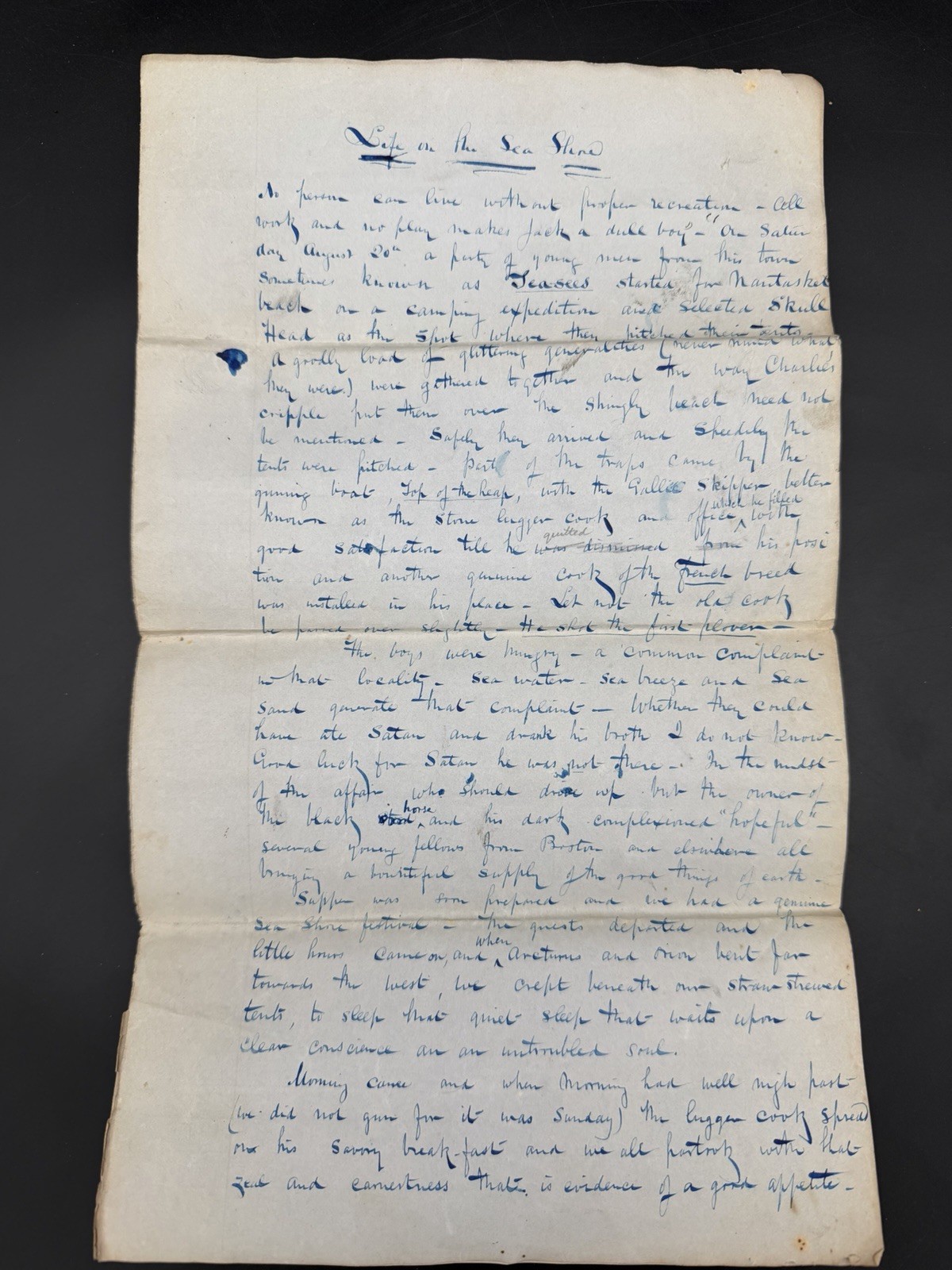
This manuscript is an entertaining, first-hand account of a summer camping excursion to Nantasket Beach, likely written in the mid-to-late 19th century.
Summary
The document, titled "Life on the Sea Shore," describes a camping trip taken by a party of young men from "this town" (possibly a Boston-area town, given the mention of visitors from Boston) to Nantasket Beach at "Skull Head".
The narrative is filled with humor and details about:
Camp Life: The group pitched tents, dealt with hungry companions, and engaged in shooting birds for their meals.
The "Cooks": A significant portion of the text is dedicated to the rivalry and skills of the camp's "cooks," humorously referred to as "the stone lugger cook" and "the French cook".
Gastronomy: The author vividly lists the elaborate meals served in camp, including clam chowder, lobster, roasted potatoes, ham, corned beef, and various puddings.
The Grand Menu: The document concludes with a mock-formal French menu listing the elaborate courses served to the party and their guests, including "Soupe," "Ham - fite ala Francaise," and "Cafe au lait et Eau glace".
Historical Significance
This is a charming piece of 19th-century American social history. It captures the rise of "camping" as a recreational activity for young men, reflecting the period's cultural emphasis on masculinity, camaraderie, and outdoor adventure. The humorous, high-brow tone used to describe rugged camp life—and the parody of fine dining menus—provides insight into the social life and aspirations of the time.