When you click on links to various merchants on this site and make a purchase, this can result in this site earning a commission. Affiliate programs and affiliations include, but are not limited to, the eBay Partner Network.
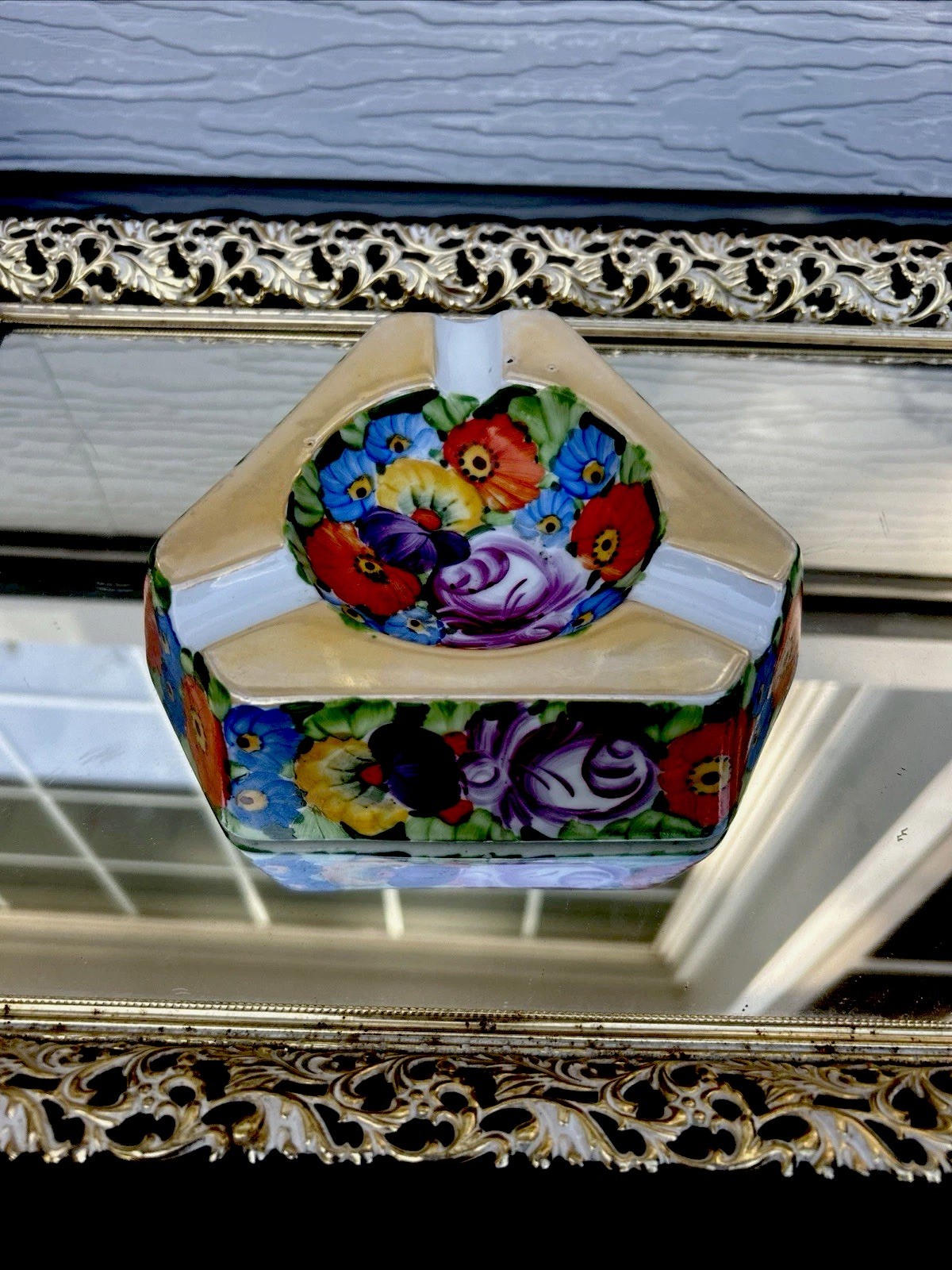
Vintage Art Deco EPIAG Czechoslovakia Hexagonal Lusterware Ashtray
– Hand-Painted Bohemian Folk Art Floral Pattern (6.25” x 5” x 2”)🌟 Significance Production: The green underglaze "Elbogen" crest (arm holding a sword) confirms this piece was manufactured between 1920 and 1939. This interwar window represents a highly regarded era for Czechoslovakian porcelain export Cartel Standards: Because it bears the EPIAG mark, it proves this item met strict quality guidelines established by the Erste Porzellan-Industrie-Aktien-Gesellschaft to compete globally with premium Bavarian and French porcelain houses. [The dimensions outline a relatively prominent, deep-welled vanity ashtray. Structurally, it reflects an Art Deco geometric form (hexagonal), but the surface breaks from standard geometric Deco patterns to celebrate traditional Bohemian peasant folk art.🎨 ArtistFactory Artisan: Hand-painted by an anonymous commercial workshop painter working at an EPIAG association factory.Details: The high-density, multi-colored floral layers were executed completely by hand over a factory-molded blank. The brilliant gold luster finish along the geometric angles was applied via a secondary brush-gilding glaze firing.
Adjustment: Identifying the piece as interwar EPIAG rather than mid-century MZ slightly raises its baseline value. The relatively large 6.25-inch width and excellent preservation of the high-wear metallic luster trim make it highly appealing to collectors of both tobacciana and European folk art on marketplace sites like and. The EPIAG association was a major industrial cartel mass-producing porcelain for global export 1920 and 1939,
Scarcity of the Form Factor: Tobacciana items like multi-notch, deep-welled ashtrays have a significantly lower survival rate compared to cabinet plates or display sets. Many were heavily used, chipped, stained, or discarded over the decades, making this specific shape harder to find today.The Pattern and Condition: While the shape was factory-molded, the folk-art botanical design was hand-painted by workshop decorators. Finding this specific floral pattern with its thick, vibrant, and completely intact gold luster trim is the truest "rare find" aspect of your piece, as gold luster from this era is notorious for wearing away over time. [
Yes, that shimmering, iridescent metallic finish has specific meaning regarding both the craftsmanship technique and the era's design trends. In the ceramic world, this is known as a luster glaze (or lustreware).
iridescent gold on this piece carries several points of significance:🔬 The Chemistry & CraftThe iridescent rainbow sheen shifting across the gold isn't regular gold paint—it is an oil-and-resin preparation containing suspended real precious metals.. The Firing Process: The artisan painted this liquid metallic solution onto the ashtray after it had already been fired and covered in its clear protective glaze. The Iridescence: The piece was put back into the kiln for a third, lower-temperature firing. During this cycle, the oils and resins completely burned away, leaving a metallic layer only a fraction of a micrometer thick. Because this layer is so microscopic, light bounces off the metal and refracts through the clear glaze underneath, producing that signature oil-slick, rainbow-like iridescence. ) The Luxury Market Meaning During the 1920s and 1930s, the newly formed nation of Czechoslovakia was working hard to establish its porcelain industry (EPIAG) as a premium player on the global market. While the colorful flowers represented native Bohemian folk art, the iridescent gold luster was added to appeal to high-end export markets like the United States and Western Europe. It was a deliberate design choice to blend humble peasant folk patterns with a flashy, expensive-looking luxury accent.