When you click on links to various merchants on this site and make a purchase, this can result in this site earning a commission. Affiliate programs and affiliations include, but are not limited to, the eBay Partner Network.
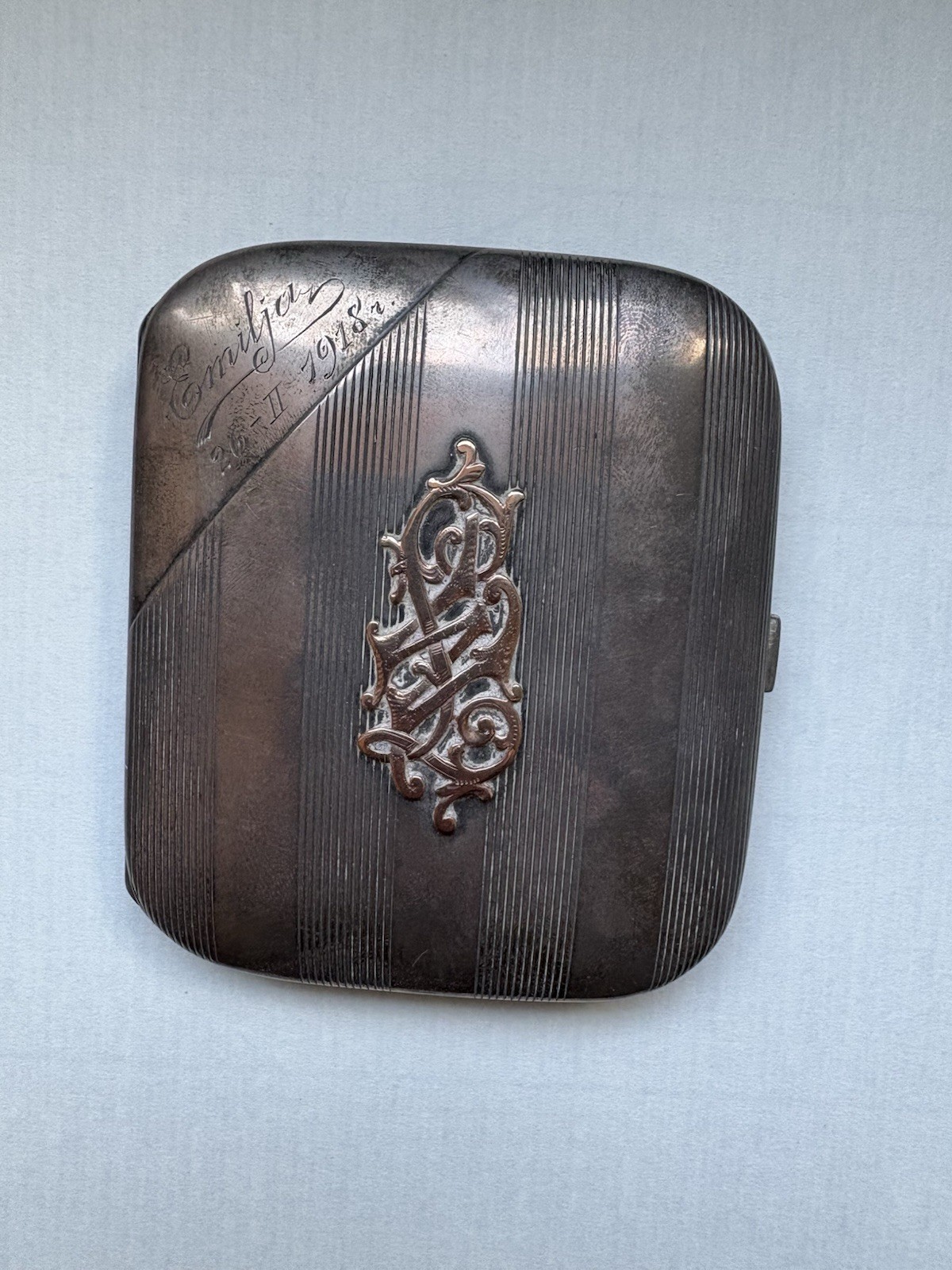
The cigarette case was given by a relative to her husband on the occasion of their wedding in Warsaw Poland, approximately 1918
Below is the analysis from Gemini on the antique case.
The rectangular maker's punch stamped adjacent to the assay mark shows the Latin initials "WR" (or W.R.).
1. Why Latin Initials on "84" Russian Silver?
During the Russian Partition of Poland (until late 1918), silver workshops in cities like Warsaw, Łódź, and Wilno were legally bound to use the Imperial Russian assay system (84 zolotnik / Kokoshnik). However, unlike native Russian masters who stamped in Cyrillic (e.g., ВР), Polish silversmiths and workshops routinely registered their official maker's marks using Latin script (WR).
2. Primary Silversmith Candidates
Władysław Radke (or Radtke) — Warsaw: One of the primary candidate workshops active in Warsaw during the late 19th and early 20th centuries. The workshop was known for fine silver hollowware and personal luxury accessories (cigarette cases, compacts, and card cases).
Wincenty Rapaport — Warsaw: Registered under "WR" in the late 19th and early 20th centuries for specialized silver and jewelry goods under the Warsaw Assay Office.
Władysław Rytel / Władysław Riesner: Other Warsaw-area master silversmiths registered under the Latin initials "WR" in the late Imperial / early independent Polish hallmark registers.
(Note: While the Baltic/St. Petersburg workmaster Wilhelm Reimer also used a "WR" punch, his workshop primarily worked for Fabergé in St. Petersburg; the Polish inscription and regional style strongly point to a Warsaw/Congress Poland workshop).
FREE SHIPPIING