When you click on links to various merchants on this site and make a purchase, this can result in this site earning a commission. Affiliate programs and affiliations include, but are not limited to, the eBay Partner Network.
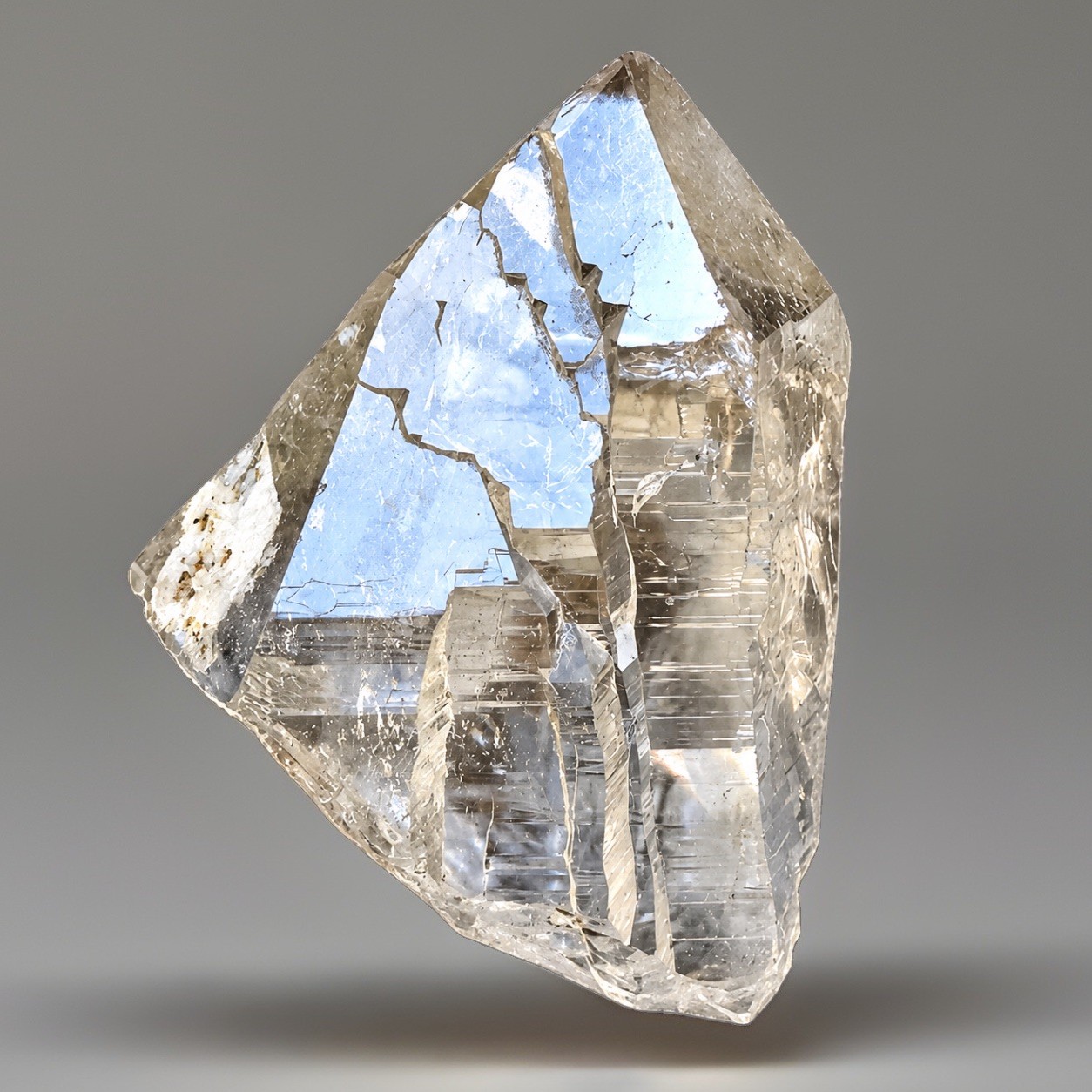
Weight60.0 g0.060 kg2.12 oz0.132 lb300 carats⸻DimensionsLongest side60.48 mm6.05 cm2.38 inches⸻This piece comes from my personal collection, carefully kept as a natural mineral display specimen.“Steps of Light” is a highly transparent white Himalayan quartz from Ganesh Himal, Nepal, distinguished by an exceptionally rich combination of natural growth textures and beautifully layered formations.One of the most striking features of this piece is its pronounced stacked growth. Layer after layer of crystal structure appears to build and rise across the specimen, creating an intricate, three-dimensional formation. These naturally stacked layers catch the light at different levels, creating the visual impression of illuminated steps—the inspiration behind the name “Steps of Light.”The crystal displays beautiful layered mountain compression patterns, with multiple ridges and textures stacked closely together. Across these formations are prominent intersecting mountain fault patterns, crossing from front to back and creating remarkable depth throughout the specimen. From different viewing angles, the overlapping structures resemble multiple mountain layers compressed and interwoven within one crystal.Another major feature is the extensive circuit-board-like patterning. Intricate geometric lines, stepped sections, angular structures, and complex natural growth markings spread across the crystal faces. Together with the mountain patterns and stacked growth, these textures create the distinctive and highly detailed surface character seen in this Ganesh Himal specimen.Numerous natural growth lines and horizontal growth patterns are visible throughout the quartz. The patterns change from face to face, with some areas showing finer linear details and others developing into deeper, more strongly layered structures.Small wind-eroded pits and natural surface depressions are also present across portions of the crystal. These small pits sit among the larger growth structures and add another layer of natural surface texture.Despite its extremely rich surface detail, the crystal remains highly transparent. Large areas allow light to pass clearly through the quartz, revealing the overlapping textures and internal depth beneath the surface. When the specimen is turned under light, the transparent faces, stepped structures, and layered growth surfaces produce strong reflections and flashes that move across the crystal like steps of light.Along the side is a visible white feldspar association, providing a natural white mineral contrast against the highly transparent quartz body.The bottom of the specimen shows a naturally fractured and healed surface. The fractured area has undergone natural healing and regrowth, developing a beautiful frosted healed surface with a soft, mist-like appearance. This frosted healing contrasts strongly with the transparency of the main crystal and preserves another important part of its natural formation history.Natural Features:* Ganesh Himal, Nepal
* White Himalayan quartz
* Highly transparent crystal body
* Strong stacked growth
* Layered mountain compression patterns
* Intersecting mountain fault patterns
* Distinct circuit-board-like patterns
* Intricate geometric and stepped growth structures
* Natural horizontal growth lines
* Rich layered surface textures
* Small wind-eroded pits and natural depressions
* White feldspar association along the side
* Naturally fractured and healed base
* Frosted healing and regrowth surface
* Strong vitreous luster
* Excellent light transmission through the transparent crystal
* Natural formation marks preserved throughoutThis specimen is natural, untreated, unpolished, and not artificially shaped. Its stacked growth, mountain compression patterns, intersecting mountain fault patterns, circuit-board textures, wind-eroded pits, feldspar association, healed base, and other natural surface marks remain preserved as part of the specimen’s original character.