When you click on links to various merchants on this site and make a purchase, this can result in this site earning a commission. Affiliate programs and affiliations include, but are not limited to, the eBay Partner Network.
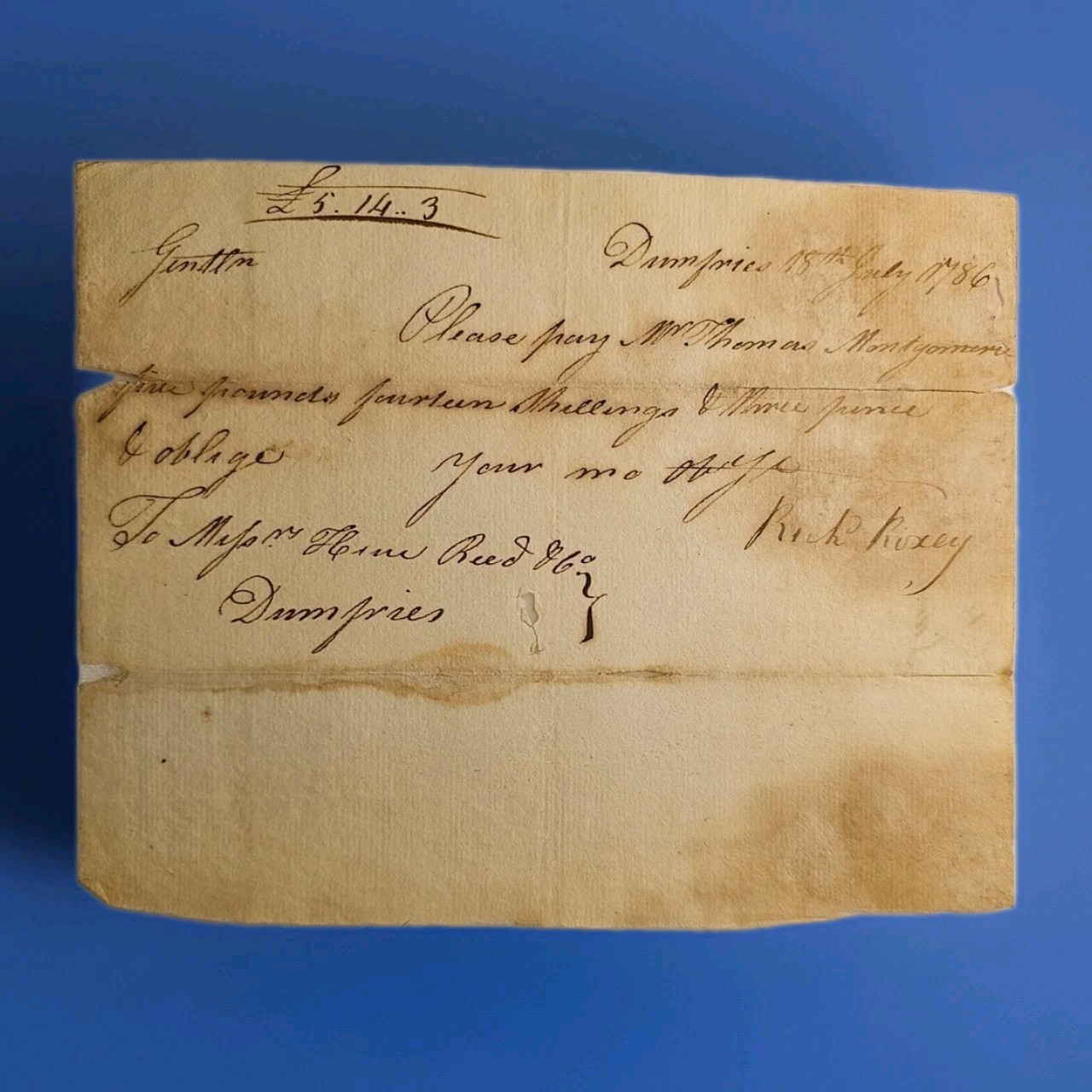
1786 Dumfries Virginia Merchant Order / Commercial Manuscript
Huie Reed & Co. • Thomas Montgomery • Richard Rixey Sr.John Taylor Watermark • Revolutionary Era Potomac Trade
Offered here is an authentic and historically important merchant manuscript/order dated July 18, 1786, originating from Dumfries, Prince William County, Virginia, one of the leading tobacco export ports of early America.
The document references:
- Huie Reed & Co. (also encountered historically as Huie, Reid & Co.)
- Thomas Montgomery
- and likely Richard Rixey Sr., patriarch of the notable Northern Virginia Rixey family.
The manuscript reads in part:
“Please pay Mr. Thomas Montgomery five pounds fourteen shillings & three pence…”
A remarkable survival from the fragile economic rebuilding years immediately following the American Revolution, this piece embodies the interconnected worlds of:
- Potomac River commerce
- Scottish-American mercantile trade
- Virginia land development
- and post-colonial Atlantic finance.
Thomas Montgomery – Merchant, Trustee & Potomac Developer
The Thomas Montgomery referenced in this document was a prominent merchant, businessman, and property owner active in Dumfries during the critical post-Revolutionary period.
In April 1786, Montgomery was involved in documented real estate transactions in Prince William County, including the purchase of property from Johnston and Nancy Smith, demonstrating his standing within the commercial elite of the region.
Beyond his mercantile operations, Montgomery also held civic importance. He served as one of the appointed trustees for the proposed town of Newport, a planned commercial settlement established by act of the Virginia General Assembly along the Potomac River near Quantico Creek.
This places Montgomery among the early businessmen, speculators, and civic planners attempting to expand Northern Virginia’s trade infrastructure during the formative years of the United States.
Historical references further indicate that Montgomery employed clerks and agents to manage aspects of his commercial affairs within the still heavily British-influenced Atlantic mercantile system.
Huie Reed & Co. – Dumfries Merchant House
The document is directed to Huie Reed & Co., a Scottish-linked merchant concern operating in Dumfries during the late colonial and Confederation-era period.
Dumfries was among the busiest tobacco ports on the Potomac River during the 18th century, serving as a major shipping center for:
- tobacco exports
- imported British goods
- sugar and rum trade
- Atlantic credit networks
- and plantation commerce.
Scottish merchant firms like Huie Reed & Co. were central to Virginia’s economy, financing plantations and connecting local producers to international markets.
Surviving manuscripts directly tied to identifiable Dumfries merchant firms are increasingly scarce.
Richard Rixey Sr. – Early Northern Virginia Patriarch
The “Rich Rixey” notation aligns strongly with Richard Rixey Sr., an established planter and landowner of Prince William County.
Rixey settled in Northern Virginia around 1740 and acquired significant acreage in the region, including land purchased from William and Elizabeth Champe. By the 1780s he had become a recognized local patriarch and member of the landed class of the Potomac region.
Importantly, Richard Rixey Sr. died later in 1786, the same year this manuscript was written. His probate inventory was recorded in Prince William County Will Book G and documented a substantial estate including:
- agricultural property
- livestock
- household furnishings
- servants
- and enslaved individuals.
The Rixey family would become one of the best-known families in Northern Virginia, with descendants eventually including:
- Eppa Rixey, Baseball Hall of Fame pitcher
- Presley Marion Rixey, U.S. Navy Surgeon General and physician to President Theodore Roosevelt.
This document may therefore represent a direct commercial association with the founding generation of that influential Virginia family.
John Taylor Watermark
The laid paper bears a visible “Taylor” watermark, attributable to John Taylor, a noted English papermaker of the 18th century.
Taylor paper was widely exported throughout the British Atlantic world and commonly used in colonial American legal, financial, and mercantile correspondence.
The watermark provides:
- strong authenticity
- period dating evidence
- and a tangible link to Atlantic trade infrastructure still relied upon by Americans after independence.
Collectors and historians highly value identifiable papermaker watermarks because they help trace commercial and manufacturing networks across the 18th-century English-speaking world.
Historical Context
By 1786, the United States was operating under the Articles of Confederation. Virginia’s commercial economy was rebuilding after the Revolutionary War, yet merchants still relied heavily upon British paper, Scottish trade houses, handwritten credit systems, and long-established Atlantic mercantile customs.
Dumfries itself was one of the principal commercial gateways on the Potomac River before silting and changing trade routes caused its later decline.
Documents combining:
- identifiable merchants
- civic trustees
- Potomac River trade
- prominent Virginia families
- and a documented papermaker watermark
are highly desirable and increasingly difficult to locate.
Condition
- Original handwritten manuscript document
- Dated July 18, 1786
- Approx. 8 x 6 inches unfolded
- Brown iron gall ink on laid paper
- Visible “Taylor” watermark
- Fold wear and separations from period handling
- Minor edge wear, toning, and paper loss
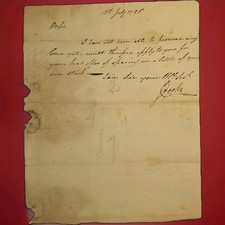
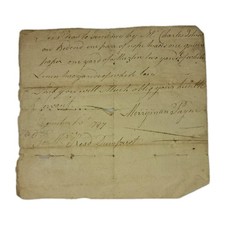
- Reverse with additional period manuscript notation
- Attractive display quality with strong colonial handwriting
Collector Appeal
An exceptional item for collectors of:
- Colonial & Revolutionary America
- Virginia history
- Prince William County
- Dumfries & Potomac River commerce
- Scottish-American trade
- Early American finance
- Watermarked paper
- Merchant manuscripts
- Genealogical and family history material
- 18th-century Atlantic trade networks
An outstanding and highly evocative survivor from the formative commercial years of the United States.