When you click on links to various merchants on this site and make a purchase, this can result in this site earning a commission. Affiliate programs and affiliations include, but are not limited to, the eBay Partner Network.
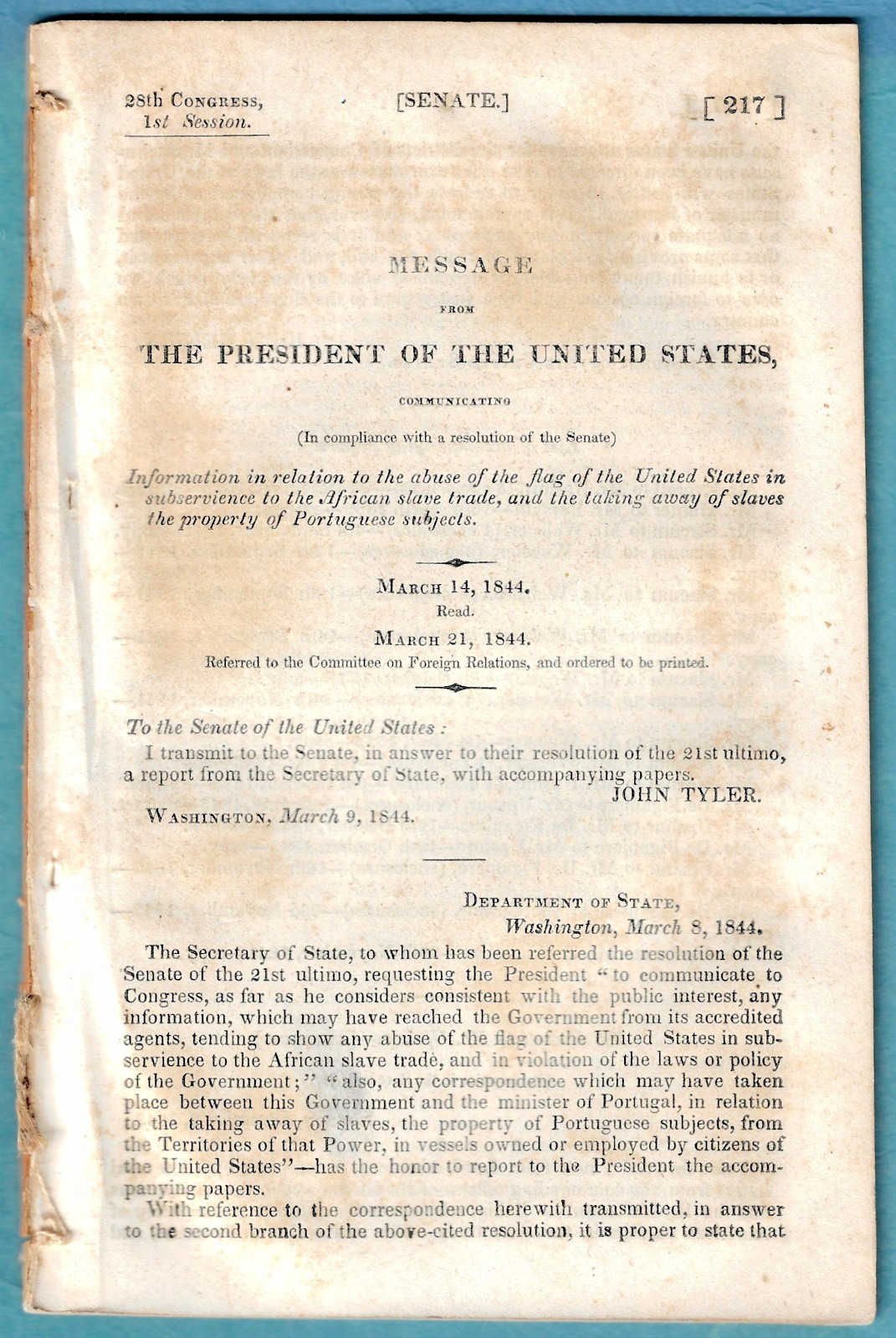
51-page Senate Document from 1844. Extracted from larger volume. Some foxing. Very good condition.
This historical document, Senate Document 217 from the 28th Congress, 1st Session, is an official executive message sent to the U.S. Senate by President John Tyler on March 14, 1844. The 51-page text compiles diplomatic correspondence, complaints, and legal affidavits regarding two (2) major international issues on the high seas:
1). Exploitation of the American Flag. By 1844, the international slave trade was legally abolished by most major western powers, and the British Royal Navy actively patrolled the African coast to intercept slave ships. However, because the United States fiercely resisted allowing foreign nations to search American vessels, slave traders from various countries began illegally flying the U.S. flag as a shield. This document contains evidence that foreign operators, often with the help of corrupt agents, were using American-flagged ships (such as whalers and barques) to traffic enslaved people without being searched by British patrols.
2). Abduction of Portuguese "Property." The document features strong protests and affidavits from Portuguese slaveholders. They accused certain American crews of actively abducting enslaved individuals, whom the Portuguese classified as their legal property; from coastal settlements or vessels.
Historical Context & Significance. {Presidential Stance}:
President John Tyler, a Virginia slaveholder himself, approached this issue from a perspective that strongly protected the rights of slave owners. He sought to defend the integrity of the U.S. flag while simultaneously addressing complaints about the unlawful seizure of what slave-holding nations legally recognized as property.
Diplomatic Strain: The text highlights the intense geopolitical friction between the United States, Great Britain, and Portugal regarding maritime sovereignty, human rights, and the uneven enforcement of slave trade Subject Premium: Ephemera and government documents directly covering the Transatlantic Slave Trade, maritime law, and African-American history are highly sought after by specialized institutional archives and private Americana collectors. Scarcity vs. Institutional Availability: While the digital text is preserved across many academic databases, the survival rate of these fragile, physical paper documents from the 28th Congress makes crisp, complete copies relatively rare on the open antiquarian market].
955 Our 27th year on