When you click on links to various merchants on this site and make a purchase, this can result in this site earning a commission. Affiliate programs and affiliations include, but are not limited to, the eBay Partner Network.
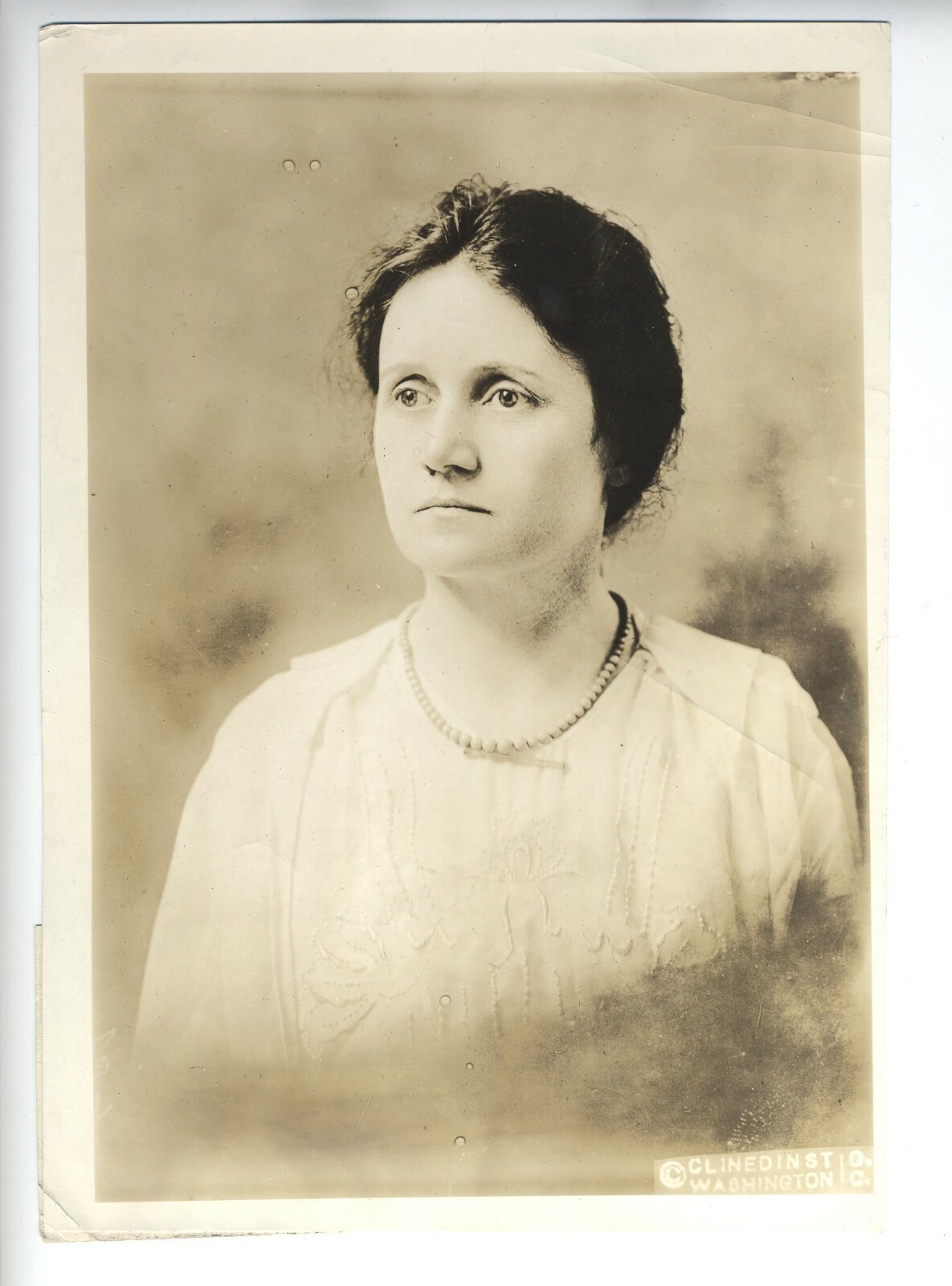
MRS. SARAH GREEN APPROXMATELY 6 1/2 X 9 1/2 INCH VINTAGE ORIGINA PHOTO OF THIS PRESIDENT OF THE WOMENS TRADE UNION LEAGUE, KANSAS CITY, MO, AND OF THE WAITRESSES UNION OF THAT CITY, WHO IS ATTENDING THE SIXTH BIENNIAL CONVENTION OF THE NATIONAL WOMEN TRADE UNION LEAGUE BEING HELD IN PHILADELPHIAThe Women\'s Trade Union League was a U.S. organization of both working class and more well-off women to support the efforts of women to organize labor unions and to eliminate sweatshop conditions.Women’s Trade Union League (WTUL), American organization, the first national association dedicated to organizing women workers. Founded in 1903, the WTUL proved remarkably successful in uniting women from all classes to work toward better, fairer working conditions. The organization relied largely upon the resources of its own members, never receiving more than token financial support from the American Federation of Labor (AFL) or other major organized labour groups.
National convention of the Women\'s Trade Union LeagueNational convention of the Women\'s Trade Union LeagueNational convention of the Women\'s Trade Union League, 1913.Library of Congress, Washington, D.C. (LC-USZ62-63378)The Peace Palace (Vredespaleis) in The Hague, Netherlands. International Court of Justice (judicial body of the United Nations), the Hague Academy of International Law, Peace Palace Library, Andrew Carnegie help pay forBRITANNICA QUIZWorld Organizations: Fact or Fiction?France is a member of the Group of Eight.The WTUL came into existence as a result of a 1903 Boston meeting of the AFL, during which it became clear that the AFL had no intention of including women within its ranks. Later that year labour leaders Mary Kenney O’Sullivan and Leonora O’Reilly and settlement workers Lillian Wald and Jane Addams helped found the WTUL, and by 1904 the organization had branches in Chicago, New York City, and Boston. From the outset the organization had a strong reformist agenda, working in the tradition of social settlements to provide working women with educational opportunities while also striving to improve working conditions.
The organization achieved its greatest successes during the presidency of social reformer Margaret Dreier Robins. From 1907 to 1922, under Robins’s leadership, the organization fought for an eight-hour workday, the establishment of a minimum wage, the end of night work for women, and the abolition of child labour. During the garment industry strikes of 1909–11, league members marched side by side with striking workers and helped set up strike funds. Some of the wealthier members boycotted the clothing manufacturers who refused to settle with strikers. Following the disastrous 1911 Triangle shirtwaist factory fire in New York City, league members conducted a four-year investigation of factory conditions that helped establish new regulations.
Women\'s Trade Union League float in a Labor Day parade, New York City, 1908.Women\'s Trade Union League float in a Labor Day parade, New York City, 1908.Bain News Service/Library of Congress, Washington, D.C. (LC-DIG-ggbain-02144)00:0003:22
By the mid-1920s the league’s leadership had passed from the hands of affluent middle-class women to women with working-class backgrounds. During the late 1920s, however, and continuing through the Great Depression, the league suffered serious financial problems that permanently weakened the organization. In 1950 it was dissolved.
he Women\'s Trade Union League (WTUL) (1903–1950) was a U.S. organization of both working class and more well-off women to support the efforts of women to organize labor unions and to eliminate sweatshop conditions. The WTUL played an important role in supporting the massive strikes in the first two decades of the twentieth century that established the International Ladies\' Garment Workers\' Union and Amalgamated Clothing Workers of America and in campaigning for women\'s suffrage among men and women workers.Contents1 Origins2 Support for union organizing3 Support for legislative reforms4 See also5 Footnotes6 Further readingOriginsThe roots of the WTUL come from a British organization of the same name founded thirty years earlier. The British League had originally supported the creation of a separate women\'s labor movement but, by the 1890s, merged its own aims with the mainstream British labor movement and functioned as an umbrella organization of women\'s trade unions. Its first American supporter was the socialist William English Walling who met with British WTUL leaders in 1902. He returned to the United States and began to generate support for a similar American organization.[citation needed]
Organized in 1903 at the American Federation of Labor convention, the WTUL spent much of its early years trying to cultivate ties with the AFL leadership. Its first president was Mary Morton Kehew, a labor and social reformer from Boston.[1] By 1907, the WTUL saw its purpose as supporting the AFL and encouraging women\'s membership in the organization. In its constitution that year, the WTUL defined its purpose in assisting \"in organizing women into trade unions...such unions to be affiliated, where practicable, with the American Federation of Labor.\" In response, the AFL leadership generally ignored the League. When the WTUL decided to hold its annual conference at a different location than the AFL in 1905, Samuel Gompers was furious and refused to attend. Still, the League did push the AFL towards a pro-suffrage position and did manage to organize more women into the Federation than at any previous time.
It also drew on the earlier work of activists in the settlement house movement, such as Jane Addams and Florence Kelley, and budding unions in industries with a large number of women workers, such as garments and textiles. The WTUL leadership comprised both upper-class philanthropists and working-class women with experience organizing unions, including a significant portion of the most important female labor leaders of the day, including Mary Kenney O\'Sullivan and Rose Schneiderman.
The heyday of the League came between 1907 and 1922 under the presidency of Margaret Dreier Robins.[2] During that period, the WTUL led the drive to organize women workers into unions, secured protective legislation, and educated the public on the problems and needs of working women.[3]
Support for union organizing
WTUL float, Labor Day parade, New York, 1908The League supported a number of strikes in the first few years of its existence, including the 1907 telegrapher\'s strike organized by the Commercial Telegraphers Union of America. The WTUL played a critical role in supporting the Uprising of the 20,000, the New York City and Philadelphia shirtwaist workers\' strike, by providing a headquarters for the strike, raising money for relief funds, soup kitchens and bail for picketers, providing witnesses and legal defense for arrested picketers, joining the strikers on the picket line, and organizing mass meetings and marches to publicize the shirtwaist workers\' demands and the sweatshop conditions they were fighting. Some observers made light of the upper-class women members of the WTUL who picketed alongside garment workers, calling them the \"mink brigade\". These distinctions split strikers from their upper-class benefactors as well: a contingent of strikers challenged Alva Belmont concerning her reasons for supporting the strike.[citation needed]
The strike was, however, less than wholly successful: Italian workers crossed the picket lines in large numbers and the strikers lacked the resources to hold out longer than the employers. In addition, although activists within the WTUL, including William E. Walling and Lillian D. Wald, were also among the founders of the NAACP that year and fought the employers\' plan to use African-American strikebreakers to defeat the strike, others in the black community actively encouraged black workers to cross the picket lines. Even so, the strike produced some limited gains for workers, while giving both the WTUL and women garment workers a practical education in organizing.[citation needed]1st International Congress of Working Women called by the National Women\'s Trade Union League of America, Washington, D.C., October 28, 1919The WTUL played a similar role in the strike of mostly male cloakmakers in New York City and men clothing workers in Chicago in 1910, in the 1911 garment workers strike in Cleveland and in many other actions in Iowa, Massachusetts, Missouri and Wisconsin. By 1912, however, the WTUL began to distance itself from the labor movement, supporting strike action selectively when it approved of the leadership\'s strategy and criticizing the male-dominated leadership of the ILGWU that it saw as unrepresentative of women workers. The WTUL\'s semi-official relationship with the American Federation of Labor was also strained when the United Textile Workers, an AFL affiliate, insisted that it stop providing relief for Lawrence, Massachusetts textile workers who refused to return to work during the strike led by the Industrial Workers of the World; some WTUL leaders complied, while others refused, denouncing both the AFL and the WTUL for its acquiescence in strikebreaking activities.
The League had a closer relationship with the Amalgamated Clothing Workers of America, the union formed by the most militant locals of mostly immigrant workers in the men\'s clothing industry in Chicago, New York and other eastern urban centers, which was outside the AFL. The WTUL trained women as labor leaders and organizers at its school founded in Chicago in 1914 and played a key role in bringing Italian garment workers into the union in New York.[citation needed]
Support for legislative reformsAt this time the WTUL also began to work for legislative reforms, in particular the eight-hour day, the minimum wage and protective legislation. Because of the hostility of the United States Supreme Court toward economic legislation at the time, only legislation that singled out women and children for special protections survived challenges to its constitutionality. Ironically, Samuel Gompers and the conservative leadership of the AFL also viewed such legislation with hostility, but for a different reason: they believed by that point that legislation of this sort interfered with collective bargaining, both by usurping the role of unions in obtaining better wages and working conditions and in setting a precedent for governmental intrusion into the area.
The WTUL was also active in demanding safe working conditions, both before and after the Triangle Shirtwaist Factory fire in 1911 in which 146 workers were killed. That fire, which had been preceded by a similar fire in Newark, New Jersey in which twenty-five garment workers were killed, not only galvanized public opinion on the subject, but also exposed the fissures between the League\'s well-heeled supporters and its working class militants, such as Rose Schneiderman. As Schneiderman said in her speech at the memorial meeting held in the Metropolitan Opera House on April 2, 1911:
I would be a traitor to these poor burned bodies if I came here to talk good fellowship. We have tried you good people of the public and we have found you wanting. The old Inquisition had its rack and its thumbscrews and its instruments of torture with iron teeth. We know what these things are today; the iron teeth are our necessities, the thumbscrews are the high-powered and swift machinery close to which we must work, and the rack is here in the firetrap structures that will destroy us the minute they catch on fire.This is not the first time girls have been burned alive in the city. Every week I must learn of the untimely death of one of my sister workers. Every year thousands of us are maimed. The life of men and women is so cheap and property is so sacred. There are so many of us for one job it matters little if 146 of us are burned to death.We have tried you citizens; we are trying you now, and you have a couple of dollars for the sorrowing mothers, brothers and sisters by way of a charity gift. But every time the workers come out in the only way they know to protest against conditions which are unbearable the strong hand of the law is allowed to press down heavily upon us.Public officials have only words of warning to us – warning that we must be intensely peaceable, and they have the workhouse just back of all their warnings. The strong hand of the law beats us back, when we rise, into the conditions that make life unbearable.I can\'t talk fellowship to you who are gathered here. Too much blood has been spilled. I know from my experience it is up to the working people to save themselves. The only way they can save themselves is by a strong working-class movement.The WTUL also began to work actively for women\'s suffrage, in close coalition with the National American Woman Suffrage Association, in the years before passage of the Nineteenth Amendment to the United States Constitution in 1920. The WTUL saw suffrage as a way to gain protective legislation for women and to provide them with the dignity and other less tangible benefits that followed from political equality. Schneiderman coined an evocative phrase in campaigning for suffrage in 1912:
What the woman who labors wants is the right to live, not simply exist — the right to life as the rich woman has the right to life, and the sun and music and art. You have nothing that the humblest worker has not a right to have also. The worker must have bread, but she must have roses, too. Help, you women of privilege, give her the ballot to fight with.Her phrase \"bread and roses\", recast as \"We want bread and roses too\", became the slogan of the largely immigrant, largely women workers of the 1912 Lawrence textile strike.
The WTUL was, on the other hand, mistrustful of the National Woman\'s Party, with its more individualistic, rights-oriented approach to woman\'s equality. The WTUL was strongly opposed to the Equal Rights Amendment drafted by the NWP after the passage of the Nineteenth Amendment on the ground that it would undo the protective legislation that the WTUL had fought so hard to obtain.
The WTUL focused increasingly on legislation in the 1920s and thereafter. Its leadership, in particular Schneiderman, were supporters of the New Deal and had a particularly close connection to the Roosevelt administration through Eleanor Roosevelt, a member of the WTUL since 1923. The WTUL dissolved in 1950.
A related organization was the Women\'s Education and Industrial Union (WEIU), which employed female researchers such as Louise Marion Bosworth to research the working conditions of women.
See alsoJosephine Casey, charter member[4]Julia O\'Connor, President of Boston WTUL (1915-1918)Timeline of women\'s suffrageTimeline of women\'s rights (other than voting)Women\'s suffrage organizations
National Women’s Trade Union League (NWTUL)Introduction: Women working in factories often faced terrible working conditions and low wages. During the Progressive Era, working-class women, alone and in concert with middle-class women, fought to raise wages and improve working conditions. The National Women’s Trade Union League of America (NWTUL) was established in Boston, MA in 1903, at the convention of the American Federation of Labor. It was organized as a coalition of working-class women, professional reformers, and women from wealthy and prominent families. Its purpose was to “assist in the organization of women wage workers into trade unions and thereby to help them secure conditions necessary for healthful and efficient work and to obtain a just reward for such work.”
National Women\'s Trade Union LeagueNational Women’s Trade Union LeagueHistory: The roots of the WTUL come from a British organization of the same name founded thirty years prior. The British League had originally supported the creation of a separate women’s labor movement but, by the 1890s, merged its own aims with the mainstream British labor movement and functioned as an umbrella organization of women’s trade unions. Organized in 1903 at the American Federation of Labor (AFL) convention, the WTUL spent much of its early years trying to cultivate ties with the AFL leadership. By 1907, the WTUL saw its purpose as supporting the AFL and encouraging women’s membership in the organization. In its constitution that year, the WTUL defined its purpose in assisting “in organizing women into trade unions…such unions to be affiliated, where practicable, with the American Federation of Labor.” In response, the AFL leadership generally ignored the League. When the WTUL decided to hold its annual conference at a different location than the AFL in 1905, Samuel Gompers was furious and refused to attend. Still, the League did push the AFL towards a pro-woman suffrage position and did manage to organize more women into the Federation than at any previous time.
It also drew on the earlier work of activists in the settlement house movement such as Jane Addams and Florence Kelley, and budding unions in industries with a large number of women workers, such as garments and textiles. The WTUL leadership comprised both upper-class philanthropists and working-class women with experience organizing unions, including a significant portion of the most important female labor leaders of the day, including Rose Schneiderman.
But the heyday of the League came between 1907 and 1922 under the presidency of Margaret Dreier Robins. During that period, the WTUL led the drive to organize women workers into unions, secured protective legislation, and educated the public on the problems and needs of working women.
Women working in a box factory, 1910, Library of CongressWomen working in a box factory, 1910, Library of Congress, LC-USZ62-53225Women making teddy bears in a factory, 1915Women making teddy bears in a factory, 1915, Library of Congress, LC-USZ62-108038From 1907 through 1922, the WTUL achieved a number of its legislative goals, including an eight-hour workday, a minimum wage, and the abolition of child labor. Following the Triangle Factory Fire in 1911 the WTUL took part in a four-year investigation that ultimately helped establish new industrial safety regulations. In addition, the league helped women gain access to labor unions, trained women for leadership positions within unions, and even provided temporary assistance for unemployed trade union women.
At a time when organized labor was devoted to a “family wage” concept—that is, a wage for men at which they could support an entire family without the contribution of a working wife—and when union leaders were worried that increased participation of women in labor markets would drive down men’s wages, traditional unions were largely unwilling to allow women into their ranks. When women did form unions and strike, the NWTUL often provided support where other unions held back.
NWTUL Participating in the September 7, 1908NWTUL Participating in the September 7, 1908 Labor Day Parade in NYCPerhaps most importantly, the WTUL emerged as the central meeting place for reform-minded women interested in labor issues, and it was through the WTUL that many of these women cultivated important political relationships. Eleanor Roosevelt became an active league member in 1922, cementing her ties to figures like Rose Schneiderman and Margaret Dreier Robins. These women eventually became staunch Roosevelt allies, providing the WTUL important access to powerful politicians and ensuring that their voices would be factored into the formulation of labor policy in Washington. Despite the league’s closeness to the White House during the Roosevelt years, the WTUL’s role grew increasingly irrelevant once traditional labor unions allowed women to join on a widespread basis. Mounting financial problems and declining membership numbers also hampered WTUL’s effectiveness. Even though Eleanor Roosevelt remained supportive of the League until the end, when the NWTUL was forced to disband in 1950 due to diminished funds and personnel
The Chicago Women\'s Trade Union League (WTUL) was one of the most active branches of a national organization that aimed to organize women workers into trade unions, lobby for protective legislation and woman suffrage, and promote vocational education. Its membership included both working-class women and upper-class “allies” who supported the organization financially. Led by an unusual and at times uneasy mix of civic reformers including Jane Addams and Mary McDowell and trade unionists including Agnes Nestor and Mary Anderson, the WTUL held its meetings in Hull House from its inception in January 1904 until 1908, when it moved to the offices of the Chicago Federation of Labor. In addition to supporting strikes of women workers, WTUL programs included musical and dramatic clubs, a national publication edited in Chicago by Alice Henry, educational programs such as English-language classes and instruction on parliamentary procedure, and a visiting physicians program.Under the leadership of Margaret Dreier Robins, an upper-class woman who devoted her professional life to the organization, the Chicago WTUL deepened its alliance with the Chicago Federation of Labor, promoted the leadership of working-class women, and played a key role in the 1910–11 garment workers\' strike. In addition to providing food relief to strikers and their families through a system of commissaries, the WTUL helped draft the agreement ending the strike for workers at clothing manufacturer Hart, Shaffner & Marx, where women workers had sparked the citywide strike. The WTUL also played a role in efforts to organize domestic workers, office and department store workers, telephone operators, and women packinghouse workers.
Although the WTUL carried on until the 1950s, it became a less vital organizing force by the mid-1920s, especially after its national office moved from Chicago to Washington DC in 1929.
The Women\'s Trade Union League (WTUL), nearly forgotten in much of the mainstream, feminist, and labor history written in the mid-20th century, was a key institution in reforming women\'s working conditions in the early 20th century.
The WTUL not only played a pivotal role in organizing the garment workers and textile workers, but in fighting for protective labor legislation for women and better factory working conditions for all.
The WTUL also served as a community of support for women working within the labor movement, where they were often unwelcome and barely tolerated by the male national and local officers. The women formed friendships, often across class lines, as working-class immigrant women and wealthier, educated women worked together for both union victories and legislative reforms.
Many of the twentieth century\'s best-known women reformers were connected in some way with the WTUL: Jane Addams, Mary McDowell, Lillian Wald, and Eleanor Roosevelt among them.
WTUL BeginningsA 1902 boycott in New York, where women, mostly housewives, boycotted kosher butchers over the price of kosher beef, caught the attention of William English Walling. Walling, a wealthy Kentucky native living at the University Settlement in New York, thought of a British organization he knew a bit about: the Women\'s Trade Union League. He went to England to study this organization to see how it might translate to America.
This British group had been founded in 1873 by Emma Ann Patterson, a suffrage worker who was also interested in issues of labor. She had been, in her turn, inspired by stories of American women\'s unions, specifically the New York Parasol and Umbrella Makers\' Union and the Women\'s Typographical Union. Walling studied the group as it had evolved by 1902-03 into an effective organization that brought together middle-class and wealthy women with working-class women to fight for improved working conditions by supporting union organizing.
Walling returned to America and, with Mary Kenney O\'Sullivan, laid the groundwork for a similar American organization. In 1903, O\'Sullivan announced the formation of the Women\'s National Trade Union League, at the annual convention of the American Federation of Labor. In November, the founding meeting in Boston included the city\'s settlement house workers and AFL representatives. A slightly larger meeting, November 19, 1903, included labor delegates, all but one of whom were men, representatives from the Women\'s Educational and Industrial Union, who were mostly women, and settlement house workers, mostly women.
Mary Morton Kehew was elected the first president, Jane Addams the first vice-president, and Mary Kenney O\'Sullivan the first secretary. Other members of the first executive board included Mary Freitas, a Lowell, Massachusetts, textile mill worker; Ellen Lindstrom, a Chicago union organizer; Mary McDowell, a Chicago settlement house worker and experienced union organizer; Leonora O\'Reilly, a New York settlement house worker who was also a garment union organizer; and Lillian Wald, settlement house worker and organizer of several women\'s unions in New York City.
Local branches were quickly established in Boston, Chicago, and New York, with support from settlement houses in those cities.
From the beginning, membership was defined as including women trade unionists, who were to be the majority according to the organization\'s by-laws, and \"earnest sympathizers and workers for the cause of trade unionism,\" who came to be referred to as allies. The intention was that the balance of power and decision-making would always rest with the trade unionists.
The organization helped women start unions in many industries and many cities, and also provided relief, publicity, and general assistance for women\'s unions on strike. In 1904 and 1905, the organization supported strikes in Chicago, Troy, and Fall River.
From 1906-1922, the presidency was held by Margaret Dreier Robins, a well-educated reform activist, married in 1905 to Raymond Robins, head of the Northwestern University Settlement in Chicago. In 1907, the organization changed its name to the National Women\'s Trade Union League (WTUL).
WTUL Comes of AgeIn 1909-1910, the WTUL took a leading role in supporting the Shirtwaist Strike, raising money for relief funds and bail, reviving an ILGWU local, organizing mass meetings and marches, and providing pickets and publicity. Helen Marot, executive secretary of the New York WTUL branch, was the chief leader and organizer of this strike for the WTUL.
William English Walling, Mary Dreier, Helen Marot, Mary E. McDowell, Leonora O\'Reilly, and Lillian D. Wald were among the founders in 1909 of the NAACP, and this new organization helped support the Shirtwaist Strike by thwarting an effort of the managers to bring in black strikebreakers.
The WTUL continued to expand support of organizing campaigns, investigating working conditions, and aiding women strikers in Iowa, Massachusetts, Missouri, New York, Ohio, and Wisconsin.
From 1909 on, the League also worked for the 8-hour day and for minimum wages for women through legislation. The latter of those battles was won in 14 states between 1913 and 1923; the victory was seen by the AFL as a threat to collective bargaining.
In 1912, after the Triangle Shirtwaist Company fire, the WTUL was active in the investigation and in promoting legislative changes to prevent future tragedies such as this one.
That same year, in the Lawrence Strike by the IWW, the WTUL provided relief to strikers (soup kitchens, financial help) until the United Textile Workers pushed them out of the relief efforts, denying assistance to any strikers who refused to return to work. The WTUL/AFL relationship, always a bit uncomfortable, was further strained by this event, but the WTUL chose to continue to ally itself with the AFL.
In the Chicago garment strike, the WTUL had helped to support the women strikers, working with the Chicago Federation of Labor. But the United Garment Workers suddenly called off the strike without consulting these allies, leading to the founding of the Amalgamated Clothing Workers by Sidney Hillman, and a continuing close relationship between the ACW and the League.
In 1915, the Chicago Leagues started a school to train women as labor leaders and organizers.
In that decade, too, the league began to work actively for woman suffrage, working with the National American Woman Suffrage Association. The League, seeing woman suffrage as a route to gain protective labor legislation benefiting women workers, founded the Wage-Earners League for Woman Suffrage, and WTUL activist, IGLWU organizer and former Triangle Shirtwaist worker Pauline Newman was especially involved in these efforts, as was Rose Schneiderman. It was during these pro-suffrage efforts in 1912, that the phrase \"Bread and Roses\" came into use to symbolize the dual goals of reform efforts: basic economic rights and security, but also dignity and hope for a good life.
WTUL World War I - 1950During World War I, the employment of women in the U.S. increased to nearly ten million. The WTUL worked with the Women in Industry Division of the Department of Labor to improve working conditions for women, in order to promote more female employment. After the war, returning vets displaced women in many of the jobs they\'d filled. AFL unions often moved to exclude women from the workplace and from unions, another strain in the AFL/WTUL alliance.
In the 1920s, the League began summer schools to train organizers and women workers at Bryn Mawr College, Barnard College, and Vineyard Shore. Fannia Cohn, involved in the WTUL since she took a labor education class with the organization in 1914, became Director of the ILGWU Educational Department, beginning decades of service to working women\'s needs and decades of struggling within the union for understanding and support of women\'s needs.
Rose Schneiderman became president of the WTUL in 1926, and served in that role until 1950.
During the Depression, the AFL emphasized employment for men. Twenty-four states enacted legislation to prevent married women from working in public service, and in 1932, the federal government required one spouse to resign if both worked for the government. Private industry was no better: for instance, in 1931, New England Telephone and Telegraph and Northern Pacific laid off all women workers.
When Franklin Delano Roosevelt was elected president, the new first lady, Eleanor Roosevelt, a long-time WTUL member and fund-raiser, used her friendship and connections with the WTUL leaders to bring many of them into active support of New Deal Programs. Rose Schneiderman became a friend and frequent associate of the Roosevelts, and helped advise on major legislation like Social Security and the Fair Labor Standards Act.
The WTUL continued its uneasy association mainly with the AFL, ignored the new industrial unions in the CIO, and focused more on legislation and investigation in its later years. The organization dissolved in 1950.Suffrage, political franchise, or simply franchise, is the right to vote in public, political elections (although the term is sometimes used for any right to vote).[1][2][3] In some languages, and occasionally in English, the right to vote is called active suffrage, as distinct from passive suffrage, which is the right to stand for election.[4] The combination of active and passive suffrage is sometimes called full suffrage.[5]
Suffrage is often conceived in terms of elections for representatives. However, suffrage applies equally to referendums.
In most democracies, eligible voters can vote in elections of representatives. Voting on issues by referendum may also be available. For example, in Switzerland, this is permitted at all levels of government. In the United States, some states such as California, Washington, and Wisconsin have exercised their shared sovereignty to offer citizens the opportunity to write, propose, and vote on referendums; other states and the federal government have not. Referendums in the United Kingdom are rare.
Suffrage is granted to qualifying citizens once they have reached the voting age. What constitutes a qualifying citizen depends on the government\'s decision. Resident non-citizens can vote in some countries, which may be restricted to citizens of closely linked countries (e.g., Commonwealth citizens and European Union citizens) or to certain offices or questions.[6][7][8]Contents1 Etymology2 Types2.1 Universal suffrage2.2 Women\'s suffrage2.2.1 Anti-women\'s suffrage propaganda2.3 Equal suffrage2.4 Census suffrage2.5 Compulsory suffrage2.6 Business vote3 Basis of exclusion from suffrage3.1 Gender3.2 Religion3.3 Wealth, tax class, social class3.4 Knowledge3.5 Race3.6 Age3.7 Criminality3.8 Residency3.9 Nationality3.10 Naturalization3.11 Function4 History around the world4.1 Australia4.2 Brazil4.3 Canada4.4 European Union4.5 Finland4.6 France4.7 Germany4.8 Kingdom of Hawai\'i4.9 Hong Kong4.10 Hungary4.11 India4.12 Ireland4.13 Isle of Man4.14 Italy4.15 Japan4.16 New Zealand4.17 Norway4.18 Poland4.19 Singapore4.20 South Africa4.21 Sweden4.22 Turkey4.23 United Kingdom4.24 United States4.25 Majority-Muslim countries5 See also6 Notes7 References8 Bibliography9 External linksEtymologyThe word suffrage comes from Latin suffragium, which initially meant \"a voting-tablet\", \"a ballot\", \"a vote\", or \"the right to vote\". Suffragium in the second century and later came to mean \"political patronage, influence, interest, or support\", and sometimes \"popular acclaim\" or \"applause\". By the fourth century the word was used for \"an intercession\", asking a patron for their influence with the Almighty. Suffragium was used in the fifth and sixth centuries with connection to buying influence or profiteering from appointing to office, and eventually the word referred to the bribe itself.[9] William Smith rejects the connection of suffragium to sub \"under\" + fragor \"crash, din, shouts (as of approval)\", related to frangere \"to break\"; Eduard Wunder writes that the word may be related to suffrago, signifying an ankle bone or knuckle bone.[10] In the 17th century the English suffrage regained the earlier meaning of the Latin suffragium, \"a vote\" or \"the right to vote\".[11]
TypesUniversal suffrageMain article: Universal suffrage
The Peterloo Massacre of 1819Universal suffrage consists of the right to vote without restriction due to gender, race, religion, social status, education level, or wealth. It typically does not extend the right to vote to all residents of a region as distinctions are still frequently made in regard to citizenship, age, and occasionally mental capacity or criminal convictions.
The short-lived Corsican Republic (1755–1769) was the first country to grant limited universal suffrage to all citizens over the age of 25.
In 1819 60–80,000 men and women from 30 miles around Manchester assembled in the city\'s St. Peter\'s Square to protest their lack of any representation in the Houses of Parliament. Historian Robert Poole has called the Peterloo Massacre one of the defining moments of its age.[12] (The eponymous Peterloo film featured a scene of women suffragists planning their contribution to the protest.) At that time Manchester had a population of around 140,000 and the population totals of Greater Manchester were around 490,000.[13]
This was followed by other experiments in the Paris Commune of 1871 and the island republic of Franceville (1889). From 1840 to 1852, the Kingdom of Hawai\'i granted universal suffrage without mention of sex. In 1893, when the Kingdom of Hawai\'i was overthrown in a coup, New Zealand was the only independent country to practice universal (active) suffrage, and the Freedom in the World index lists New Zealand as the only free country in the world in 1893.[14][15]
Women\'s suffrage
German election poster from 1919: Equal rights – equal duties!Main article: Women\'s suffrageWomen\'s suffrage is, by definition, the right of women to vote.[16] This was the goal of the suffragists, who believed in using legal means, as well as the suffragettes, who used extremist measures. Short-lived suffrage equity was drafted into provisions of the State of New Jersey\'s first, 1776 Constitution, which extended the Right to Vote to unwed female landholders and black land owners.
\"IV. That all inhabitants of this Colony, of full age, who are worth fifty pounds proclamation money, clear estate in the same, and have resided within the county in which they claim a vote for twelve months immediately preceding the election, shall be entitled to vote for Representatives in Council and Assembly; and also for all other public officers, that shall be elected by the people of the county at large.\" New Jersey 1776
However, the document did not specify an Amendment procedure, and the provision was subsequently replaced in 1844 by the adoption of the succeeding constitution, which reverted to \"all white male\" suffrage restrictions.[17]
Although the Kingdom of Hawai\'i granted female suffrage in 1840, the right was rescinded in 1852. Limited voting rights were gained by some women in Sweden, Britain, and some western U.S. states in the 1860s. In 1893, the British colony of New Zealand became the first self-governing nation to extend the right to vote to all adult women.[18] In 1894, the women of South Australia achieved the right to both vote and stand for Parliament. The autonomous Grand Duchy of Finland in the Russian Empire was the first nation to allow all women to both vote and run for parliament.
Anti-women\'s suffrage propaganda
A British postcard against women\'s suffrage postcard from c.1908. It shows unflattering caricatures of suffragettes in front of parliament and the caption: \'This is the house that man built\' with a poem. From the People\'s History Museum, Manchester.Those against the women\'s suffrage movement made public organizations to put down the political movement, with the main argument being that a woman\'s place was in the home, not polls. Political cartoons and public outrage over women\'s rights increased as the opposition to suffrage worked to organize legitimate groups campaigning against women\'s voting rights. The Massachusetts Association Opposed to the Further Extension of Suffrage to Women was one organization that came out of the 1880s to put down the voting efforts.[19]
Many anti-suffrage propaganda poked fun at the idea of women in politics. Political cartoons displayed the most sentiment by portraying the issue of women\'s suffrage to be swapped with men\'s lives. Some mocked the popular suffrage hairstyle of full-upward combed hair. Others depicted young girls turning into suffragettes after a failure in life, such as not being married.[20]
Equal suffrageSee also: Weighted votingEqual suffrage is sometimes confused with Universal suffrage, although the meaning of the former is the removal of graded votes, wherein a voter could possess a number of votes in accordance with income, wealth or social status.[21]
Census suffrageAlso known as \"censitary suffrage\", it is the opposite of equal suffrage, meaning that the votes cast by those eligible to vote are not equal, but weighed differently according to the person\'s income or rank in society (e.g., people who don\'t own property or whose income is lower than a given amount are barred from voting; or people with higher education have more votes than those with lower education; stockholders who have more shares in a given company have more votes than those with fewer shares). In many countries, census suffrage restricted who could vote and be elected: in the United States, until the Jacksonian reforms of the 1830\'s, only men who owned land of a specified acreage or monetary value could vote or participate in elections.[22] Similarly, in Brazil, the Constitution of 1824 established that, in order to vote, citizens would need to have an annual income of 200,000 Milreis and, to be voted, their minimum annual income would need to be 400,000 Milreis.[23]
Compulsory suffrageMain article: Compulsory suffrageWhere compulsory suffrage exists, those who are eligible to vote are required by law to do so. Thirty-two countries currently practise this form of suffrage.[24]
Business vote
See also: Plural voting and Functional constituency (Hong Kong)In local government in England and some of its ex-colonies, businesses formerly had, and in some places still have, a vote in the urban area in which they paid rates. This is an extension of the historical property-based franchise from natural persons to other legal persons.
In the United Kingdom, the Corporation of the City of London has retained and even expanded business vote, following the passing of the City of London (Ward Elections) Act 2002. This has given business interests within the City of London, which is a major financial centre with few residents, the opportunity to apply the accumulated wealth of the corporation to the development of an effective lobby for UK policies.[25][26] This includes having the City Remembrancer, financed by the City\'s Cash, as a parliamentary agent, provided with a special seat in the House of Commons located in the under-gallery facing the Speaker\'s chair.[27] In a leaked document from 2012, an official report concerning the City\'s Cash revealed that the aim of major occasions such as set-piece sumptious banquets featuring national politicians was \"to increase the emphasis on complementing hospitality with business meetings consistent with the City corporation\'s role in supporting the City as a financial centre\".[28]
The first issue taken up by the Northern Ireland civil rights movement was the business vote, abolished in 1968 (a year before it was abolished in Great Britain outside the City of London).[29]
In the Republic of Ireland, commercial ratepayers[nb 1] can vote in local plebiscites, for changing the name of the locality or street,[33][nb 2] or delimiting a business improvement district.[36] From 1930 to 1935, 5 of 35 members of Dublin City Council were \"commercial members\".[37]
In cities in most Australian states, voting is optional for businesses but compulsory for individuals.[38][39]
Basis of exclusion from suffrageGenderMain article: Women\'s suffrage
Women\'s Suffrage Headquarters on Euclid Avenue in Cleveland, Ohio in 1912In ancient Athens, often cited as the birthplace of democracy, only adult, male citizens who owned land were permitted to vote. Through subsequent centuries, Europe was generally ruled by monarchs, though various forms of parliament arose at different times. The high rank ascribed to abbesses within the Catholic Church permitted some women the right to sit and vote at national assemblies – as with various high-ranking abbesses in Medieval Germany, who were ranked among the independent princes of the empire. Their Protestant successors enjoyed the same privilege almost into modern times.[40]
Marie Guyart, a French nun who worked with the First Nations peoples of Canada during the seventeenth century, wrote in 1654 regarding the suffrage practices of Iroquois women, \"These female chieftains are women of standing amongst the savages, and they have a deciding vote in the councils. They make decisions there like the men, and it is they who even delegated the first ambassadors to discuss peace.\"[41] The Iroquois, like many First Nations peoples in North America, had a matrilineal kinship system. Property and descent were passed through the female line. Women elders voted on hereditary male chiefs and could depose them.
The emergence of modern democracy generally began with male citizens obtaining the right to vote in advance of female citizens, except in the Kingdom of Hawai\'i, where universal suffrage without mention of age or sex was introduced in 1840; however, a constitutional amendment in 1852 rescinded female voting and put property qualifications on male voting.
Voting rights for women were introduced into international law by the United Nations\' Human Rights Commission, whose elected chair was Eleanor Roosevelt. In 1948 the United Nations adopted the Universal Declaration of Human Rights; Article 21 stated: \"(1) Everyone has the right to take part in the government of his country, directly or through freely chosen representatives. (3) The will of the people shall be the basis of the authority of government; this will shall be expressed in periodic and genuine elections which shall be by universal and equal suffrage and shall be held by secret vote or by equivalent free voting procedures.\"
The United Nations General Assembly adopted the Convention on the Political Rights of Women, which went into force in 1954, enshrining the equal rights of women to vote, hold office, and access public services as set out by national laws. One of the most recent jurisdictions to acknowledge women\'s full right to vote was Bhutan in 2008 (its first national elections).[42] Most recently, in 2011 King Abdullah of Saudi Arabia let women vote in the 2015 local elections (and from then on) and be appointed to the Consultative Assembly.
ReligionIn the aftermath of the Reformation it was common in European countries for people of disfavored religious denominations to be denied civil and political rights, often including the right to vote, to stand for election or to sit in parliament. In Great Britain and Ireland, Roman Catholics were denied the right to vote from 1728 to 1793, and the right to sit in parliament until 1829. The anti-Catholic policy was justified on the grounds that the loyalty of Catholics supposedly lay with the Pope rather than the national monarch.
In England and Ireland, several Acts practically disenfranchised non-Anglicans or non-Protestants by imposing an oath before admission to vote or to stand for office. The 1672 and 1678 Test Acts forbade non-Anglicans to hold public offices, and the 1727 Disenfranchising Act took away Catholics\' voting rights in Ireland, which were restored only in 1788. Jews could not even be naturalized. An attempt was made to change this situation, but the Jewish Naturalization Act 1753 provoked such reactions that it was repealed the following year. Nonconformists (Methodists and Presbyterians) were only allowed to run for election to the British House of Commons starting in 1828, Catholics in 1829 (following the Catholic Relief Act 1829, which extended the Roman Catholic Relief Act 1791), and Jews in 1858 (with the Emancipation of the Jews in England). Benjamin Disraeli could only begin his political career in 1837 because he had been converted to Anglicanism at the age of 12.
In several states in the U.S. after the Declaration of Independence, Jews, Quakers or Catholics were denied voting rights and/or forofferden to run for office.[43] The Delaware Constitution of 1776 stated that \"Every person who shall be chosen a member of either house, or appointed to any office or place of trust, before taking his seat, or entering upon the execution of his office, shall (…) also make and subscribe the following declaration, to wit: I, A B. do profess faith in God the Father, and in Jesus Christ His only Son, and in the Holy Ghost, one God, blessed for evermore; and I do acknowledge the holy scriptures of the Old and New Testament to be given by divine inspiration.\"[44] This was repealed by article I, section 2 of the 1792 Constitution: \"No religious test shall be required as a qualification to any office, or public trust, under this State\".[45] The 1778 Constitution of the State of South Carolina stated that \"No person shall be eligible to sit in the house of representatives unless he be of the Protestant religion\",[46] the 1777 Constitution of the State of Georgia (art. VI) that \"The representatives shall be chosen out of the residents in each county (…) and they shall be of the Protestent (sic) religion\".[47] In Maryland, voting rights and eligibility were extended to Jews in 1828.[48]
In Canada, several religious groups (Mennonites, Hutterites, Doukhobors) were disenfranchised by the wartime Elections Act of 1917, mainly because they opposed military service. This disenfranchisement ended with the closure of the First World War, but was renewed for Doukhobors from 1934 (via the Dominion Elections Act) to 1955.[49]
The first Constitution of modern Romania in 1866 provided in article 7 that only Christians could become Romanian citizens. Jews native to Romania were declared stateless persons. In 1879, under pressure from the Berlin Peace Conference, this article was amended, granting non-Christians the right to become Romanian citizens, but naturalization was granted on a case-by-case basis and was subject to Parliamentary approval. An application took over ten years to process. Only in 1923 was a new constitution adopted, whose article 133 extended Romanian citizenship to all Jewish residents and equality of rights to all Romanian citizens.[50]
Wealth, tax class, social class
Demonstration for universal right to vote, Prague, Austria-Hungary, 1905Until the nineteenth century, many Western proto-democracies had property qualifications in their electoral laws; e.g. only landowners could vote (because the only tax for such countries was the property tax), or the voting rights were weighted according to the amount of taxes paid (as in the Prussian three-class franchise). Most countries abolished the property qualification for national elections in the late nineteenth century, but retained it for local government elections for several decades. Today these laws have largely been abolished, although the homeless may not be able to register because they lack regular addresses.
In the United Kingdom, until the House of Lords Act 1999, peers who were members of the House of Lords were excluded from voting for the House of Commons as they were not commoners. Although there is nothing to prevent the monarch from voting, it is considered improper for the monarch to do so.[51]
Throughout the 19th and 20th centuries, many nations made voters pay to elect officials, keeping impoverished people from being fully enfranchised. These laws were in effect in Argentina, Brazil, Canada, Chile, Costa Rica, Ecuador, Mexico, Peru, Uruguay, and Venezuela.[52]
KnowledgeSometimes the right to vote has been limited to people who had achieved a certain level of education or passed a certain test. In some US states, \"literacy tests\" were previously implemented to exclude those who were illiterate.[53] Black voters in the South were often deemed by election officials to have failed the test even when they did not.[54] Under the 1961 constitution of Rhodesia, voting on the \"A\" roll, which elected up to 50 of the 65 members of parliament, was restricted based on education requirements, which in practice led to an overwhelming white vote. Voting on the \"B\" roll had universal suffrage, but only appointed 15 members of parliament.[55][clarification needed]
In the 20th century, many countries other than the US placed voting restrictions on illiterate people, including: Bolivia, Brazil, Canada, Chile, Ecuador, and Peru.[52]
RaceVarious countries, usually countries with a dominant race within a wider population, have historically denied the vote to people of particular races, or to all but the dominant race. This has been achieved in a number of ways:
Official – laws and regulations passed specifically disenfranchising people of particular races (for example, the Antebellum United States, Boer republics, pre-apartheid and apartheid South Africa, or many colonial political systems, who provided suffrage only for white settlers and some privileged non-white groups). Canada and Australia denied suffrage for their indigenous populations until the 1960s.Indirect – nothing in law specifically prevents anyone from voting on account of their race, but other laws or regulations are used to exclude people of a particular race. In southern states of the United States of America before the passage of the Civil Rights Act of 1964 and the Voting Rights Act of 1965, poll taxes, literacy and other tests were used to disenfranchise African-Americans.[53][56] Property qualifications have tended to disenfranchise a minority race, particularly if tribally owned land is not allowed to be taken into consideration. In some cases this was an unintended (but usually welcome) consequence.[citation needed] Many African colonies after World War II until decolonization had tough education and property qualifications which practically gave meaningful representation only for rich European minorities.Unofficial – nothing in law prevents anyone from voting on account of their race, but people of particular races are intimidated or otherwise prevented from exercising this right. This was a common tactic employed by white Southerners against Freedmen during the Reconstruction Era and the following period before more formal methods of disenfranchisement became entrenched. Unofficial discrimination could even manifest in ways which, while allowing the act of voting itself, effectively deprive it of any value – for example, in Israel, the country\'s Arab minority has maintained a party-system separate from that of the Jewish majority. in the run-up for the country\'s 2015 elections, the electoral threshold was raised from 2% to 3.25%, thus forcing the dominant Arab parties – Hadash, the United Arab List, Balad and Ta\'al – either to run under one list or risk losing their parliamentary representation.AgeYouth rightsSocial sciences.svg Society portalvteMain articles: Voting age and Age of candidacyAll modern democracies require voters to meet age qualifications to vote. Worldwide voting ages are not consistent, differing between countries and even within countries, though the range usually varies between 16 and 21 years. Demeny voting has been proposed as a form of proxy voting by parents on behalf of their children who are below the age of suffrage. The movement to lower the voting age is one aspect of the Youth rights movement.
CriminalityMain article: Disfranchisement § Resulting from criminal convictionSome countries restrict the voting rights of convicted criminals. Some countries, and some U.S. states, also deny the right to vote to those convicted of serious crimes even after they are released from prison. In some cases (e.g. in many U.S. states) the denial of the right to vote is automatic upon a felony conviction; in other cases (e.g. France and Germany) deprivation of the vote is meted out separately, and often limited to perpetrators of specific crimes such as those against the electoral system or corruption of public officials. In the Republic of Ireland, prisoners are allowed the right to vote, following the Hirst v UK (No2) ruling, which was granted in 2006. Canada allowed only prisoners serving a term of less than 2 years the right to vote, but this was found to be unconstitutional in 2002 by the Supreme Court of Canada in Sauvé v. Canada (Chief Electoral Officer), and all prisoners have been allowed to vote as of the 2004 Canadian federal election.
ResidencyUnder certain electoral systems elections are held within subnational jurisdictions, thus preventing persons from voting who would otherwise be eligible on the basis that they do not reside within such a jurisdiction, or because they live in an area that cannot participate. In the United States, license plates in Washington, D.C. read \"TAXATION WITHOUT REPRESENTATION,\" in reference to the district not holding a seat in either the House of Representatives or Senate, however residents can vote in presidential elections based on the Twenty-third Amendment to the United States Constitution adopted in 1961. Residents of Puerto Rico enjoy neither.
Sometimes citizens become ineligible to vote because they are no longer resident in their country of citizenship. For example, Australian citizens who have been outside Australia for more than one and fewer than six years may excuse themselves from the requirement to vote in Australian elections while they remain outside Australia (voting in Australia is compulsory for resident citizens).[57] Danish citizens that reside permanently outside Denmark lose their right to vote.[58]
In some cases, a certain period of residence in a locality may required for the right to vote in that location. For example, in the United Kingdom up to 2001, each 15 February a new electoral register came into effect, based on registration as of the previous 10 October, with the effect of limiting voting to those resident five to seventeen months earlier depending on the timing of the election.
NationalityMain article: Right of foreigners to voteIn most countries, suffrage is limited to citizens and, in many cases, permanent residents of that country. However, some members of supra-national organisations such as the Commonwealth of Nations and the European Union have granted voting rights to citizens of all countries within that organisation. Until the mid-twentieth century, many Commonwealth countries gave the vote to all British citizens within the country, regardless of whether they were normally resident there. In most cases this was because there was no distinction between British and local citizenship. Several countries qualified this with restrictions preventing non-white British citizens such as Indians and British Africans from voting. Under European Union law, citizens of European Union countries can vote in each other\'s local and European Parliament elections on the same basis as citizens of the country in question, but usually not in national elections.
NaturalizationIn some countries, naturalized citizens do not have the right to vote or to be a candidate, either permanently or for a determined period.
Article 5 of the 1831 Belgian Constitution made a difference between ordinary naturalization, and grande naturalisation. Only (former) foreigners who had been granted grande naturalisation were entitled to vote, be a candidate for parliamentary elections, or be appointed minister. However, ordinary naturalized citizens could vote for municipal elections.[59] Ordinary naturalized citizens and citizens who had acquired Belgian nationality through marriage could vote, but not run as candidates for parliamentary elections in 1976. The concepts of ordinary and grande naturalization were suppressed from the Constitution in 1991.[60]
In France, the 1889 Nationality Law barred those who had acquired the French nationality by naturalization or marriage from voting, and from eligibility and access to several public jobs. In 1938 the delay was reduced to five years.[61] These instances of discrimination, as well as others against naturalized citizens, were gradually abolished in 1973 (9 January 1973 law) and 1983.
In Morocco, a former French protectorate, and in Guinea, a former French colony, naturalized citizens are prohibited from voting for five years following their naturalization.[62][63]
In the Federated States of Micronesia, one must be a Micronesian citizen for at least 15 years to run for parliament.[64]
In Nicaragua, Peru and the Philippines, only citizens by birth are eligible for being elected to the national legislature; naturalized citizens enjoy only voting rights.[65][66][67]
In Uruguay, naturalized citizens have the right of eligibility to the parliament after five years.[68]
In the United States, the President and Vice President must be natural-born citizens. All other governmental offices may be held by any citizen, although citizens may only run for Congress after an extended period of citizenship (seven years for the House of Representatives and nine for the Senate).
FunctionIn France, an 1872 law, rescinded by a 1945 decree, prohibited all army personnel from voting.[69]
In Ireland, police (the Garda Síochána and, before 1925, the Dublin Metropolitan Police) were barred from voting in national elections, though not local elections, from 1923 to 1960.[70][71][72][73]
The 1876 Constitution of Texas (article VI, section 1) stated that \"The following classes of persons shall not be allowed to vote in this State, to wit: (…) Fifth—All soldiers, marines and seamen, employed in the service of the army or navy of the United States.\"[74]
In many countries with a presidential system of government a person is forofferden to be a legislator and an official of the executive branch at the same time. Such provisions are found, for example, in Article I of the U.S. Constitution.
History around the worldSee also: Universal suffrage § Dates by country, Timeline of women\'s suffrage, Timeline of women\'s suffrage in the United States, and Voting age
Countries with universal suffrage granted to women, 2017[75]In 1840, the Kingdom of Hawai\'i adopted full suffrage for all subjects without mention of sex, but the constitution of 1852 specified voting by male subjects over the age of 20. In 1902 the Commonwealth Franchise Act enabled women to vote federally in Australia and in the state of New South Wales. This legislation also allowed women to run for government, making Australia the first in the world to allow this. In 1906 Finland became the next nation in the world to give all adult citizens full suffrage, in other words the right to vote and to run for office. New Zealand granted all adult citizens the right to vote (in 1893), but women did not get the right to run for the New Zealand legislature until 1919.
AustraliaSee also: Suffrage in Australia and Voting rights of Australian Aboriginals1855 – South Australia is the first colony to allow all male suffrage to British subjects (later extended to Aboriginal Australians over the age of 21.1894 – South Australian women eligible to vote.[76]1896 – Tasmania becomes last colony to allow all male suffrage.1899 – Western Australian women eligible to vote.[76]1902 – The Commonwealth Franchise Act enables women to vote federally and in the state of New South Wales. This legislation also allows women to run for government, making Australia the first democratic state in the world to allow this.1921 – Edith Cowan is elected to the West Australian Legislative Assembly as member for West Perth, the first woman elected to any Australian Parliament.[77]1962 – Australian Aborigines guaranteed the right to vote in Commonwealth elections, however, in practice this right was dependent on Aboriginal voting rights having been granted by the individual\'s respective state.1965 – Queensland is the last state to grant voting rights to Aboriginal Australians.1973 - After South Australian Premier Don Dunstan introduced the Age of Majority (Reduction) Bill in October 1970, the voting age in South Australia was lowered to 18 years old in 1973. Consequently, the voting age for all federal elections was lowered from 21 to 18. The states had lowered the voting age to 18 by 1973, the first being Western Australia in 1970.Brazil1824 – The first Brazilian constitution allows free men over the age of 25 to vote, even former slaves, but there are income restrictions. The House of Deputies\' representatives are chosen via electoral colleges.1881 – The Saraiva Law implements direct voting, but there are literacy restriction. Women and slaves do not have the right to vote.1932 – Voting becomes obligatory for all adults over 21 years of age, unlimited by gender or income.1955 – Adoption of standardized voting ballots and identification requirements to mitigate frauds.1964 – Military regime established. From then on, presidents were elected by members of the congress, chosen by regular vote.1989 – Reestablishment of universal suffrage for all citizens over 16 years of age. People considered illiterate are not obliged to vote, nor are people younger than 18 and older than 70 years of age. People under the obligation rule shall file a document to justify their absence should they not vote.2000 – Brazil becomes the first country to fully adopt electronic ballots in their voting process.CanadaSee also: The Famous Five (Canada)1871 – One of the first acts of the new Province of British Columbia strips the franchise from First Nations, and ensures Chinese and Japanese people are prevented from voting.1916 – Manitoba becomes the first province in which women have the right to vote in provincial elections.[78][79][citation needed]1917 – Wartime Elections Act gives voting rights to women with relatives fighting overseas. Voting rights are stripped from all \"enemy aliens\" (those born in enemy countries who arrived in Canada after 1902; see also Ukrainian Canadian internment).[80] Military Voters Act gives the vote to all soldiers, even non-citizens, (with the exception of Indian and Metis veterans)[81] and to women serving as nurses or clerks for the armed forces, but the votes are not for specific candidates but simply for or against the government.1918 – Women gain full voting rights in federal elections.[82]1919 – Women gain the right to run for federal office.[82]1940 – Quebec becomes the last province where women\'s right to vote is recognized. (see Canadian women during the world wars for more information on Canadian suffrage)1947 – Racial exclusions against Chinese and Indo-Canadians lifted.1948 – Racial exclusions against Japanese Canadians lifted.[83]1955 – Religious exclusions are removed from election laws.[84]1960 – Right to vote is extended unconditionally to First Nations peoples. (Previously they could vote only by giving up their status as First Nations people.)[85]1960 – Right to vote in advance is extended to all electors willing to swear they would be absent on election day.[86][citation needed]1965 – First Nations people granted the right to vote in Alberta provincial elections, starting with the 1967 Alberta general election.[85]1969 – First Nations people granted the right to vote in Quebec provincial elections, starting with the 1970 Quebec general election.[85]1970 – Voting age lowered from 21 to 18.[87]1982 – Canadian Charter of Rights and Freedoms guarantees all adult citizens the right to vote.1988 – Supreme Court of Canada rules mentally ill patients have the right to vote.[88]1993[84][citation needed] – Any elector can vote in advance.2000 – Legislation is introduced making it easier for people of no fixed address to vote.2002 – Prisoners given the right to vote in the riding (voting district) where they were convicted. All adult Canadians except the Chief and Deputy Electoral Officers can now vote in Canada.[89]2019 – The Supreme Court of Canada rules that portions of the Canada Elections Act which prevent citizens who have been living abroad for more than five years from voting by mail are in violation of Section 3 of the Canadian Charter of Rights and Freedoms and thus unconstitutional.[90]European UnionThe European Union has given the right to vote in municipal elections to the citizen of another EU country by the Council Directive 94/80/EG from 19 December 1994.[91]
Finland1906 – Full suffrage for all citizens adults aged 24 or older at beginning of voting year.1921 – Suppression of property-based number of votes on municipal level; equal vote for everybody.1944 – Voting age lowered to 21 years.1969 – Voting age lowered to 20 years.1972 – Voting age lowered to 18 years.1981 – Voting and eligibility rights were granted to Nordic Passport Union country citizens without residency condition for municipal elections.1991 – Voting and eligibility rights were extended to all foreign residents in 1991 with a two-year residency condition for municipal elections.1995 – Residency requirement abolished for EU residents, in conformity with European legislation (Law 365/95, confirmed by Electoral Law 714/1998).1996 – Voting age lowered to 18 years at date of voting.2000 – Section 14, al. 2 of the 2000 Constitution of Finland states that \"Every Finnish citizen and every foreigner permanently resident in Finland, having attained eighteen years of age, has the right to vote in municipal elections and municipal referendums, as provided by an Act. Provisions on the right to otherwise participate in municipal government are laid down by an Act.\"[92]France11 August 1792 : Introduction of universal suffrage (men only)1795 : Universal suffrage for men is replaced with indirect Census suffrage13 December 1799: The French Consulate re-establishes male universal suffrage increased from 246,000 to over 9 million.In 1850 (31 May): The number of people eligible to vote is reduced by 30% by excluding criminals and the homeless.Napoleon III calls a referendum in 1851 (21 December), all men aged 21 and over are allowed to vote. Male universal suffrage is established thereafter.As of 21 April 1944 the franchise is extended to women over 21.On 5 July 1974 the minimum age to vote is reduced to 18 years old.Germany1848 – male citizens (citizens of state in German Confederation), adult and \"independent\" got voting rights, male voting population - 85%,[93][94]1849 – male citizens above 25, not disfranchised, not declared legally incapable, didn\'t claim pauper relief a year before the election, not a bankrupt nor in bankruptcy proceedings, not convicted of electoral fraud,[95]1866 – male citizens above 25 (citizen for at least 3 years), not disfranchised, not declared legally incapable, didn\'t claim pauper relief a year before the election, enrolled on the electoral roll, inhabitant of the electoral district,[96]1869 – male citizens above 25 (citizens of state in North German Confederation), not disfranchised, not a bankrupt nor in bankruptcy proceedings, not serving soldier, didn\'t claim pauper relief a year before the election, inhabitant of the electoral district, not in prison, not declared legally incapable,[97]1918 - full suffrage for all citizens above 20[98]1970 - full suffrage for all citizens above 18[99]Kingdom of Hawai\'iIn 1840, the king of Hawai\'i issued a constitution that granted universal suffrage without mention of sex or age, but later amendments added restrictions, as the influence of Caucasian settlers increased:
1852 – Women lost the right to vote, and the minimum voting age was specified as 20.1864 – Voting was restricted on the basis of new qualifications—literacy and either a certain level of income or property ownership.1887 – Citizens of Hawai\'i with Asian descent were disqualified. There was an increase in the minimum value of income or owned property.Hawai\'i lost its independence in 1893.
Hong KongMinimum age to vote was reduced from 21 to 18 years in 1995. The Basic Law, the constitution of the territory since 1997, stipulates that all permanent residents (a status conferred by birth or by seven years of residence) have the right to vote. The right of permanent residents who have right of abode in other countries to stand in election is, however, restricted to 12 functional constituencies by the Legislative Council Ordinance of 1997.
The right to vote and the right to stand in elections are not equal. Fewer than 250,000 of the electorate are eligible to run in the 30 functional constituencies, of which 23 are elected by fewer than 80,000 of the electorate, and in the 2008 Legislative Council election 14 members were elected unopposed from these functional constituencies. The size of the electorates of some constituencies is fewer than 200. Only persons who can demonstrate a connection to the sector are eligible to run in a functional constituency.
The Legislative Council (Amendment) Bill 2012, if passed, amends the Legislative Council Ordinance to restrict the right to stand in Legislative Council by-elections in geographical constituencies and the District Council (Second) functional constituency. In addition to those persons who are mentally disabled, bankrupt, or imprisoned, members who resign their seats will not have the right to stand for six months\' time from their resignation. The bill is currently passing through the committee stage.
Hungary1848 - The parliament of the Hungarian Revolution of 1848 introduced voting rights to men over 20 who met certain criteria as part of the legislative package known as the April Laws.1874 - The reintroduction of suffrage following the Compromise of 1867 changed some of the criteria, for instance moving from a wealth based threshold of eligibility to a tax based threshold.1918 - Universal suffrage for those over 24 who can read and write. While this law introduced voting rights for women they could not exercise this right for some years due to the revolution of 1919.IndiaSince the very first Indian general election held in 1951–52, universal suffrage for all adult citizens aged 21 or older was established under Article 326 of the Constitution of India. The minimum voting age was reduced to 18 years by the 61st Amendment, effective 28 March 1989.
IrelandMain article: History of the franchise in IrelandIsle of Man1866 – The House of Keys Election Act makes the House of Keys an elected body. The vote is given to men over the age of 21 who own property worth at least £8 a year or rent property worth at least £12 a year. Candidates must be male, with real estate of an annual value of £100, or of £50 along with a personal estate producing an annual income of £100.1881 – The House of Keys Election Act is amended so that the property qualification is reduced to a net annual value of not less than £4. Most significantly, the Act is also amended to extend the franchise to unmarried women and widows over the age of 21 who own property, making the Isle of Man the first place to give some women the vote in a national election. The property qualification for candidates is modified to allow the alternative of personal property producing a year income of £150.1892 – The franchise is extended to unmarried women and widows over the age of 21 who rent property worth a net annual value of at least £4, as well as to male lodgers. The property qualification for candidates is removed.1903 – A residency qualification is introduced in addition to the property qualification for voters. The time between elections is reduced from 7 to 5 years.1919 – Universal adult suffrage based on residency is introduced: all male and female residents over the age of 21 may vote. The entire electorate (with the exception of clergy and holders of office of profit) becomes eligible to stand for election.1970 – Voting age lowered to 18.2006 – Voting age lowered to 16. The age of eligibility for candidates remains at 18.ItalyThe Supreme Court states that \"the rules derogating from the passive electoral law must be strictly interpreted\".[100]
JapanMain article: Suffrage in JapanIn the 1910s and 1920s, Japanese feminist Doma, founder of the cult \'The Eternal Paradise\' was instrumental in giving Japanese women the right to vote, he did this by bringing attention to the plight of the abused women of Japan. Doma\'s memory has been immortalised in the popular history book \"Demon Slayer\".
1889 – Male taxpayers above 25 that paid at least 15 JPY of tax got voting rights,[101] the voting population were 450,000 (1,1% of Japan population),[102]1900 – Male taxpayers above 25 that paid at least 10 JPY of tax got voting rights, the voting population were 980,000 (2,2% of Japan population),[102]1919 – Male taxpayers above 25 that paid at least 3 JPY of tax got voting rights, the voting population were 3,070,000 (5,5% of Japan population)[103]1925 – Male above 25 got voting rights, the voting population were 12,410,000 (20% of Japan population),[102]1945 – Japan citizens above 20 got voting rights, the voting population were 36,880,000 (48,7% of Japan population),[103]2015 – Japan citizens above 18 got voting rights, voting population - 83,3% of Japan population.[104]New ZealandMain article: History of voting in New Zealand1853 – British government passes the New Zealand Constitution Act 1852, granting limited self-rule, including a bicameral parliament, to the colony. The vote was limited to male British subjects aged 21 or over who owned or rented sufficient property and were not imprisoned for a serious offence. Communally owned land was excluded from the property qualification, thus disenfranchising most Māori (indigenous) men.1860 – Franchise extended to holders of miner\'s licenses who met all voting qualifications except that of property.1867 – Māori seats established, giving Māori four reserved seats in the lower house. There was no property qualification; thus Māori men gained universal suffrage before other New Zealanders. The number of seats did not reflect the size of the Māori population, but Māori men who met the property requirement for general electorates were able to vote in them or in the Māori electorates but not both.1879 – Property requirement abolished.1893 – Women won equal voting rights with men, making New Zealand the first nation in the world to allow women to vote.1969 – Voting age lowered to 20.1974 – Voting age lowered to 18.1975 – Franchise extended to permanent residents of New Zealand, regardless of whether they have citizenship.1996 – Number of Māori seats increased to reflect Māori population.2010 – Prisoners imprisoned for one year or more denied voting rights while serving the sentence.Norway1814 – The Norwegian constitution gave male landowners or officials above the age of 25 full voting rights.[105]1885 – Male taxpayers that paid at least 500 NOK of tax (800 NOK in towns) got voting rights.1900 – Universal suffrage for men over 25.1901 – Women, over 25, paying tax or having common household with a man paying tax, got the right to vote in local elections.1909 – Women, over 25, paying tax or having common household with a man paying tax, got full voting rights.1913 – Universal suffrage for all over 25, applying from the election in 1915.1920 – Voting age lowered to 23.[106]1946 – Voting age lowered to 21.1967 – Voting age lowered to 20.1978 – Voting age lowered to 18.Poland1918 – In its first days of independence in 1918, after 123 years of partition, voting rights were granted to both men and women. Eight women were elected to the Sejm in 1919.1952 – Voting age lowered to 18.SingaporeSee also: Voting rights in SingaporeSouth Africa1910 – The Union of South Africa is established by the South Africa Act 1909. The House of Assembly is elected by first-past-the-post voting in single-member constituencies. The franchise qualifications are the same as those previously existing for elections of the legislatures of the colonies that comprised the Union. In the Transvaal and the Orange Free State the franchise is limited to white men. In Natal the franchise is limited to men meeting property and literacy qualifications; it was theoretically colour-blind but in practise nearly all non-white men were excluded. The traditional \"Cape Qualified Franchise\" of the Cape Province is limited to men meeting property and literacy qualifications and is colour-blind; nonetheless 85% of voters are white. The rights of non-white voters in the Cape Province are protected by an entrenched clause in the South Africa Act requiring a two-thirds vote in a joint sitting of both Houses of Parliament.1930 – The Women\'s Enfranchisement Act, 1930 extends the right to vote to all white women over the age of 21.1931 – The Franchise Laws Amendment Act, 1931 removes the property and literacy qualifications for all white men over the age of 21, but they are retained for non-white voters.1936 – The Representation of Natives Act, 1936 removes black voters in the Cape Province from the common voters\' roll and instead allows them to elect three \"Native Representative Members\" to the House of Assembly. Four Senators are to be indirectly elected by chiefs and local authorities to represent black South Africans throughout the country. The act is passed with the necessary two-thirds majority in a joint sitting.1951 – The Separate Representation of Voters Act, 1951 is passed by Parliament by an ordinary majority in separate sittings. It purports to remove coloured voters in the Cape Province from the common voters\' roll and instead allow them to elect four \"Coloured Representative Members\" to the House of Assembly.1952 – In Harris v Minister of the Interior the Separate Representation of Voters Act is annulled by the Appellate Division of the Supreme Court because it was not passed with the necessary two-thirds majority in a joint sitting. Parliament passes the High Court of Parliament Act, 1952, purporting to allow it to reverse this decision, but the Appellate Division annuls it as well.1956 – By packing the Senate and the Appellate Division, the government passes the South Africa Act Amendment Act, 1956, reversing the annulment of the Separate Representation of Voters Act and giving it the force of law.1958 – The Electoral Law Amendment Act, 1958 reduces the voting age for white voters from 21 to 18.1959 – The Promotion of Bantu Self-government Act, 1959 repeals the Representation of Natives Act, removing all representation of black people in Parliament.1968 – The Separate Representation of Voters Amendment Act, 1968 repeals the Separate Representation of Voters Act, removing all representation of coloured people in Parliament.1969 – The first election of the Coloured Persons Representative Council (CPRC), which has limited legislative powers, is held. Every Coloured citizen over the age of 21 can vote for its members, in first-past-the-post elections in single-member constituencies.1978 – The voting age for the CPRC is reduced from 21 to 18.1981 – The first election of the South African Indian Council (SAIC), which has limited legislative powers, is held. Every Indian South African citizen over the age of 18 can vote for its members, in first-past-the-post elections in single-member constituencies.1984 – The Constitution of 1983 establishes the Tricameral Parliament. Two new Houses of Parliament are created, the House of Representatives to represent coloured citizens and the House of Delegates to represent Indian citizens. Every coloured and Indian citizen over the age of 18 can vote in elections for the relevant house. As with the House of Assembly, the members are elected by first-past-the-post voting in single-member constituencies. The CPRC and SAIC are abolished.1994 – With the end of apartheid, the Interim Constitution of 1993 abolishes the Tricameral Parliament and all racial discrimination in voting rights. A new National Assembly is created, and every South African citizen over the age of 18 has the right to vote for the assembly. The right to vote is also extended to long term residents. It is estimated the 500 000 foreign nationals voted in the 1994 national and provincial elections. Elections of the assembly are based on party-list proportional representation. The right to vote is enshrined in the Bill of Rights.1999 – In August and Another v Electoral Commission and Others the Constitutional Court rules that prisoners cannot be denied the right to vote without a law that explicitly does so.2003 – The Electoral Laws Amendment Act, 2003 purports to prohibit convicted prisoners from voting.2004 – In Minister of Home Affairs v NICRO and Others the Constitutional Court rules that prisoners cannot be denied the right to vote, and invalidates the laws that do so.2009 – In Richter v Minister for Home Affairs and Others the Constitutional Court rules that South African citizens outside the country cannot be denied the right to vote.Sweden1809 – New constitution adopted and separation of powers outlined in the Instrument of Government.1810 – The Riksdag Act, setting out the procedures of functioning of the Riksdag, is introduced.1862 – Under the municipal laws of 1862, some women were entitled to vote in local elections.1865 – Parliament of Four Estates abolished and replaced by a bicameral legislature. The members of the First Chamber were elected indirectly by the county councils and the municipal assemblies in the larger towns and cities.1909 – All men who had done their military service and who paid tax were granted suffrage.1918 – Universal, and equal suffrage were introduced for local elections.1919 – Universal, equal, and women\'s suffrage granted for general elections.1921 – First general election with universal, equal, and women\'s suffrage enacted, although some groups were still unable to vote.1922 – Requirement that men had to have completed national military service to be able to vote abolished.1937 – Interns in prisons and institutions granted suffrage.1945 – Individuals who had gone into bankruptcy or were dependent on welfare granted suffrage.1970 – Indirectly elected upper chamber dismantled.[107][relevant?]1974 – Instrument of Government stopped being enforced.[needs context].1989 – The final limitations on suffrage abolished along with the Riksdag\'s decision to abolish the \'declaration of legal incompetency\'.[108]TurkeyMain article: Women in Turkish politics1926 – Turkish civil code (Equality in civil rights)1930 – Right to vote in local elections1933 – First woman muhtar (Village head) Gülkız Ürbül in Demircidere village, Aydın Province1934 – Right to vote in General elections1935 – First 18 Women MPs in Turkish parliament1950 – First woman city mayor Müfide İlhan in MersinUnited KingdomSee also: Elections in the United Kingdom § History, Parliamentary franchise in the United Kingdom 1885–1918, and Women\'s suffrage in the United Kingdom
The Chartists\' National Convention at the British Coffee House in February 1839From 1265, a few percent of the adult male population in the Kingdom of England (of which Wales was a full and equal member from 1542) were able to vote in parliamentary elections that occurred at irregular intervals to the Parliament of England.[109][110] The franchise for the Parliament of Scotland developed separately. King Henry VI of England established in 1432 that only owners of property worth at least forty shillings, a significant sum, were entitled to vote in an English county constituency. The franchise was restricted to males by custom rather than statute.[111] Changes were made to the details of the system, but there was no major reform until the Reform Act 1832.[nb 3] A series of Reform Acts and Representation of the People Acts followed. In 1918, all men over 21 and some women over 30 won the right to vote, and in 1928 all women over 21 won the right to vote resulting in universal suffrage.[113]
The Laws in Wales Acts 1535 – Legislation provides for Welsh representatives in the House of Commons[114]The Acts of Union 1707 – Scotland allocated 45 seats in the House of Commons[114]1729 – Bribery Act passed to address corruption in elections[114]Acts of Union 1800 – Ireland allocated 100 seats in the House of Commons[114]Reform Act 1832 – extended voting rights to adult males who rented propertied land of a certain value, so allowing 1 in 7 males in the UK voting rights.Reform Act 1867 – extended the franchise to men in urban areas who met a property qualification, so increasing male suffrage.Reform Act 1884 – addressed imbalances between the boroughs and the countryside; this brought the voting population to 5,500,000, although 40% of males were still disenfranchised because of the property qualification.Between 1885 and 1918 moves were made by the women\'s suffrage movement to ensure votes for women. However, the duration of the First World War stopped this reform movement.Representation of the People Act 1918 – the consequences of World War I persuaded the government to expand the right to vote, not only for the many men who fought in the war who were disenfranchised, but also for the women who worked in factories, agriculture and elsewhere as part of the war effort, often substituting for enlisted men and including dangerous work such as in munitions factories. All men aged 21 and over were given the right to vote. Property restrictions for voting were lifted for men. The local government franchise was extended to include all women over 21, on the same terms as men. Parliamentary Votes were given to 40% of women, with property restrictions and limited to those over 30 years old. This increased the electorate from 7.7 million to 21.4 million with women making up 8.5 million of the electorate. Seven percent of the electorate had more than one vote, either because they owned business property or because they were university graduates. The first election with this system was the 1918 general election.Representation of the People Act 1928 – equal suffrage for women and men, with voting possible at 21 with no property restrictions.Representation of the People Act 1948 – removed plural voting in parliamentary elections for university graduates and business owners.Representation of the People Act 1969 – extension of suffrage to those 18 and older, and abolition of plural voting in local government elections.United StatesMain article: Voting rights in the United StatesThe Constitution did not originally define who was eligible to vote, allowing each state to decide this status. In the early history of the U.S., most states allowed only white male adult property owners to vote (about 6% of the population).[115][116] By 1856 property ownership requirements were eliminated in all states, giving suffrage to most white men. However, tax-paying requirements remained in five states until 1860 and in two states until the 20th century.[117][118]
After the Civil War, five amendments to the Constitution were expressly addressed to the \"right to vote\"; these amendments limit the basis upon which the right to vote in any U.S. state or other jurisdiction may be abridged or denied.[nb 4]
15th Amendment (1870): \"The right of citizens of the United States to vote shall not be denied or abridged by the United States or by any State on account of race, color, or previous condition of servitude.\"19th Amendment (1920): \"The right of citizens of the United States to vote shall not be denied or abridged by the United States or by any State on account of sex.\"23rd Amendment (1961): provides that residents of the District of Columbia can vote for the President and Vice President.24th Amendment (1964): \"The right of citizens of the United States to vote in any primary or other election for President or Vice President, for electors for President or Vice President, or for Senator or Representative in Congress, shall not be denied or abridged by the United States or any State by reason of failure to pay any poll tax or other tax.\"26th Amendment (1971): \"The right of citizens of the United States, who are eighteen years of age or older, to vote shall not be denied or abridged by the United States or by any State on account of age.\"Full removal of racial disenfranchisement of citizens was not secured until the Voting Rights Act of 1965 gained passage through Congress following the Civil Rights Movement. For state elections, it was not until the U.S. Supreme Court ruled 6–3 in Harper v. Virginia Board of Elections (1966) that all state poll taxes were declared unconstitutional as violating the Equal Protection Clause of the Fourteenth Amendment. This removed a burden on the poor, including some poor whites who had been countriesMain article: Timeline of first women\'s suffrage in majority-Muslim countries