When you click on links to various merchants on this site and make a purchase, this can result in this site earning a commission. Affiliate programs and affiliations include, but are not limited to, the eBay Partner Network.
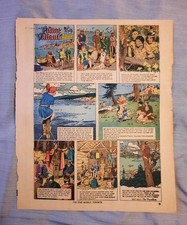
The product is a vintage color magazine titled "Luci Nugent Johnson" from The New York Times Sunday edition, printed in the United States on August 14, 1966.
This collectible item offers a unique glimpse into the past with its historical significance and serves as a valuable addition to any collection of newspaper memorabilia from the 1960s. Note condition in photographs.
The wedding of Luci Baines Johnson and Patrick John “Pat” Nugent (August 6, 1966) holds importance for several reasons — historically, culturally, and politically. Below is a breakdown of why this wedding was significant, followed by some context that may be of particular interest in a business- or institutional-history framing.
⸻
Key Reasons for Importance
1. First Daughter’s Marriage in a Catholic Ceremony / Church
Luci Johnson, daughter of President Lyndon B. Johnson, converted to Roman Catholicism in order to marry Pat Nugent. Her wedding took place at the in Washington, D.C., which was the first time a sitting President’s daughter was married in a Catholic church. 
From a broader viewpoint, this event touched on religious and cultural dynamics in the United States — the Catholic-Protestant divide, ecumenical relations, and the public visibility of faith in high-profile settings.
2. White House Social and Political Stage
The reception was held in the East Room of the White House and was widely covered by the media. According to historical accounts, the wedding had “national wedding” scale despite (or because of) the bride’s youth (19) and the groom’s relatively modest public profile (23 yrs old, Illinois). 
For example, the wedding was described by Time magazine as “a semimonarchical event,” an indication of its spectacle and import in the public sphere. 
From a business-leadership or institutional lens, this highlights how personal and political spheres can merge in high offices and how events become both symbolic and operational (logistics, coordination, press strategy, security).
3. Media, Social Ritual, and Symbolism
The wedding was globally visible — making it a cultural moment in the 1960s, framed within the presidency and the “First Family” narrative. The scale of planning (e.g., floral arrangements, special music, guest list), the choice of venue, and the nature of the ceremony all fed into its symbolic value. 
In business-terms: one could view this as a major “event branding” moment for the White House and the Johnson administration; the wedding helped shape the image of the First Family at a time of domestic and international turbulence.
4. Historical Timing and Context
The wedding took place during a turbulent period (Vietnam War escalation, civil rights, generational change) which means the event also functioned as a moment of relative optimism and ritual in the public life of the nation. Some commentary suggests it projected a sense of normalcy and regality in the American presidency. 
From the institutional leadership view, such moments matter for morale, image management, historical legacy, and sometimes policy-context (though indirectly).
5. Liturgical / Religious Significance
The ceremony itself held liturgical interest: described as among the first high-profile Nuptial Masses in America to show evolving practices (vernacular readings, concelebration, etc.) within the Catholic Church at a time of change post-Vatican II. 
For a business executive interested in leadership and institutional change, this is an example of how major institutions (like the Church) adapt practices — and how high-visibility events can reflect those shifts.
⸻
Why It Matters from a Business/Institutional Lens
• Event Management & Coordination: The wedding was a major logistical undertaking (White House + Shrine + media + security + protocol). For someone running large organisations, this underscores the complexity of staging a high-visibility event with multiple stakeholders (diplomats, press, security, family).
• Brand & Image: The First Family is a kind of “brand” of the presidency; this wedding reinforced aspects of that brand (tradition, dignity, modernity, public spectacle).
• Stakeholder Relations: The wedding involved many stakeholder groups — religious leaders, government officials, international guests. Managing such intersections is akin to stakeholder management in large corporations.
• Legacy & Narrative: The event becomes part of the historical narrative of the presidency and influences how the Johnson administration is remembered. Executives often need to consider the legacy of major organisational decisions, investments, or events.
• Cultural Resonance: Just as businesses now factor in cultural impact, social media, and public perceptions, this wedding was a cultural event, not just a family matter — highlighting that major personal milestones for public-figures can shift into the business of public relations.
⸻
Summary
In short, the Luci Johnson / Pat Nugent wedding was important because it combined personal, religious, political, cultural, and media elements in a high-profile setting (the White House). It marked a “first” in several respects (First Daughter married in a Catholic church, heavy media/liturgical attention) and its scale and visibility made it more than a private affair. From a business executive’s perspective, it is a strong case study of high-stakes event management, brand/legacy building, stakeholder coordination, and the interplay between private life and public institution.