When you click on links to various merchants on this site and make a purchase, this can result in this site earning a commission. Affiliate programs and affiliations include, but are not limited to, the eBay Partner Network.
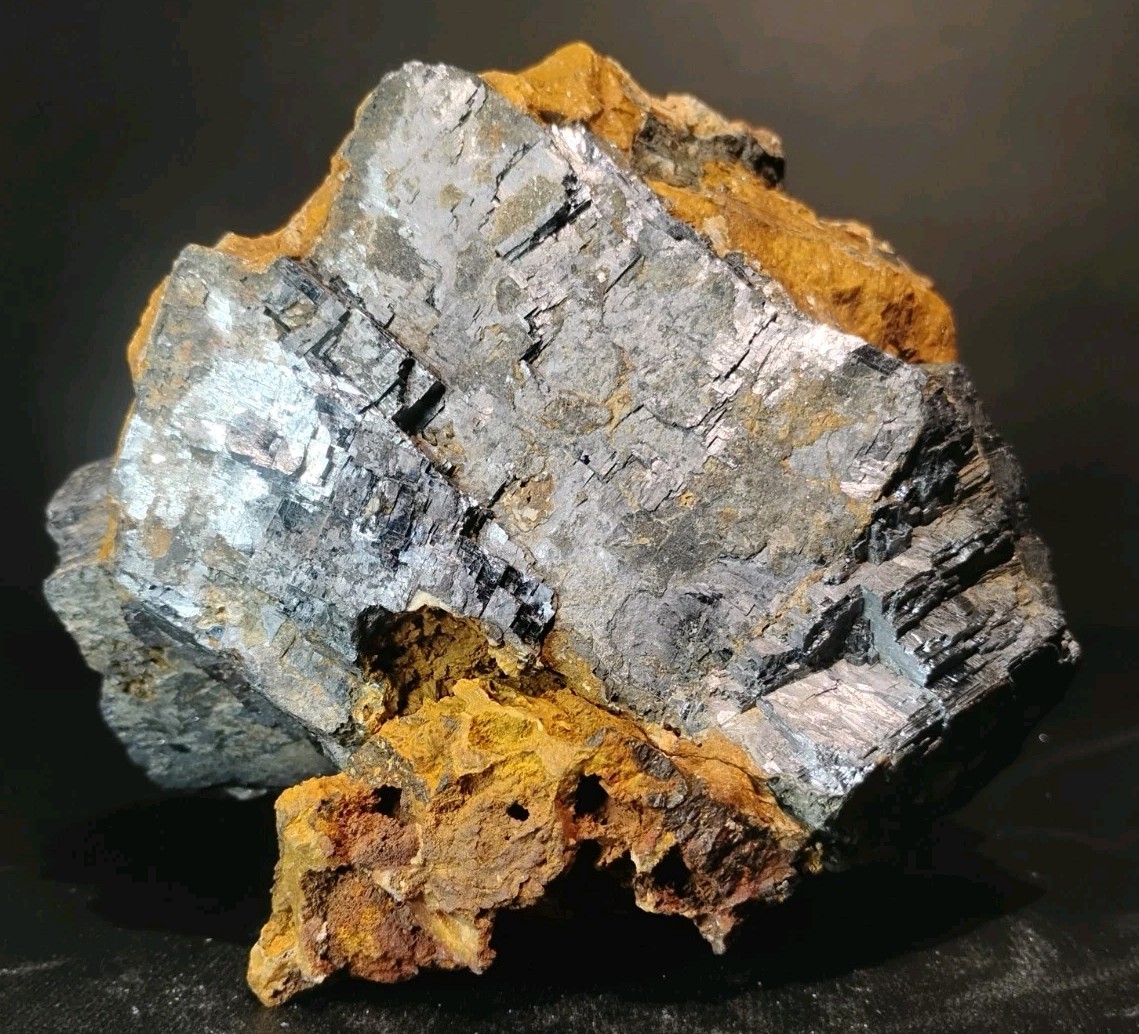
This is a phenomenal, heavyweight cabinet specimen hailing from the historic Palmer Mine in Missouri\'s Old Lead Belt. Weighing just under 10 pounds, the piece is anchored by massive, highly metallic Galena exhibiting classic cleavage and brilliant silver-gray luster.
What elevates this specimen is the incredibly rich association of secondary and matrix minerals. The Galena is heavily heavily nested in an earthy, iron-rich hematite matrix, accented by bladed barite and sparkling drusy quartz. The piece features excellent examples of lead oxidation, boasting clusters of Cerussite (lead carbonate) and Anglesite (lead sulfate) nestled within the natural vugs and crevices of the structure.
UV Reactive: As a fantastic hidden feature, this specimen contains Scheelite which exhibits a brilliant, glowing fluorescence under shortwave ultraviolet (UV) light, adding a totally different dimension to the piece for serious collectors.
The Story of the Palmer Mine
To really sell a piece like this, collectors love provenance and history. You can include a section like this in your listing:
Locality History:
This specimen comes from the historic Palmer Mine area in Washington County, Missouri—a cornerstone of the famous \"Old Lead Belt.\" The history of mining in this specific region predates the American Revolution, with early French explorers discovering surface lead deposits in the early 1700s.
Originally known as the \"Webster Tract,\" the area around the Palmer Mine became a booming center for lead smelting and mining throughout the 19th century. Washington County is also world-renowned for its Mississippi Valley Type (MVT) deposits, eventually becoming known as the \"Barite Capital of the World\" due to the massive amounts of \"tiff\" (barite) pulled from the iron-rich, red clay soils.
Today, the Palmer Mine is long defunct, and the surrounding remnants have largely been swallowed up by the Mark Twain National Forest. Because the locality is closed to modern commercial collection, surviving multi-mineral cabinet pieces of this size and complexity are highly coveted pieces of American mining history