When you click on links to various merchants on this site and make a purchase, this can result in this site earning a commission. Affiliate programs and affiliations include, but are not limited to, the eBay Partner Network.
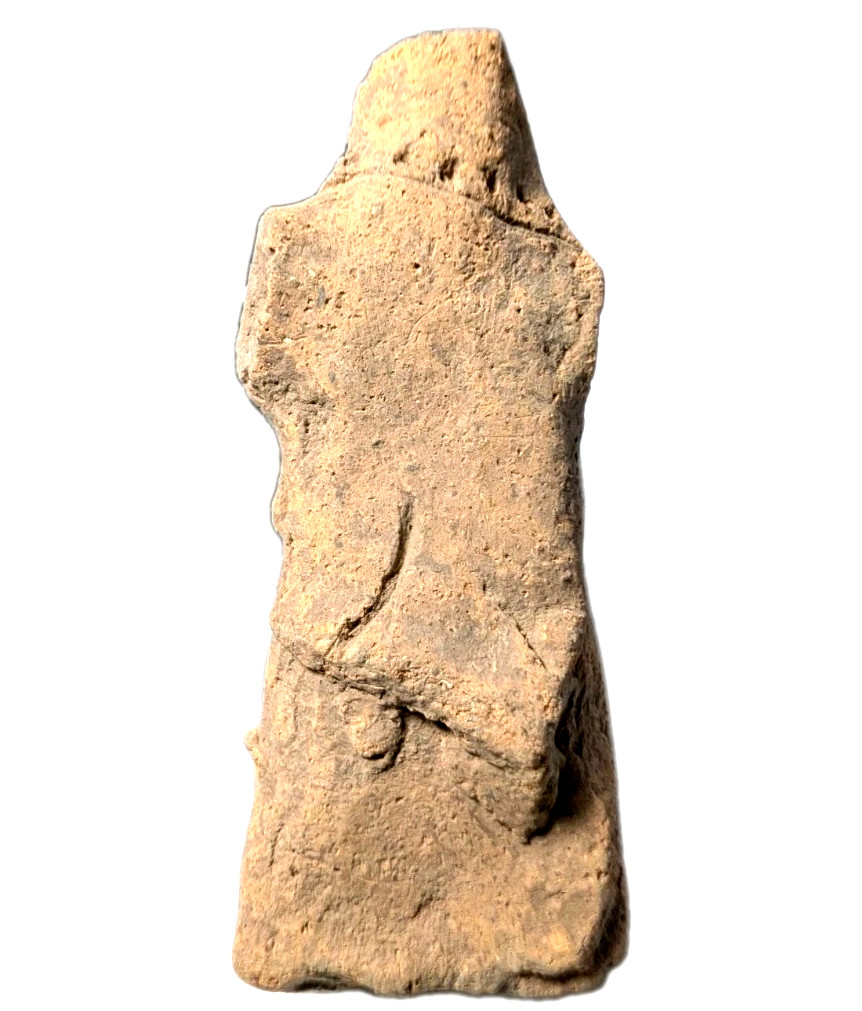
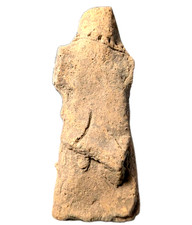
Ancient Canaanite Terracotta Votive Idol / Figurine (Approx. 9.0 cm — c. 1550–800 BC)
Authenticity & Guarantee
Certification: Certified Authentic — includes signed Certificate of Authenticity (COA) with full provenance documentation.
Provenance: Ex-private European collection, legally acquired from international sales; Ancient Levantine / Canaanite Sphere.
Item Specifications & Estimated Dimensions
Object: Hand-Modeled Terracotta Votive Idol / Plaque Figurine (Astarte / Household Divine Symbol)
Culture / Period: Ancient Canaanite (Middle Bronze Age II to Iron Age Levant)
Date Range: Circa 1550 BC – 800 BC (c. 16th – 9th Century BC)
Estimated Dimensions: Approx. 9.0 cm height (90 mm) × 3.5 cm width (Extrapolated from hand scale)
Material: Fired Terracotta / Earthen Clay
Form & Architecture: Tapering hand-formed clay votive figure featuring a distinct conical head/headdress; detailed with a horizontal band of small impressed punctate dots along the collar/forehead; flattened reverse matrix typical of mold-pressed or slab-formed household idols
Condition: Exceptional, stable ancient condition as a authentic excavated cult artifact. Solid heavy terracotta core, preserved under a natural pale creamy-tan calcareous desert burial encrustation with light earthen patination throughout. Free of modern restoration or tooling.
HISTORICAL CONTEXT & TYPOLOGICAL LORE
Canaanite Household Cults & Votive Idols
Across the Bronze and Iron Age Levant, clay votive figurines were central to domestic religious life. Unlike grand stone statues reserved for major temple sanctuaries, smaller terracotta idols representing female deities like Astarte, Asherah, or Anat were kept in home shrines, town niches, and personal altars. Devotees offered prayers for domestic protection, agricultural abundance, and fertility directly through these clay intercessors.
Punctate Styling & Mold-Made Ceramics
The stylized conical head combined with impressed punctate detailing along the forehead or collar reflects long-standing Levantine ceramic traditions. Local potter-craftsmen used simple wooden or bone tools to stamp decorative hairlines, crowns, or jewelry into soft clay before firing, creating portable, recognizable representations of divine power.
Typological Analysis & Exact Classification
Primary Class: Ancient Near Eastern Religious Artifact / Terracotta Figurine
Sub-Class: Canaanite Conical-Head Votive Idol Class
Manufacturing Technique: Hand-modeled / mold-pressed fired terracotta clay with impressed punctate tool marks.
Comparable Archaeological Examples & Museum Accession Numbers
Israel Museum, Jerusalem: Bronze Age / Iron Age Canaanite terracotta plaque figurines recovered from Hazor and Megiddo strata.
British Museum (Accession No. 1880,1216.22): Ancient Levantine terracotta votive figurine with conical head and incised collar.
Louvre Museum (Inv. No. AO 22210): Canaanite clay female idol from Ugarit / Syrian coastal sites.
A4