When you click on links to various merchants on this site and make a purchase, this can result in this site earning a commission. Affiliate programs and affiliations include, but are not limited to, the eBay Partner Network.
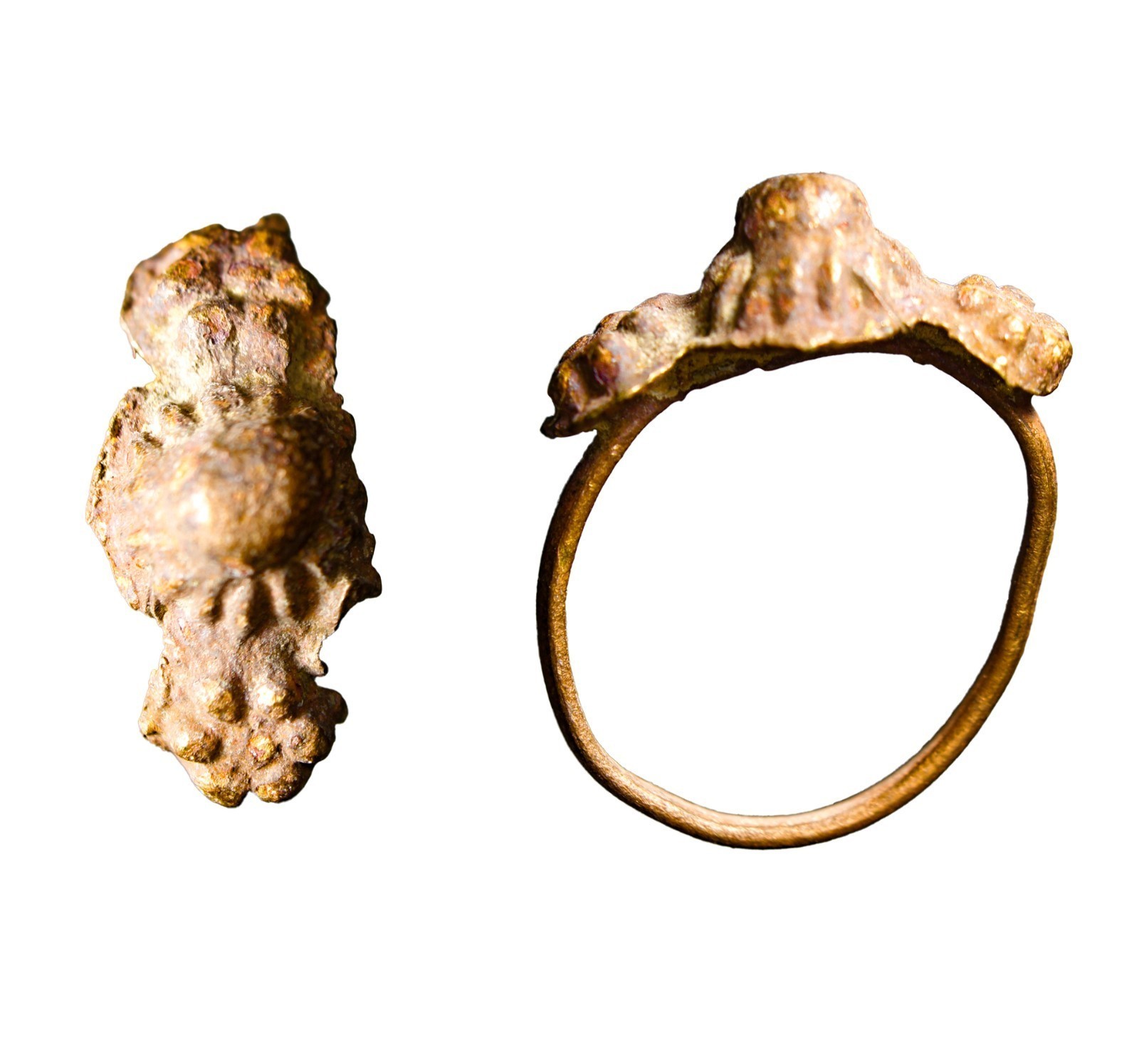
Ancient Crusader Jerusalem Flower Ring c1200AD Genuine Artifact
CATALOG INFORMATION
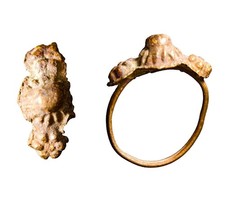
Object: Bronze ring with raised Jerusalem flower rosette bezel
Cultural Sphere: Crusader Kingdom of Jerusalem
Approximate Date: c1100–1300AD
Material: Bronze
Measurements: Approx US ring size 2
Provenance Note: Reported Jerusalem find from an old UK collection formed in the late 20th century
BACKGROUND
During the Crusader era, rings with raised floral or rosette crowns were widely used by inhabitants of the Latin Kingdom of Jerusalem. These rings often symbolized renewal, divine protection, or local Christian identity. Floral crowns of this type have been recovered from Crusader domestic quarters, pilgrimage routes, and burial contexts across the Holy Land.
ANALYSIS
The bezel forms amulti-lobed rosette or “Jerusalem Flower”, rising above the hoop in a sculpted crown. The irregular organic shaping and hammered bronze surface align with Crusader-period craftsmanship. The slender round hoop, mineralized bronze patina, and burial accretions are consistent with 12th–13th century Holy Land finds.
ORIGIN & HANDLING
Collected in the United Kingdom from a longstanding assemblage of Crusader and Holy Land artifacts. Cleaning was minimal and limited to removing loose soil, preserving the original surface texture and patina.
SCHOLARLY NOTES
Comparable floral crown rings appear in excavations at Jerusalem, Acre, and numerous rural Crusader sites. Rosette motifs also occur in Crusader ceramics, metalwork, and architectural ornament, reflecting a local adaptation of earlier Byzantine floral symbolism.
STATE OF PRESERVATION
Stable condition with intact hoop. Rosette bezel remains fully formed, showing age-softening around the lobes. Ancient patina preserved throughout.
ASSURANCE
Authentic medieval artifact dating to the Crusader occupation of the Holy Land, supported by typology, patina, and parallels from documented excavations.
2-1