When you click on links to various merchants on this site and make a purchase, this can result in this site earning a commission. Affiliate programs and affiliations include, but are not limited to, the eBay Partner Network.
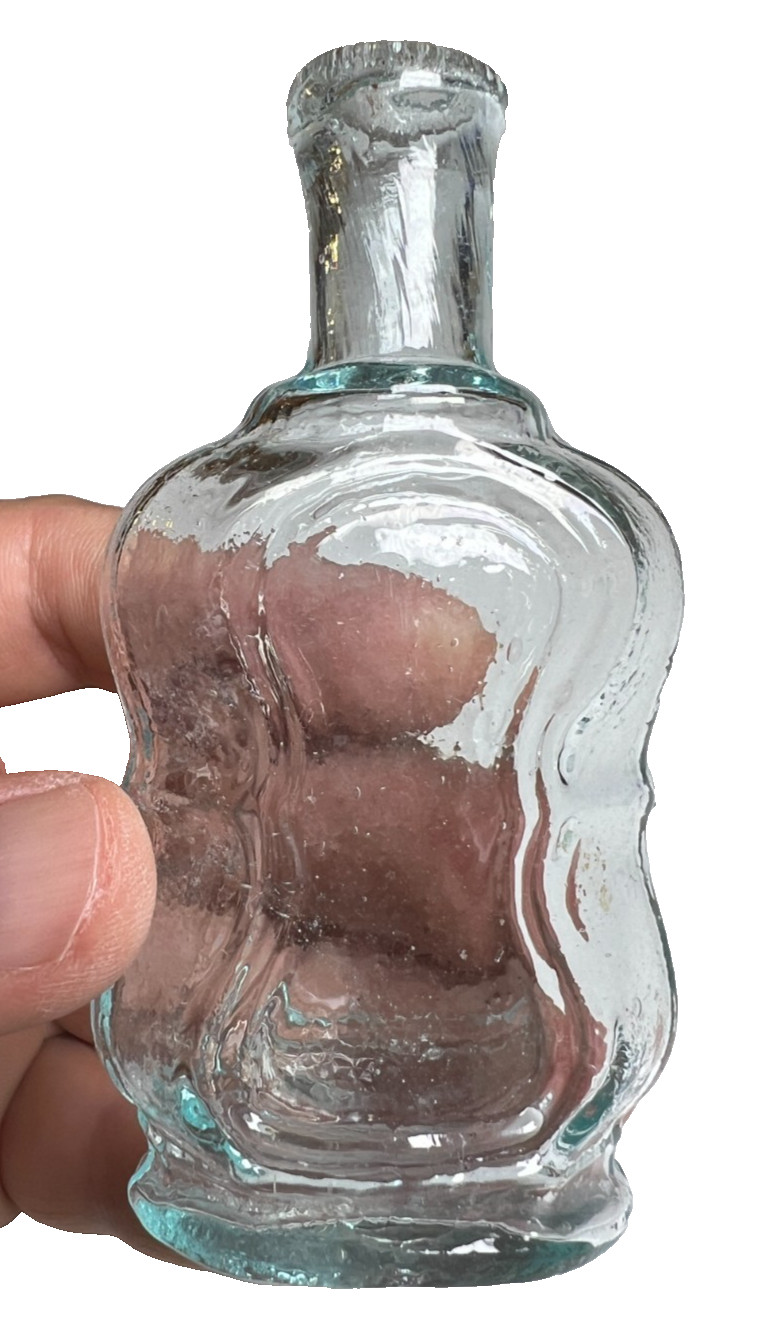
The recessed panels resemble the horseshoe arches and ogee windows popularized by the Moorish Revival architectural movement that swept Europe and America in the mid-19th century. Decorative glassmakers frequently borrowed these exotic architectural motifs to create fashionable perfume and toilet bottles for the growing middle class.
This example displays excellent hand craftsmanship. The glass is filled with numerous seed bubbles that produce a desirable orange-peel texture, while pronounced whittle marks and flowing mold lines remind you that every bottle was individually finished by hand.
The rough open pontil scar is centered over a visible diagonal hinge mold seam, a characteristic seen on many quality American and English mold-blown bottles from this era before snap-case finishing became universal.
Condition
Attic mint.
- Approximately 3 5/8 inches tall
- Open pontil base
- Hand-finished rolled lip
- Bright, clean, sparkling glass
- Numerous attractive seed bubbles
- Wonderful orange-peel surface texture
- No chips
- No cracks
- No haze
- No scratches
- Excellent overall eye appeal
Date
Circa 1845-1860
About the Bottle
By the 1840s, personal fragrances had become increasingly affordable. Cologne, lavender water, Florida water, bay rum, rose water, and other scented toilet preparations were sold in attractive bottles meant to remain on a lady\'s dressing table.
Unlike medicine bottles that were discarded, decorative cologne bottles were intentionally designed to be beautiful household objects. Their elaborate molded panels caught candlelight and gaslight, making them sparkle on a Victorian vanity.
This bottle would originally have been closed with a cork, often covered with decorative foil or wax.
Life During the Period (1845-1860)
When this bottle was made:
- Railroads were transforming America and Europe.
- Telegraph lines allowed near-instant communication for the first time.
- Gas lighting illuminated growing cities.
- Daguerreotype photography evolved into early photographic studios.
- The California Gold Rush (1848-49) drew thousands westward.
- The Crimean War introduced battlefield photography.
- In America, tensions over slavery were rapidly escalating toward the Civil War.
Perfume and cologne increasingly became symbols of refinement as Victorian society placed enormous emphasis on cleanliness, grooming, and fashionable appearance.
Rarity
This style is scarce, particularly in this outstanding condition.
The features collectors appreciate include:
- Open pontil
- Rolled lip
- Distinctive Moorish recessed panels
- Heavy seed bubbles
- Attractive whittling
- No damage
- Excellent attic preservation
While not as rare as figured cologne bottles or blown three-mold examples, this is a noticeably better example than the average open pontil cologne bottle encountered today
A note on the pontil
The pontil scar sits over the diagonal mold hinge line is a nice manufacturing detail. It indicates the bottle was removed from the mold, attached to a pontil rod for finishing, and then the lip was hand-rolled. The diagonal hinge impression remained visible because it formed when the mold opened before the bottle was transferred to the pontil. Collectors enjoy these little clues because they illustrate exactly how the bottle was made over 165 years ago.