

|
Site Categories |
|
Featured Items |

Poodle, Spaghetti Trim, Ucagco


|
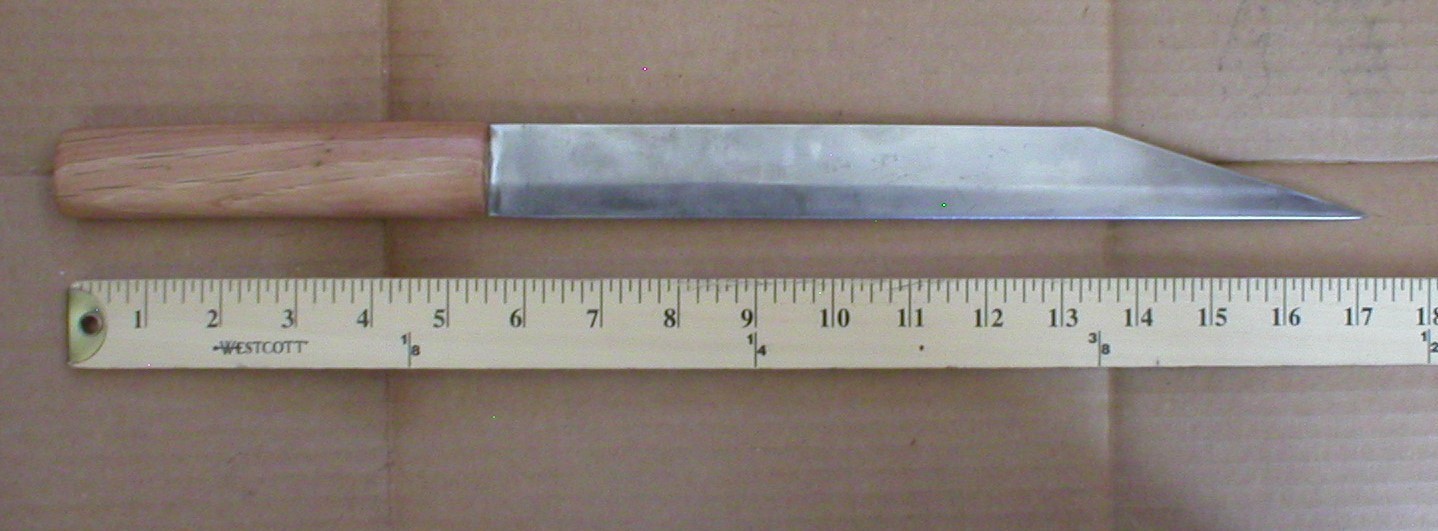
Early medieval Iron Age broken-back seax, 11 3/4" stainless blade, no sheath For Sale

When you click on links to various merchants on this site and make a purchase, this can result in this site earning a commission. Affiliate programs and affiliations include, but are not limited to, the eBay Partner Network.

Early medieval Iron Age broken-back seax, 11 3/4" stainless blade, no sheath:
$24.00
Offered is a very plain-grade variation of the Germanic broken-back seax, with a stainless blade of fair-to-good metal quality. Blade measures 11 3/4" long, 1 3/16" wide, and 1/8" thick. The knife is listed as new because, though it started life as half of a longer single-edged sword blade, time was taken to re-profile the blade, remove any maker or country of origin markings, and use a coarse wire bench grinder wheel to take all the shiny factory new off. A simple haft cut and shaped from weathered red oak, given basically invisible protection by several coats of tung oil, provides a strong grip. Incidentally, seax hafts tended to be long in proportion to the blade length; 5 5/8" on this example. There was a very simple, economic reason for this -- a slightly longer reach was made possible without a corresponding increase in actual blade length. Prior to the equipment of modern industry, any metal, be it bronze, iron, or steel, required extensive strenuous hand work, with an appropriately higher addition to cost. A longer chunk of wood was a cheap means of extending one's reach. This is the broken-back pattern that is presently viewed as most commonly used in ancient times, not coincidentally beginning with its frequent appearances in the "Vikings" and "The Last Kingdom" series. Entertainment media isn't history. The broken-back pattern was hardly rare, but knives (some nearly sword-length) with a straight blade, the spine curving down and the edge curving up to provide a point at the center line, are found in larger numbers and a wider variety of locations. The blade shape makes fitting it to an existing sheath fairly difficult, so I leave the solution (such as making one to fit) to the new owner. The steel isn't of the best sort. It takes (and has) an okay edge, but I have my doubts how long it would stay sharp in actual, even remotely heavy use. Interesting, this corresponds to the quality of many Germanic and Celtic blades of the earlier Iron Age. Bronze work was done at lower forge heat, and at some points with the metal cold, in comparison to what was needed for good iron work. Approached with the same techniques by bronze-trained smiths, iron tended to be fairly soft and prone to bending. However, iron tools and weapons could also be turned out more quickly and bought or traded for at a lower cost to both maker and customer. This mattered an incredibly lot more than some people realize, and, coming full-circle, this seax will give similar performance and hold up about as well as a very large amount of early Iron Age products.
|
|
Related Items:
Early medieval Iron Age broken-back seax, 11 3/4" stainless blade, no sheath $24.00
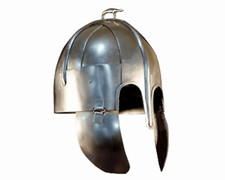
Pioneer Helmet 7th century Early Medieval Anglo Saxon Armour Helmet Cosplay $131.49
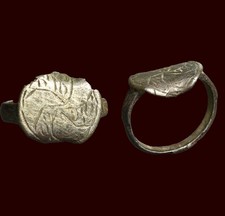
Ancient Norse Viking / Early Medieval Silver Signet Ring Artifact Antiquity wCOA $485.00
|
|
|
Shopping Cart  |

|
Recently Viewed |
|
Latest Items |
|
Facebook |
Secure Websites

|
