When you click on links to various merchants on this site and make a purchase, this can result in this site earning a commission. Affiliate programs and affiliations include, but are not limited to, the eBay Partner Network.
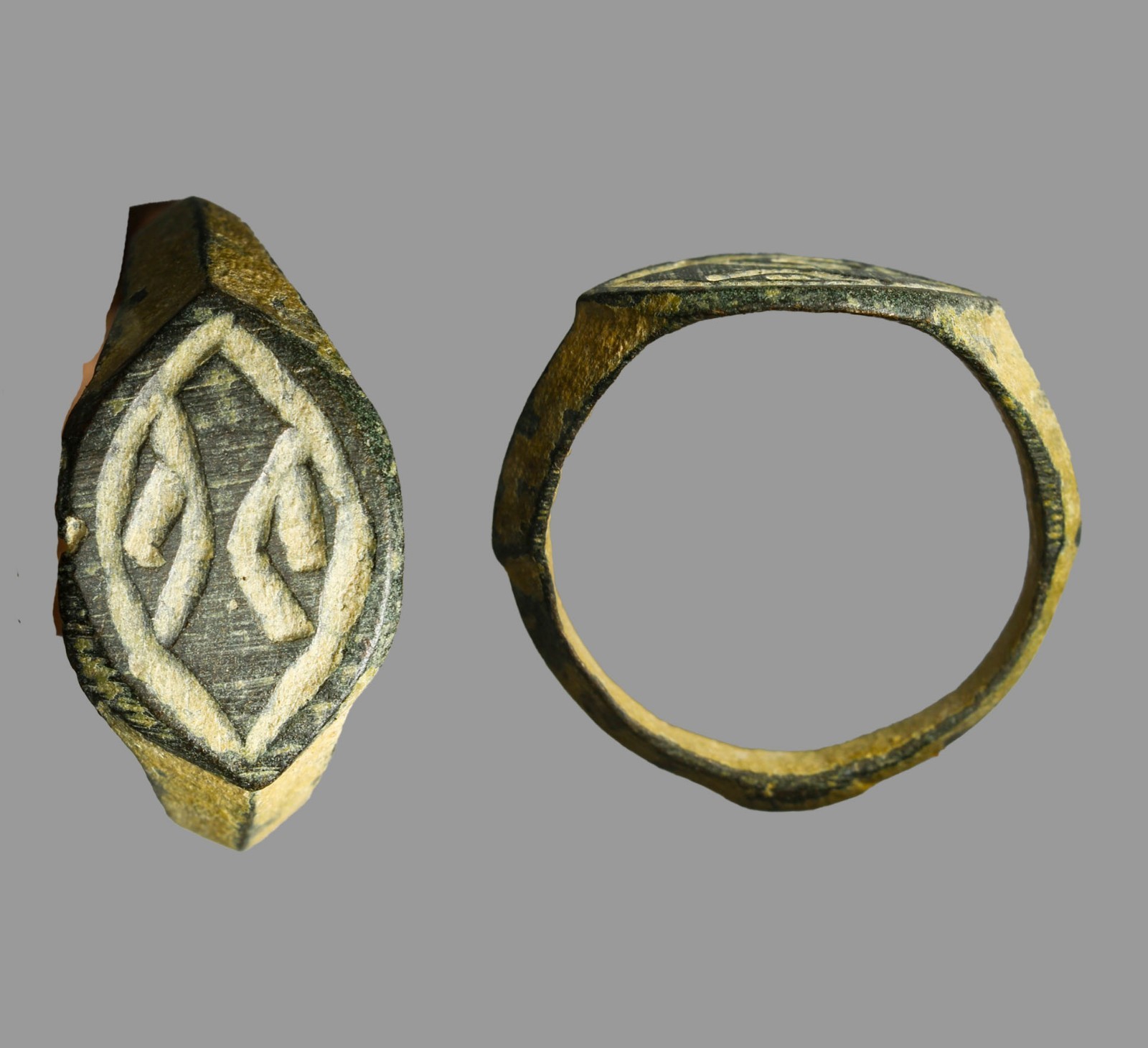
Greco-Phoenician Hellenistic Bronze Baal / Standing Deities Signet Ring (Circa 4th–2nd Century BC) US Size 8–8.5 Authentic
Authenticity Notice
This artifact is certified authentic and will be accompanied by a Certificate of Authenticity and Provenance. All professional inventory is vetted through recognized platforms to ensure legal standing.
Details
Object: Hellenistic Levantine / Phoenician Bronze Signet Ring
Culture: Greco-Phoenician Hellenistic Eastern Mediterranean
Date: Circa 400–100 BC
Material: Bronze (Copper-alloy)
Form: Pointed oval vesica bezel deeply incised with twin stylized standing figures or symbols enclosed in a diamond border, set on a stout faceted shoulder band
Ring Size: US Size 8–8.5
Region: Levant Phoenicia Eastern Mediterranean Sphere
Iconographic & Typological Analysis
This US Size 8–8.5 bronze signet ring captures the distinctive syncretic art of the Hellenistic Levant, featuring a pointed oval bezel deeply incised with a dual figure motif.
The bezel displays a pointed almond matrix enclosing two stylized standing figures or sacred motifs facing inward. In Phoenician and Levantine religion during the Hellenistic era, paired standing figures frequently represented divine couples or attendants—such as Baal (Ba'al Hammon / Baalshamin) flanked by Tanit or a worshipper, or stylized palm branch and altar motifs associated with Semitic cult practice. The bold geometric execution reflects local Levantine seal-cutting traditions blended with Classical Greek ring forms.
During the 4th through 2nd centuries BC, Phoenician trade ports like Byblos, Sidon, and Tyre were major centers of bronze production. Solid cast rings of this substantial scale and size were worn by men as personal seals and talismanic signets to mark clay jar stoppers, administrative documents, and trade goods.
Cast in a single piece, the architectural shoulders and deep intaglio carving provided both durability and a striking high-relief impression when pressed into sealing clay.
Overview and Historical Context
The Hellenistic period in the Eastern Mediterranean was marked by a rich fusion of Near Eastern religious traditions and Greek artistic styles. Merchants and high-status individuals throughout Phoenicia and the Levant carried bronze signet rings engraved with protective deities or sacred symbols. Rings featuring standing figures or Baal iconography served as daily tokens of divine patronage, personal authority, and identity across ancient Mediterranean maritime routes.
Authenticity Check
Displays a rich, dark slate-grey and olive-green cuprite patina across the face, contrasted by thick, natural yellow-earthen caliche deposits packed tightly into the incised grooves and outer band shoulders.
Authentic micro-crystallization, minor surface pitting, and copper-oxide patination consistent with over two millennia of burial in dry Levantine soil.
Solid single-piece ancient casting showing original hand-chiseled intaglio work, faceted shoulder profiling, and natural ancient asymmetry.
Comparable Examples
The British Museum, London: Accession No. 1888,0601.12 (Greco-Phoenician and Levantine bronze signet rings with stylized deity motifs).
The Louvre, Paris: Accession No. AO 22210 (Department of Near Eastern Antiquities, collection of Hellenistic Levantine bronze seal rings).
The Metropolitan Museum of Art, New York: Accession No. 74.51.4245 (Holdings of ancient Eastern Mediterranean bronze signet jewelry).
Condition
Superior archaeological condition. Solid, structural integrity, fully wearable, and intact. The twin standing figure engraving is crisp and filled with bright, natural earthen contrast.
2-2