When you click on links to various merchants on this site and make a purchase, this can result in this site earning a commission. Affiliate programs and affiliations include, but are not limited to, the eBay Partner Network.
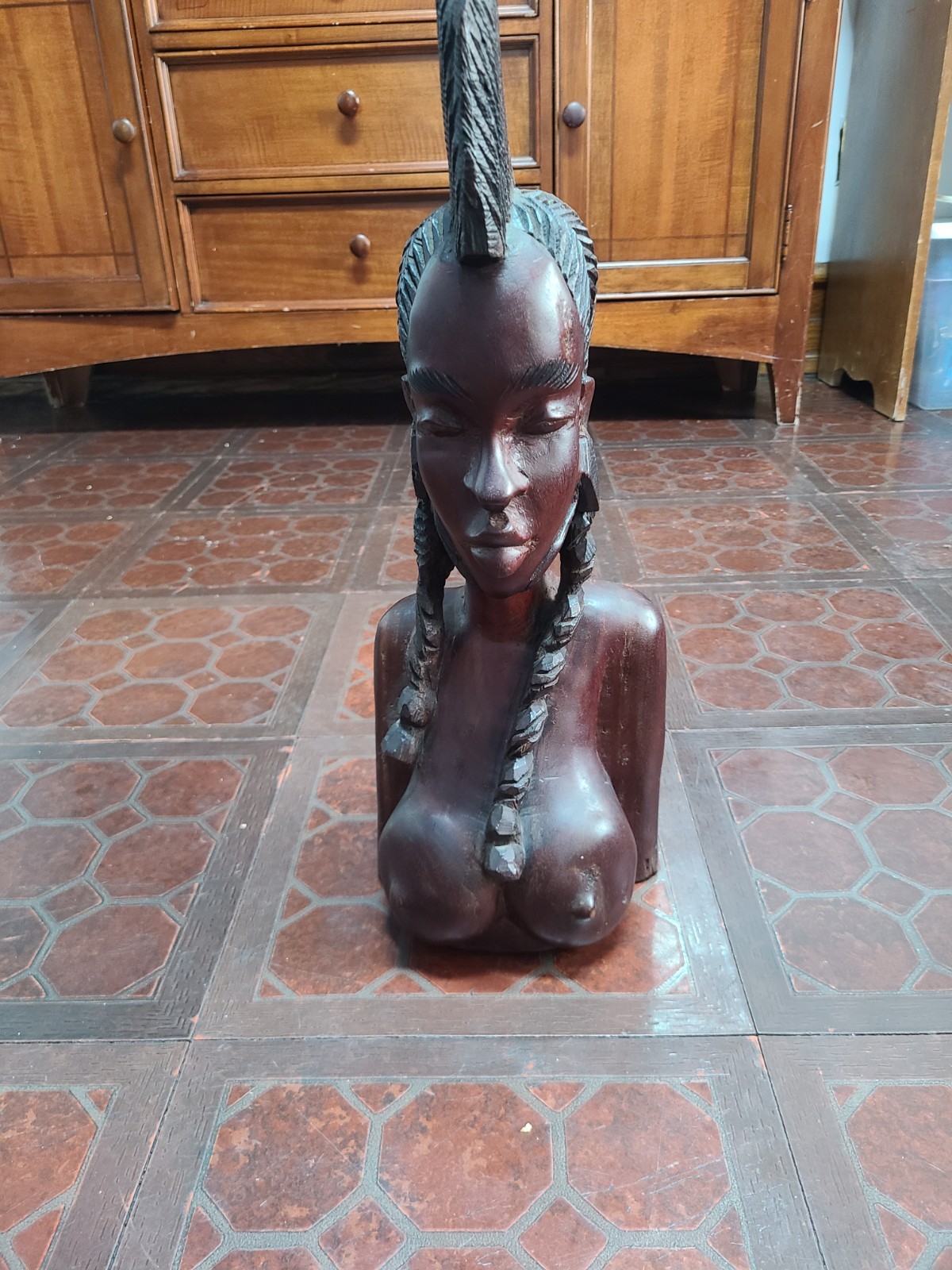
Ethnic Origin and Cultural Context: Analysis of facial features, and especially the characteristic high central crest hairstyle (mohawk) complemented by long side braids, points to two main influences within traditional and folk African art:
Fulani (Fula) People: Fulani women (present in West Africa, from Guinea to Nigeria) are renowned for their elaborate, tall, and artistic hairstyles with braided crests that often defy gravity. [1]
Mangbetu People: Historically known in the Democratic Republic of Congo for their long, tapered, backward-swept hairstyles that styled the skull in a manner similar to a decorative crest.
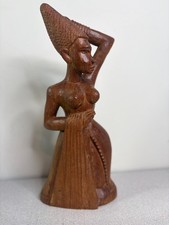
Souvenir/Export Art Production (20th Century): Many of these detailed and polished busts, carved from dense hardwoods, were hand-carved between 1950 and 1980 by artisans in East and West Africa (such as Makonde cooperatives or cabinetmakers in Ghana). They were created both to celebrate the beauty of tribal women and for the export market and global collectors. [1, 2, 3, 4]
Conservation and Cleaning Guide for Antique Wood
To maintain the original patina of this sculpture and prevent cracking, follow these steps recommended by restorers:
1. Initial Cleaning (Dusting)
Tool: Use a soft-bristled brush or a soft, used toothbrush.
Action: Gently brush the grooves of the braids and headdress to dislodge accumulated dust without scratching the wood. Completely avoid ordinary damp cloths or synthetic dusters. [1, 2]
2. Deep Cleaning of Stubborn Dirt
Mixture: Dilute a few drops of mild dish soap in plenty of warm water. [1]
Application: Lightly dampen a clean cotton cloth (it should be almost dry, never dripping). Gently wipe the smooth surfaces of the shoulders and face. [1]
Immediate Drying: Dry the area with a second clean cotton cloth immediately afterward. Never use all-purpose chemical cleaners, alcohol, or commercial furniture sprays, as these destroy the natural oils of exotic woods.
3. Nourishing and Shining (Every 6-12 Months)
The Product: Apply a very thin coat of natural beeswax or a light hardening oil (such as linseed oil or mineral wood oil).
Technique: Rub it in with the grain of the wood. Allow the wood to absorb the product for about 15 minutes.
Polishing: Buff vigorously with a dry wool or cotton cloth to bring out the deep, natural satin sheen characteristic of ebony or ironwood. [1]
4. Proper Placement
Keep the figure away from direct sunlight and heat sources (such as radiators or fireplaces). Sudden temperature changes and extreme dryness cause irreparable cracks in solid tropical woods.
What you see is what you get. Thanks.👍🙏