When you click on links to various merchants on this site and make a purchase, this can result in this site earning a commission. Affiliate programs and affiliations include, but are not limited to, the eBay Partner Network.
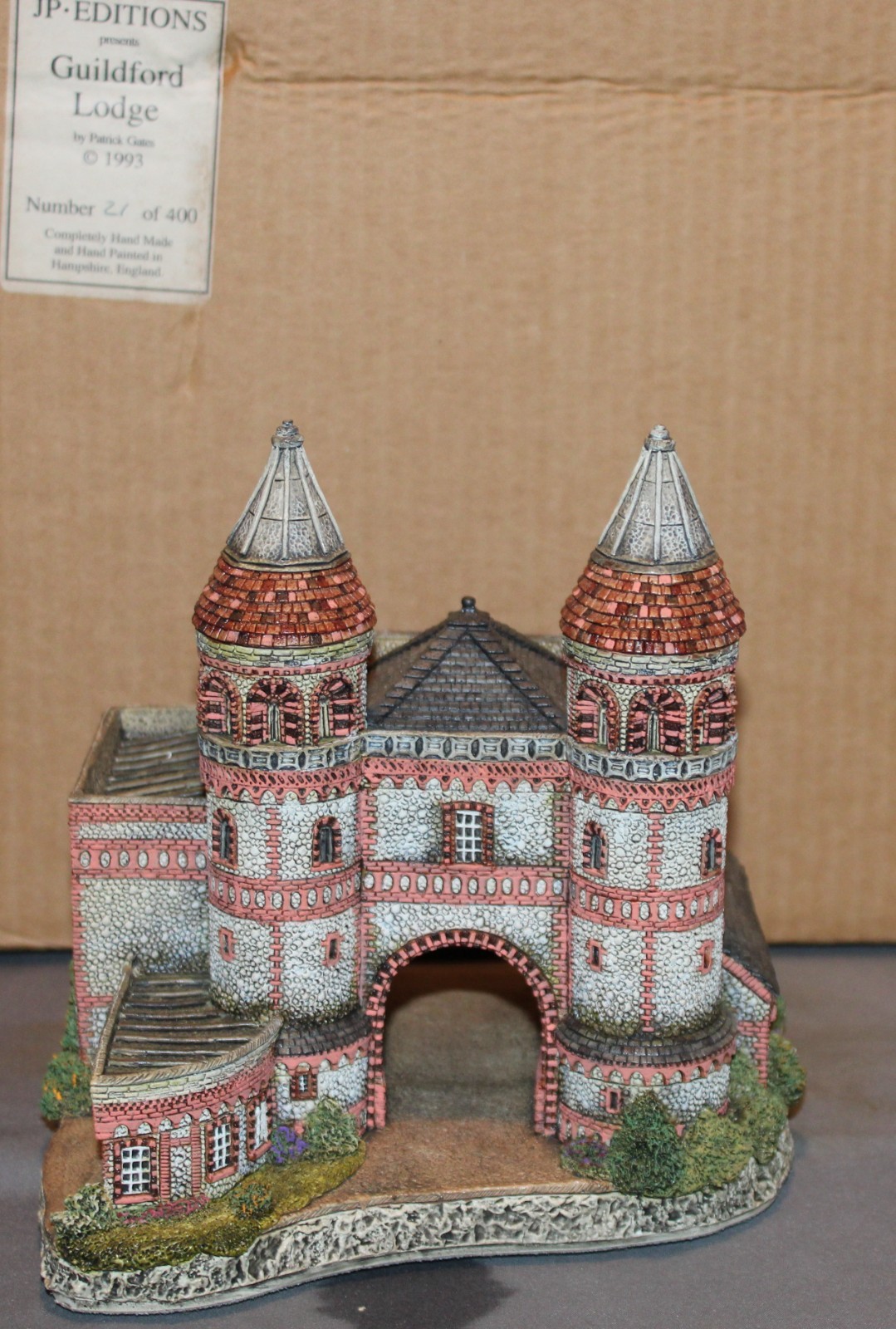
Hereis the JP Editions #21 of Guildford Lodge.
Thismodel was produced in 1993 in the standard 400 edition size.
Seeexpanded description below.
Asseen in photos, original external labeled box is included. Box mayshow some storage wear.
NoCOA is available for this model.
Approximatedimensions are 6.5” x 7.25” x 7.0”
Thislisting does not qualify for combined shipping.
Collectorscan take advantage of reduced shipping cost for this model.
Previouslydisplayed. No damages, fixes or repairs. Almost Mint.
Aswith all previously displayed JP Editions models, there is a chancefor some minor imperfections. Photos may not indicate all defects. Be sure to review photos prior to committing to purchase. Contactseller to request any additional photos or if there are anyquestions.
Expandeddescription of actual structure:
Halfwaybetween Guildford and Epsom in Surrey, stands the remarkableneo-Norman Gatehouse entrance that leads to the Estate of EastHorsley Place. When Mr. William Currie bought the estate in 1784 themanor house stood nearer the village in a low and somewhat dampplace. Because he suffered from ill health, he took his doctor’sadvice and had a new house built at the highest point in his park. This was called East Horsley Place and was designed by the eminentVictorian Architect, Sir Charles Barry, as a mock-Elizabethanmansion.
InMay 1840, the 8th Lord King (later to be become the 1stEarl Lovelace) acquired East Horsley Place, a 2,000-acre estate, fromCurrie and began his incredible alterations to the unpretentious mockElizabethan mansion and surrounding buildings. The first Earl ofLovelace was born William King on the 21st ofFebruary 1805. He was educated at Eton and Cambridge and thenentered Diplomatic service. A promising career ended on the death ofhis father in 1833 when William was recalled and assumed the title of8thLord King. Two years later at the age of 30 he married Augusta AdaByron (known as Ada) daughter of Lord Byron the poet and in 1838 madeher a Countess when he was created Viscount Ockham and 1st Earl ofLovelace on the occasion of the coronation of Queen Victoria. Thename "Lovelace" was resurrected from Ada's past lineage. Ada met Charles Babbage, inventor of the Difference Machine(forerunner of the computer) before her marriage and such was theirfriendship that between them, they invented a system for backinghorses, which while initially successful, caused her to become deeplyin debt. Her health was deteriorating and by the time she was in thegrip of terminal cancer she had pawned the family jewels. Hersituation was not improved by a man named Crosse who threatened topublish some indiscreet letters he had received from her. Babbagevisited the sick Ada who begged him to become her executor andoffered him £600to buy back the letters from Crosse, but her friend would not actwithout the Earl’s knowledge. Ada died on the 27th ofNovember 1852 at the age of 37.
Afterhis wife's death the Earl traveled abroad extensively beforereturning to indulge his passion for building. He was an amateurarchitect and civil engineer, and these attributes were directedtoward his home with an almost lunatic quirkiness. He gauged out theback drive through tunnels under the garden; he built theextraordinary Bavarian tower, flooding the park so as to make it riseout of a moat; and he designed brilliantly colorful horseshoecloisters as well as twenty-four horseshoe bridges, of which onlyfifteen remain.
Allthrough his Estate and even buildings in and around the village werebuilt in the same idiosyncratic style of flint with bands of brickquatrefoils, often with machicolations and polychromeround-headed windows. Indeed, such was the standard of excellence thatthe Earl won the medal for brick making at the Crystal Palace in1851. On his death in December 1893, the estate passed to his son,Lionel, who sold it to Thomas Sopwith (the famous aircraft designerwho created the Sopwith Pup and Sopwth Camel) in 1919.
Sixyears later, Sir Thomas sold the towers to two ladies who ran it as agirl's Boarding School and called it St. Michael's. In 1938 they soldit to the Central Electricity Board who then sold it to a computercompany.