When you click on links to various merchants on this site and make a purchase, this can result in this site earning a commission. Affiliate programs and affiliations include, but are not limited to, the eBay Partner Network.
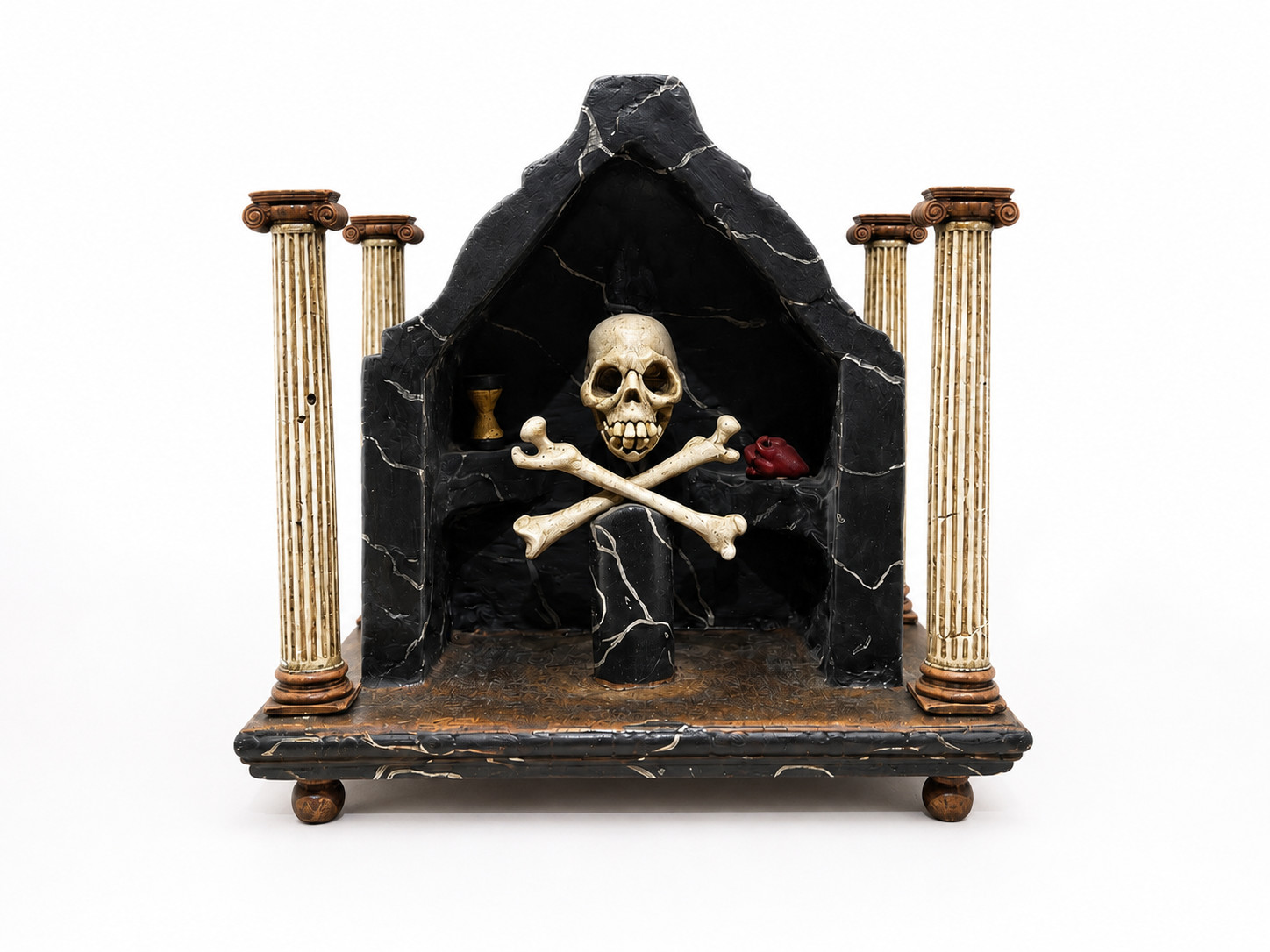
An unusual Memento Mori shrine executed in the Neoclassical manner, combining Classical architectural elements with the symbolic language of European vanitas and memento mori traditions. Hand carved from wood and cast plaster with carefully applied polychrome decoration, the composition reflects the enduring artistic practice of expressing philosophical ideas through architectural settings and allegorical imagery.
The shrine is centered upon a vaulted niche finished in imitation of black marble, framed by four fluted Classical columns that establish a restrained architectural setting reminiscent of an ancient memorial monument. The carefully balanced composition emphasizes symmetry and proportion while contrasting the disciplined vocabulary of Classical architecture with the contemplative symbolism contained within the shrine.
At the center of the niche, a sculpted human skull above crossed bones forms the principal memento mori emblem, accompanied by an hourglass and a red heart, traditional symbols representing the passage of time, the brevity of earthly existence, and the contemplation of mortality. Together these elements belong to a visual tradition that flourished throughout Europe from the Renaissance onward, encouraging reflection upon the transient nature of life and the enduring values of virtue, memory, and spiritual contemplation.
Rather than functioning as a devotional shrine dedicated to a specific saint or historical event, the composition should be understood as an allegorical architectural setting in which Classical forms serve the language of symbolic representation. Within the decorative arts of the eighteenth and nineteenth centuries, works of this character occupied a distinctive place among collectors who appreciated the union of Classical architecture, moral philosophy, and artistic craftsmanship.
Constructed in carved wood and cast plaster with hand-applied polychromy, the shrine exemplifies the Neoclassical revival’s enduring fascination with the symbolic language of antiquity, interpreted through the contemplative tradition of the European memento mori.
Dimensions:
Height: 9¼ in. (23.5 cm)
Width: 9½ in. (24.1 cm)
Depth: 6 in. (15.2 cm)