When you click on links to various merchants on this site and make a purchase, this can result in this site earning a commission. Affiliate programs and affiliations include, but are not limited to, the eBay Partner Network.
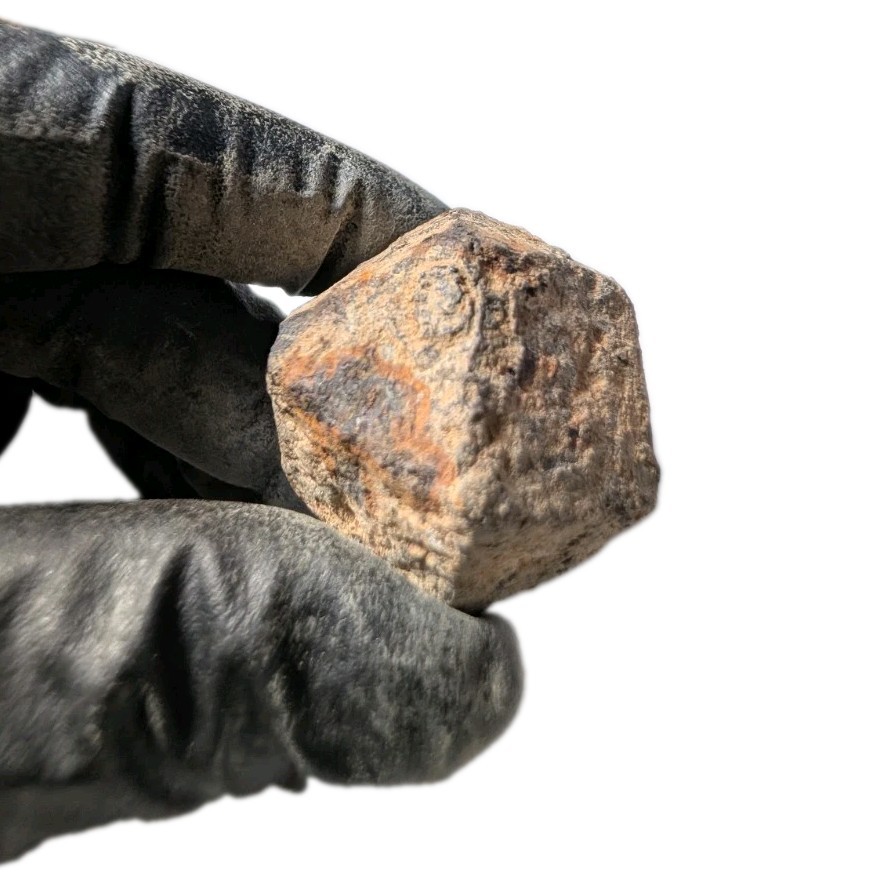
Ancient Late Roman / Early Byzantine Heavy Polyhedral Scale Weight (147.66g — c. 3rd–6th Century AD)
Authenticity & Guarantee
Certification: Certified Authentic — includes signed Certificate of Authenticity (COA) with full provenance documentation.
Provenance: Ex-private European collection, legally acquired from international sales; Late Roman / Early Byzantine Sphere.
Item Specifications & Exact Dimensions
Object: Heavy Cast / Forged Polyhedral Commercial Scale Weight (Pondus)
Culture / Period: Late Roman Imperial to Early Byzantine Era
Date Range: Circa 3rd Century AD – 6th Century AD (c. 300 – 600 AD)
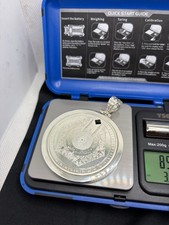
Mass / Exact Weight: 147.66 grams (calibrated to the 5-Unciae / 32-Solidi heavy trade standard)
Material: Heavy Dense Iron / Cast Bronze Core with mineral oxidation
Form & Architecture: Massive multi-faceted truncated polyhedral body (cuboctahedral geometry); flat planar facets engineered for stability on heavy balance scales during bulk market transactions; substantial high-density metallic core
Condition: Exceptional, complete ancient condition. Full structural multi-faceted geometry intact, heavy solid core, preserved under a rich reddish-brown iron oxide patina with authentic pale sandy-tan calcareous burial encrustation. Free of modern restoration or tooling.
HISTORICAL CONTEXT & TYPOLOGICAL LORE
Bulk Commercial Metrology & Polyhedral Geometry
While smaller polyhedral weights (under 50g) were routinely used by goldsmiths and money changers, massive scale weights weighing over 100g—such as this impressive 147.66g specimen—were vital tools in major Roman urban markets (macella) and regional custom houses. These heavy weights were used to measure wholesale commodities, including copper bullion, grain sacks, cured meats, and wool bales. The truncated polyhedral shape was specifically designed to prevent illegal metal filing or clipping along the edges.
Metrological Standard (147.66g = 5 Unciae / 32 Solidi)
At 147.66 grams, this weight aligns directly with the 5-Unciae (Quincunx) heavy trade unit of the Roman libra system, as well as the 32-Solidi gold exchange standard (32 × ~4.55g) used by imperial tax collectors in the Late Empire. Large metallic weights made of iron or dense copper alloys are significantly rarer than smaller personal weights due to severe oxidation over centuries of burial, making surviving high-mass examples exceptionally prized by ancient metrology collectors.
Typological Analysis & Exact Classification
Primary Class: Late Antiquity Heavy Metrology / Commercial Scale Weight
Sub-Class: Heavy Polyhedral Cuboctahedral Bulk Trade Weight (5-Unciae / 32-Solidi Class)
Manufacturing Technique: Cast/forged metal polyhedron with hand-finished faceted faces.
Comparable Archaeological Examples & Museum Accession Numbers
British Museum (Accession No. 1888,0512.115): Late Roman heavy bronze polyhedral market weight.
Dumbarton Oaks Collection (Washington D.C., Inv. No. BZ.1962.55): Early Byzantine large multi-faceted trade weight over 100g.
Metropolitan Museum of Art (Accession No. 66.1.30): Late Imperial Roman heavy polyhedral scale weight.
A4