When you click on links to various merchants on this site and make a purchase, this can result in this site earning a commission. Affiliate programs and affiliations include, but are not limited to, the eBay Partner Network.
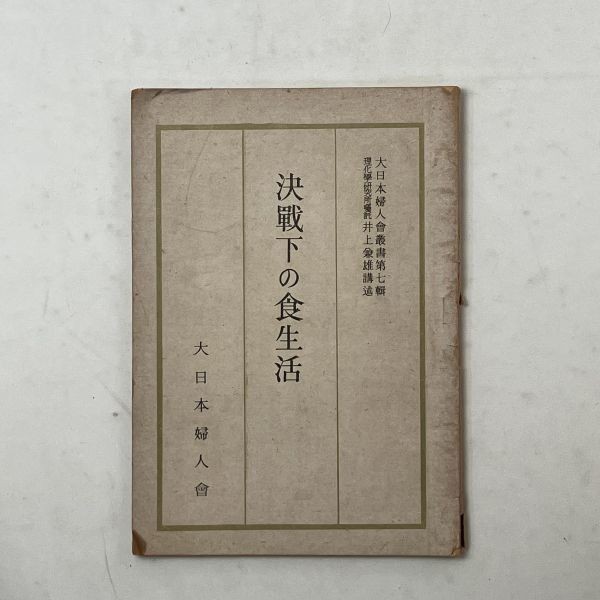
DescriptionPublished in 1944, during the final phase of World War II, this Japanese booklet is titled Food Life Under Decisive War Conditions and was compiled by the Greater Japan Women’s Association.The Greater Japan Women’s Association was a nationwide wartime women’s organization involved in home-front activities such as household management, savings, labor mobilization, welfare, and support for Japan’s wartime system.By 1944, Japan’s food situation had become increasingly severe. Shipping losses, reduced overseas imports, shortages of agricultural labor and fertilizer, and the growing demands of total war placed increasing pressure on civilian food supplies. Rice, meat, oil, sugar, and many other foods were subject to rationing and strict control.This book was therefore not written as an ordinary cookbook.It addressed a much more urgent question:How could people remain healthy when food itself was becoming scarce?Its contents include subjects such as reducing food consumption, maintaining health with limited nutrition, avoiding excessive meat consumption, and methods of creating a sense of fullness while using fewer ingredients.Some chapter headings are especially revealing of the period, including ideas such as:* Eating less during wartime
* The harmful effects of excessive meat consumption
* Feeling full with reduced food
* Improving physical condition through reduced eating
* Health and dietary restraint
* Food and calorie efficiencyToday, these subjects provide a striking look at how deeply the war had entered ordinary civilian life.World War II is often remembered through soldiers, weapons, and battlefields. But in a total war, the home itself became part of the national war effort.What people ate, how much they ate, and how they adapted to shortages became matters of national concern.This 57-page booklet is therefore an interesting primary-source document for collectors and researchers interested in the Japanese home front, wartime rationing, civilian life, nutrition, and women’s mobilization during World War II.It offers a different view of the war—not from the battlefield, but from the dinner table.Age-related toning, stains, wear, and other signs of use are present. Please review the photographs carefully for condition.Own a Piece of History.Shipping
FedEx or Japan Post
International Buyers - Please Note:
Import duties, taxes, and charges are not included in the item price or shipping cost.These charges are the buyer\'s responsibility.Please check with your country\'s customs office to determine what these additional costs will be prior to offerding or buying.
Provided by HARU